DIFC Positions Dubai as a Global Hub for Sustainable Finance Ahead of COP28
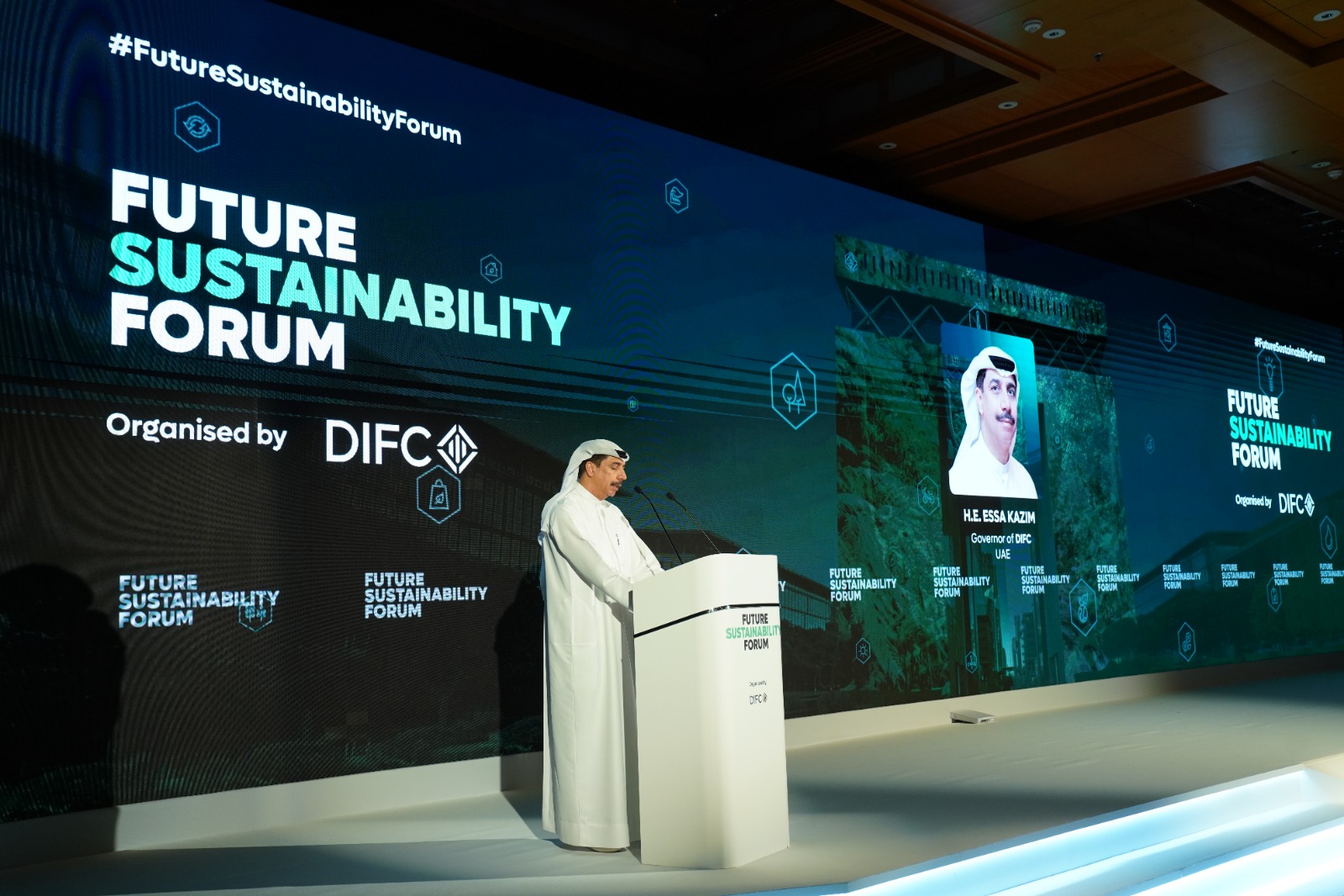
Dubai took another significant step in advancing its sustainability ambitions with the launch of the inaugural Future Sustainability Forum 2023, where H.E. Essa Kazim, Governor of the Dubai International Financial Centre (DIFC), outlined a vision for mobilising climate finance, accelerating the transition to a net-zero economy, and strengthening Dubai’s position as a global sustainable finance hub.
Held at The Ritz-Carlton, DIFC, the forum brought together more than 1,000 leaders, investors, policymakers, sustainability experts, and innovators from over 30 countries. Taking place just weeks before the UAE hosted the historic COP28 climate conference, the event served as a platform to bridge the gap between sustainability commitments and practical implementation.
A Regional Leader in Climate Finance
Opening the forum, H.E. Essa Kazim highlighted the UAE’s commitment to sustainability and climate action, noting that both the UAE and Dubai governments have introduced comprehensive programmes aimed at achieving a net-zero future. He stressed that financial centres such as DIFC have a critical role to play in directing capital towards sustainable projects and emerging markets.
Kazim emphasized that Dubai’s strategic position connecting Europe, Asia, and Africa enables it to serve as a vital gateway for climate finance mobilisation. Through DIFC’s growing ecosystem of financial institutions, investors, and capital markets, the emirate is increasingly becoming a preferred destination for sustainable investment.
The Challenge of Financing Sustainability
One of the central themes of the Governor’s speech was the enormous funding requirement needed to achieve global sustainability goals. According to estimates cited during the forum, between USD 3.3 trillion and USD 4.5 trillion in annual investment is required to achieve the United Nations Sustainable Development Goals by 2030.
Kazim argued that public funding alone will not be sufficient to meet these ambitions. Instead, governments, financial institutions, corporations, and investors must work together to unlock private capital and develop innovative financial mechanisms capable of supporting climate adaptation, renewable energy, sustainable infrastructure, and environmental resilience.
Building a Sustainable Finance Ecosystem
The Governor also outlined DIFC’s efforts to establish itself as the region’s leading centre for sustainable finance. He highlighted the Centre’s growing role in supporting green bonds, sustainable sukuk, ESG-linked investment products, and climate-focused financing initiatives.
At the time of the forum, Nasdaq Dubai had become the world’s largest ESG sukuk market, accounting for approximately 64 percent of all dollar-denominated sustainable sukuk globally. This achievement reflects growing investor demand for financial products that align profitability with environmental and social impact.
Kazim also announced DIFC’s Sustainable Finance Framework, designed to support impact-driven projects and align capital allocation with international sustainability standards. The initiative forms part of DIFC’s broader Strategy 2030, which seeks to drive the future of finance while supporting Dubai’s economic and sustainability objectives.
Aligning with COP28 and Global Climate Goals
The Future Sustainability Forum was closely aligned with the priorities of COP28 and the long-term objectives of the Paris Agreement. Discussions throughout the event focused on accelerating climate action, improving access to climate finance, supporting vulnerable economies, and ensuring a just transition toward a sustainable future.
Kazim described the forum as an important milestone in DIFC’s journey to drive tangible progress on climate action and foster greater collaboration between public and private sector stakeholders. He emphasized that sustainability must become integrated into the core of economic and financial decision-making rather than being treated as a separate agenda.
From Vision to Action
Throughout his address, the Governor reinforced a key message: sustainability is no longer optional. It has become a fundamental requirement for long-term economic resilience, investor confidence, and global competitiveness.
As climate-related risks continue to reshape markets and economies worldwide, financial institutions are increasingly expected to play a leadership role in funding solutions, supporting innovation, and enabling sustainable growth. DIFC’s initiatives, combined with Dubai’s broader sustainability agenda, aim to position the emirate at the forefront of this transformation.
The inaugural Future Sustainability Forum concluded with a clear call to action—mobilise capital, strengthen partnerships, and turn sustainability ambitions into measurable outcomes. As the world prepared for COP28, Dubai sent a strong signal that finance would be one of the most important tools in achieving a more sustainable and climate-resilient future.