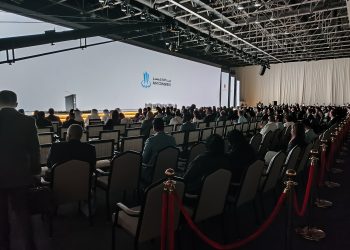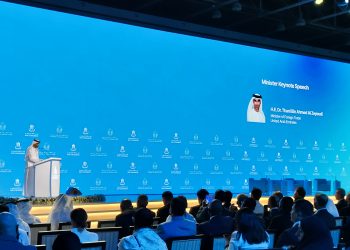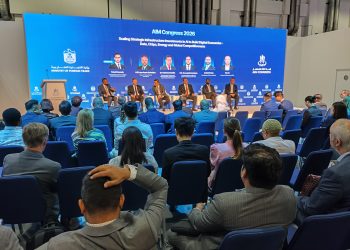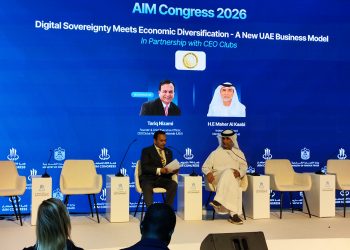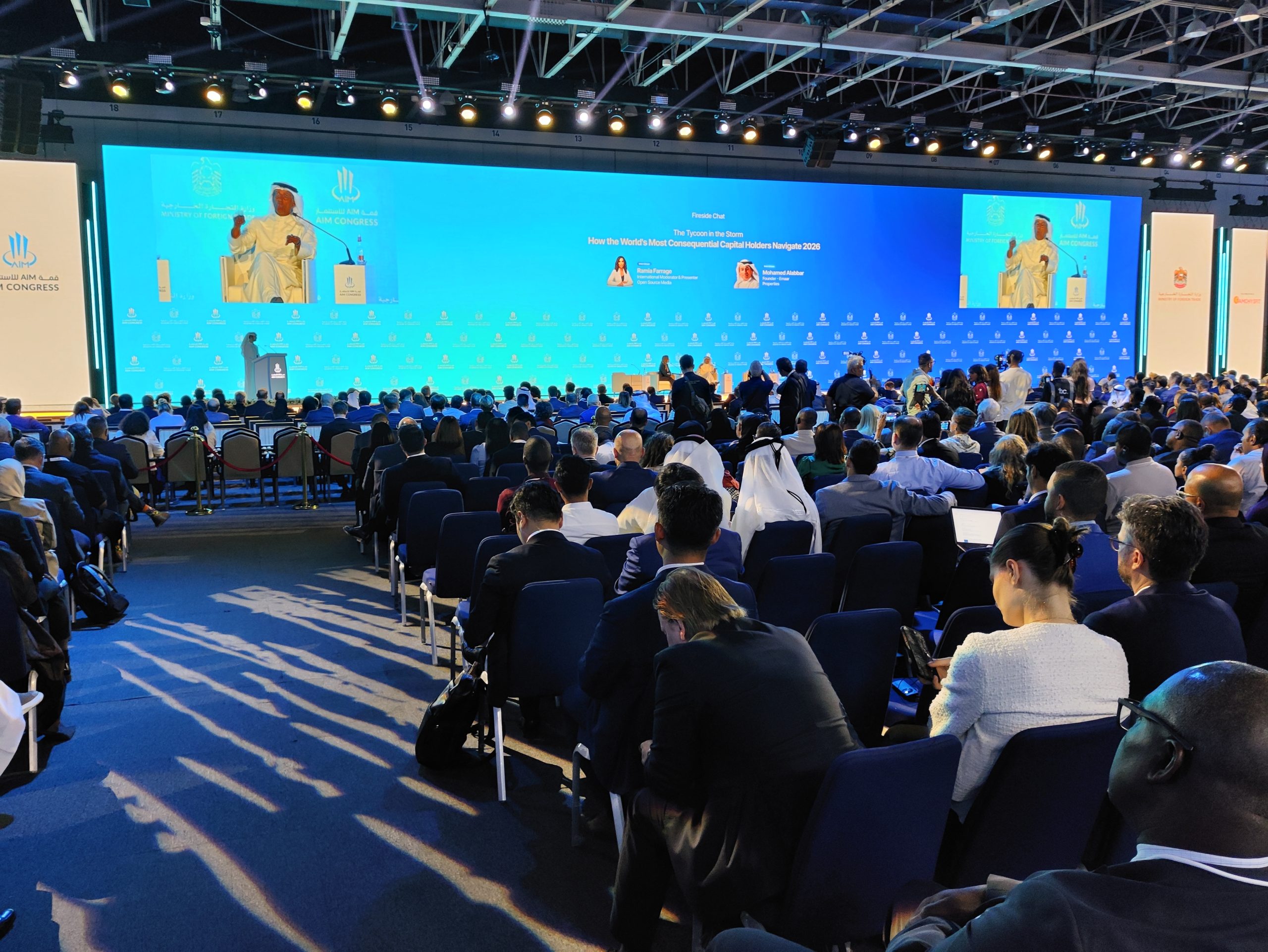
At AIM Congress 2026 in Dubai, a fireside conversation titled “The Tycoon in the Storm: How the World’s Most Consequential Capital Holders Navigate 2026” examined how major business leaders can navigate geopolitical uncertainty, changing investment conditions and evolving economic cycles while maintaining a longterm focus on growth.
The session featured Mohamed Alabbar, Founder and Managing Director of Emaar Properties, in conversation with Ramia Farrage, International Moderator & Presenter at Open Source Media. The discussion offered a practical perspective on resilience, financial discipline, leadership and the continuing investment potential of Dubai and the wider UAE.

The conversation formed part of AIM Congress 2026, held at Dubai World Trade Centre from September 7–9 under the theme “Reshaping Global Prosperity: Unlocking New Investment Pathways Towards a Sustainable and Inclusive Future.” The congress brought together governments, investors, financial institutions, entrepreneurs and business leaders to examine the forces shaping the next phase of global economic growth.
Investing Beyond the Immediate Cycle
One of the central themes of the discussion was the importance of maintaining a long-term perspective when markets experience periods of uncertainty.
For major capital holders, volatility is not necessarily a reason to abandon investment strategies. Instead, challenging periods can create an opportunity to review business models, strengthen operations and ensure that companies are prepared for the next stage of growth.
Alabbar’s perspective emphasized that successful businesses need to be built with the expectation that economic and geopolitical cycles will change. Rather than treating uncertainty as an exceptional event, businesses can incorporate resilience into their everyday decision-making.
This approach places greater emphasis on the underlying strength of a company than on short-term market movements.
Financial Strength as a Foundation for Resilience
The discussion also highlighted the importance of maintaining a strong financial foundation.
Adequate capital, responsible levels of debt, capable people and strong relationships with customers and society were among the key considerations raised during the conversation. The broader message was that companies with sound fundamentals are better positioned to absorb external shocks and continue investing when conditions improve.
This is particularly relevant as companies reassess growth strategies following several years of strong expansion across many sectors.
Periods of slower growth can provide businesses with valuable time to reorganize, improve efficiency and strengthen their internal structures. For established companies, measured growth can therefore become an opportunity to improve quality and sustainability rather than simply pursuing expansion for its own sake.
Dubai’s Continued Investment Appeal
A significant part of the conversation focused on Dubai and the UAE’s position within the global investment landscape.
Despite geopolitical uncertainty across international markets, Dubai continues to benefit from its infrastructure, international connectivity, business environment and ability to attract global talent and capital.
The resilience of the UAE economy has increasingly positioned Dubai as a platform through which businesses and investors can access opportunities across the Middle East and wider international markets.
The discussion reflected confidence in Dubai’s ability to maintain its growth trajectory while continuing to adapt to changing global conditions. For investors, this creates an environment where long-term opportunities can be evaluated beyond the immediate effects of individual geopolitical or economic events.
Leadership and the Ability to Adapt
Another important theme was leadership.
In an increasingly interconnected global economy, business leaders are required to look beyond traditional financial indicators. They must understand geopolitical developments, consumer behaviour, technology, talent, capital flows and changing expectations from society.
The conversation suggested that effective leadership involves continuous assessment and adaptation. Companies that regularly examine their strategies and operating models can respond more effectively when circumstances change.
This is particularly important for large organizations whose decisions can influence employees, communities, investors and wider economic ecosystems.
Turning Uncertainty Into Opportunity
The broader message from the fireside conversation was not centred on uncertainty itself, but on how businesses respond to it.
Global markets will continue to experience periods of disruption. Trade relationships will evolve, investment destinations will compete for capital and businesses will face new technological and economic challenges.
However, uncertainty can also encourage companies to become more disciplined, innovative and strategically focused.
For investors, this creates an opportunity to identify businesses and markets with strong fundamentals, capable leadership and the capacity to adapt over the long term.
A Positive Outlook for the UAE
The conversation ultimately reinforced a positive outlook for Dubai and the UAE.
The country’s ability to combine infrastructure, international connectivity, investment-friendly policies and a strong focus on future-oriented sectors has strengthened its position as a global business and investment hub.
As global capital continues to search for resilient markets and new sources of growth, the UAE is well placed to remain an important destination.
The AIM Congress discussion demonstrated that navigating 2026 is not simply about responding to uncertainty. It is about preparing businesses to operate successfully through different cycles while continuing to invest in people, capabilities and long-term opportunities.
For capital holders and entrepreneurs alike, the lesson is clear: resilience, financial discipline, adaptability and long-term conviction can provide the foundations for sustainable growth—even when the global economic landscape continues to change.