The UAE is increasingly positioning digital sovereignty as an important component of its economic diversification strategy, with artificial intelligence, cloud computing, data infrastructure and digital innovation becoming central to the country’s future growth model.
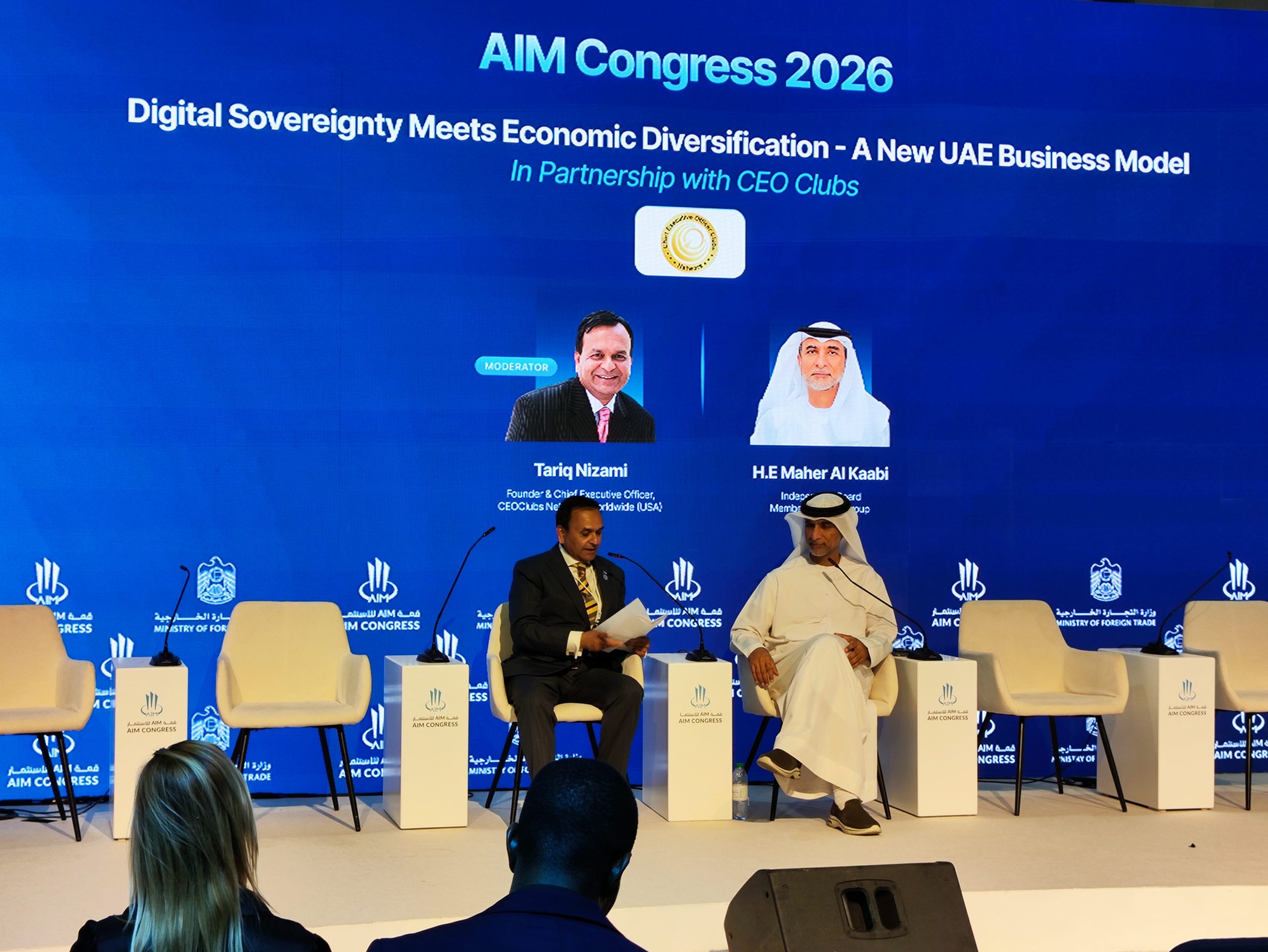
This theme was explored at AIM Congress 2026 in Dubai during the session “Digital Sovereignty Meets Economic Diversification – A New UAE Business Model.” The discussion examined how control over digital infrastructure and data can strengthen national competitiveness while creating new opportunities for investment, entrepreneurship and technology-led economic growth.
The session featured Tariq Nizami, Founder & CEO of CEO Clubs Network, Inc., and H.E. Maher Al Kaabi, Advisor and Independent Board Member at Alserkal Group.
Digital Sovereignty as an Economic Strategy
Digital sovereignty is becoming increasingly important as governments and businesses rely more heavily on data, cloud infrastructure, artificial intelligence and connected technologies.
For the UAE, developing strong domestic digital capabilities is closely connected with its broader ambition to build a diversified, knowledge-based economy.
The concept extends beyond cybersecurity or data protection. It includes the ability to develop, operate and manage critical digital infrastructure while creating an environment where businesses can innovate securely and compete internationally.
This creates opportunities for investment across technology infrastructure, AI, cloud computing, data centres, cybersecurity and digital services.
AI at the Centre of Transformation
Artificial intelligence is becoming one of the most significant technologies shaping the global economy.
For the UAE, AI represents both a technological opportunity and an economic diversification tool. Its applications extend across financial services, healthcare, logistics, government services, manufacturing, real estate, energy and other industries.
The increasing adoption of AI can help companies improve productivity, develop new products and services and make better use of large volumes of data.
It also creates demand for a broader technology ecosystem, including computing infrastructure, specialist talent, software, cybersecurity and data management.
Building Digital Infrastructure
A strong digital economy requires significant infrastructure.
Cloud platforms, data centres, high-speed connectivity and secure networks provide the foundations for businesses and government institutions to adopt advanced technologies.
The UAE’s continued investment in digital infrastructure supports its ambition to operate as a global technology and business hub.
For international companies, this infrastructure can provide an attractive platform for establishing regional operations and delivering digital services across the Middle East and wider markets.
Data as a Strategic Asset
Data has become one of the most important resources in the modern economy.
Businesses increasingly depend on data to understand customers, optimise operations and develop new technologies. At the national level, secure and effective data infrastructure can support public services, economic planning and innovation.
The session highlighted the importance of creating an environment where data can be managed securely while still enabling innovation.
Clear digital regulation and trusted governance can provide businesses with greater confidence to invest in new technologies and develop solutions for regional and international markets.
Public and Private Sector Collaboration
The development of a sophisticated digital economy requires cooperation between governments and businesses.
Public institutions can establish infrastructure, policies and regulatory frameworks, while private-sector companies bring investment, technology, expertise and entrepreneurial capacity.
Public-private partnerships can therefore accelerate the adoption of new technologies and help transform national digital strategies into commercial opportunities.
For the UAE, this model is particularly relevant as it seeks to encourage innovation while maintaining a secure and trusted digital environment.
Supporting Economic Diversification
Digital transformation is also contributing to the UAE’s wider economic diversification agenda.
Technology-enabled industries can create new sources of economic activity beyond traditional sectors while improving productivity across established industries.
AI, cloud computing, cybersecurity, fintech, digital commerce and advanced technologies are creating new business models and attracting entrepreneurs and investors.
The digital economy can also strengthen existing sectors by providing them with tools to operate more efficiently and reach new markets.
Creating a Globally Competitive Digital Economy
The UAE’s geographic position, international business environment and advanced infrastructure provide a strong foundation for developing its digital economy.
A trusted digital ecosystem can help attract international technology companies, investors and specialised talent while supporting local businesses seeking to expand internationally.
This creates a positive cycle in which infrastructure attracts investment, investment supports innovation, and innovation contributes to broader economic diversification.
A Future Built Around Innovation
The discussion at AIM Congress 2026 reflected the growing connection between digital sovereignty and economic development.
For the UAE, investing in digital capabilities is not simply about preparing for technological change. It is part of building a resilient and diversified economy capable of creating new industries, attracting global investment and supporting long-term competitiveness.
AI, cloud infrastructure, data and digital regulation will continue to play an increasingly important role in this transformation.
As the UAE advances its long-term economic vision, the combination of digital infrastructure, innovation, investment and strong public-private collaboration provides a powerful foundation for a future-ready economy.