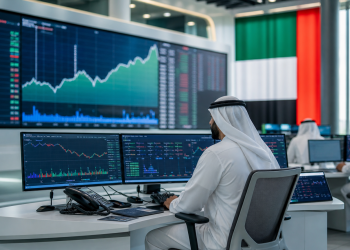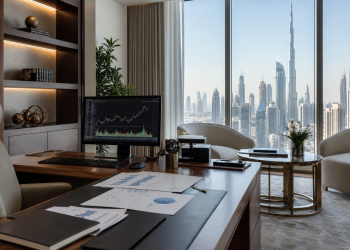

Investors across the UAE and wider Gulf region are increasingly weighing how to position portfolios amid a global environment marked by shifting interest rate expectations, geopolitical uncertainty and evolving energy markets. While no single announcement has dominated headlines this week, market participants in Abu Dhabi, Dubai and other regional financial hubs continue to monitor how capital flows are being reallocated between traditional asset classes and newer opportunities in technology, infrastructure and sustainable finance.
Analysts note that the broader investment picture remains fluid, with institutional allocators balancing caution over global growth against the desire to capture returns in sectors seen as resilient to macroeconomic headwinds. For Gulf-based sovereign wealth funds and family offices, this has translated into a continued emphasis on diversification, both geographically and across asset types, as part of longer-term strategies aimed at reducing dependence on any single market or commodity cycle.
Regional financial centers have positioned themselves as conduits for this activity, leveraging regulatory frameworks designed to attract international capital alongside domestic savings. Free zones and specialized financial districts in the UAE, in particular, have sought to build on their reputation as neutral, business-friendly jurisdictions capable of bridging investors from Asia, Europe and the Americas with opportunities across the Middle East and North Africa.
Implications for Gulf Investors and Markets
For everyday investors and expatriates based in the UAE and GCC, the broader trend underscores the importance of staying informed about where global capital is moving and why. Even in the absence of a single headline-grabbing deal, incremental shifts in investor sentiment can influence local equity markets, real estate valuations and the cost of capital for regional businesses seeking to expand.
Financial advisors operating in the region frequently point to the need for diversified portfolios that can withstand volatility stemming from global monetary policy decisions, energy price fluctuations and shifting trade relationships. With many residents of the UAE holding internationally exposed investment accounts, from pension schemes to brokerage portfolios, changes in global capital allocation patterns can have a direct bearing on personal financial planning, even when the underlying developments originate far from the Gulf.
Government-linked entities and sovereign wealth vehicles in the UAE and neighboring Gulf states have historically played an outsized role in global markets, given the scale of assets under their management. Their investment decisions, whether directed toward renewable energy infrastructure, technology ventures or traditional fixed-income instruments, are closely watched by analysts as indicators of broader confidence in various sectors and geographies.
As the region continues to pursue economic diversification away from hydrocarbon dependence, officials in the UAE have repeatedly emphasized the role of foreign direct investment and private capital in supporting non-oil sectors such as technology, logistics, tourism and manufacturing. This policy direction suggests that investment flows, both inbound and outbound, will remain a focal point for policymakers and market participants alike in the months ahead.
While specific transactions and figures tied to this particular story were not detailed, the broader context reinforces a pattern familiar to Gulf-based investors: global capital markets remain interconnected, and developments far beyond the region’s borders can carry meaningful implications for local economies, businesses and individual investment strategies. Market watchers in the UAE are likely to continue tracking these dynamics closely as part of ongoing efforts to assess risk and identify opportunity across a rapidly evolving global financial landscape.