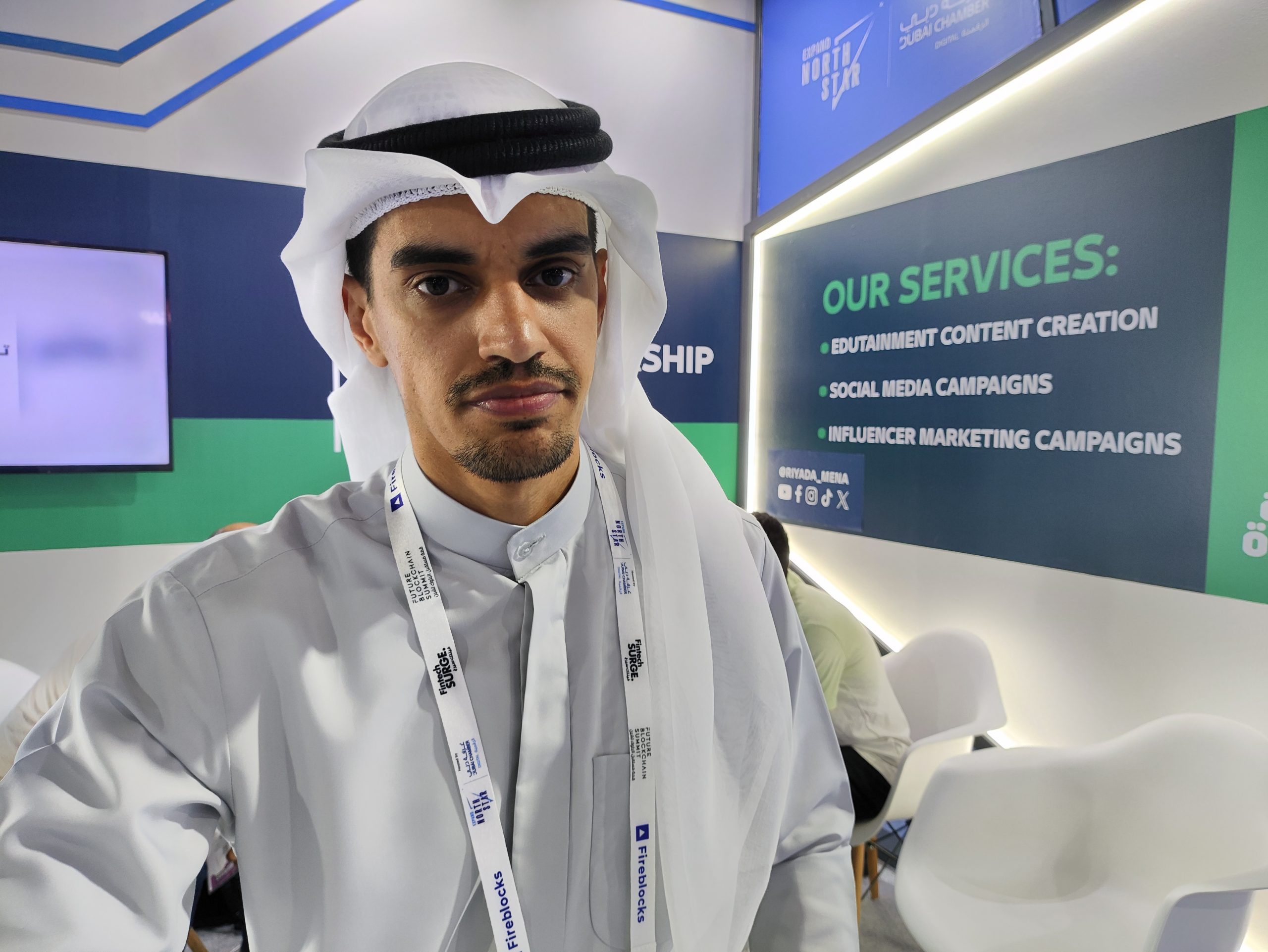
Growth Co.’s Khaled Al Jaberi on Scaling Innovation Across the Middle East
The Middle East’s startup ecosystem is entering a new phase of maturity.
Over the past decade, the region has witnessed record investment activity, the emergence of unicorn companies, and growing interest from global investors. Yet as the ecosystem evolves, entrepreneurs are discovering that access to capital alone is no longer enough to build successful companies.
At the heart of the conversation is a new question: How can founders transform promising ideas into scalable, sustainable businesses?
During discussions at GITEX 2023, Khaled Al Jaberi, Managing Partner at Growth Co., highlighted the importance of venture building, founder support, and ecosystem development as critical drivers of the region’s next wave of innovation.
Beyond Funding: The Rise of Venture Building
For many years, startup ecosystems measured success primarily through fundraising announcements and valuation milestones. While capital remains important, investors and founders increasingly recognize that execution, talent, and operational capability are often the determining factors behind long-term success.
This realization has fueled the rise of venture builders and startup growth platforms that provide founders with access to mentorship, strategic guidance, market expertise, and operational support.
Rather than simply investing in companies, venture builders actively help entrepreneurs navigate product development, go-to-market strategy, hiring, customer acquisition, and scaling challenges.
The model is particularly valuable in emerging ecosystems where founders may have strong technical expertise but limited experience in building high-growth businesses.
The Middle East’s Opportunity
The GCC region is increasingly positioned as one of the world’s most attractive startup markets.
Government-led innovation initiatives, digital transformation programs, sovereign wealth investment, and a growing entrepreneurial culture have created favorable conditions for technology-driven growth.
The UAE, in particular, has emerged as a regional hub for startups seeking access to capital, talent, infrastructure, and international markets.
However, ecosystem leaders argue that the next stage of growth will depend on developing stronger support structures around founders and early-stage companies.
Building globally competitive startups requires more than funding. It requires access to networks, expertise, mentorship, and market opportunities that help companies scale beyond their domestic markets.
From Startup Ecosystem to Innovation Economy
The conversation also reflected a broader transformation taking place across the region.
Governments are increasingly viewing entrepreneurship as a key pillar of economic diversification and long-term competitiveness. Startups are no longer seen merely as small businesses but as engines of innovation capable of creating jobs, attracting investment, and accelerating technological advancement.
As a result, collaboration between founders, investors, corporations, universities, and government institutions is becoming increasingly important.
Strong ecosystems create environments where ideas can move more efficiently from concept to commercialization.
The Founder Advantage
One of the most important themes emerging from startup discussions globally is the role of the founder.
While technology, capital, and market conditions matter, successful startups are often defined by the quality of their leadership. Resilience, adaptability, vision, and execution remain essential traits for entrepreneurs navigating uncertain environments.
Founders today face increasingly complex challenges, including fundraising pressures, talent competition, changing market dynamics, and rapid technological disruption.
Supporting founders through these challenges requires ecosystems that prioritize education, mentorship, and long-term capability building.
Artificial Intelligence and New Growth Opportunities
Artificial intelligence is creating new opportunities for entrepreneurs across nearly every industry.
From healthcare and finance to logistics and media, AI-powered solutions are enabling startups to solve problems more efficiently while creating entirely new business models.
For venture builders and ecosystem leaders, the challenge lies in helping founders understand how emerging technologies can be translated into commercially viable products and scalable companies.
The next generation of regional success stories is likely to emerge from founders capable of combining technological innovation with strong execution and market understanding.
Building for Sustainability
As global investment markets become more disciplined, founders are increasingly focused on sustainable growth rather than growth at all costs.
Investors are placing greater emphasis on business fundamentals, unit economics, profitability pathways, and long-term resilience.
This shift represents an important evolution for the regional startup ecosystem. Companies that can demonstrate sustainable value creation are likely to attract stronger investor confidence and achieve more durable success.
Looking Ahead
The Middle East’s innovation economy is still in its early chapters.
The region possesses significant advantages, including access to capital, ambitious government strategies, world-class infrastructure, and a young, technology-savvy population. The challenge now is translating these advantages into globally competitive companies.
Leaders such as Khaled Al Jaberi argue that achieving this goal requires a stronger focus on venture building, founder development, and ecosystem collaboration.
The future of entrepreneurship in the region will not be determined solely by the amount of capital available. It will depend on the ability to nurture talent, accelerate innovation, and help founders transform bold ideas into sustainable businesses that create lasting economic impact.
As startup ecosystems continue to mature, venture builders may prove to be among the most important catalysts in shaping the next generation of Middle Eastern innovation.