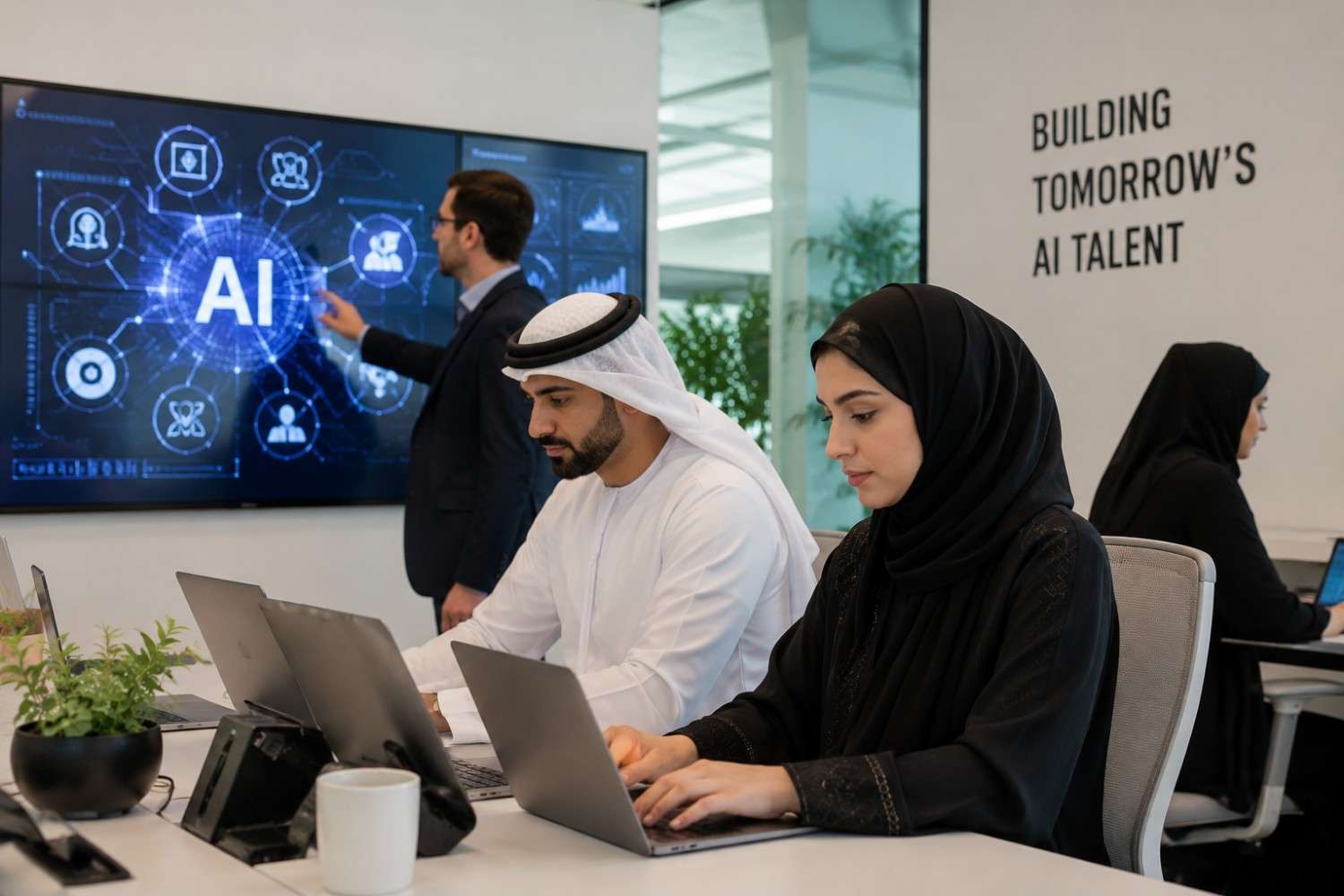
DUBAI — A government mandate requiring private-sector adoption of agentic AI within two years is exposing a talent shortfall that could determine whether the emirate’s AI ambitions translate into commercial reality, according to industry executives tracking the rollout.
In May, Dubai’s Crown Prince Sheikh Hamdan bin Mohammed set a two-year deadline for private companies to integrate agentic AI—systems capable of planning and executing tasks with minimal human oversight—into core operations. Dubai Chambers has since stood up an executive committee, training programmes, incubators and funding schemes to support the transition, positioning it as one of the most aggressive AI adoption timelines set by any government.
Infrastructure Outpacing Skills
Abdullah Al Jaafari, CEO and founder of Resquad AI, argues that capital and compute are not the binding constraint. Dubai has invested heavily in data centres, regulatory sandboxes and government-backed funds. What remains scarce is the workforce capable of designing, deploying and managing agentic systems inside real businesses—engineers who understand both the technical architecture and the operational context of UAE industries such as logistics, real estate and financial services.
This gap matters for founders building AI-native companies in the region. Startups pitching agentic solutions to enterprise clients are finding that the buyer-side talent needed to evaluate, integrate and maintain these tools is often thinner than the vendor-side hype suggests, slowing procurement cycles even where budgets exist.
What It Means for Investors and Founders
For venture investors in Dubai and Abu Dhabi, the talent bottleneck reframes deal diligence: portfolio companies with in-house implementation capability, not just model access, may command a premium. For founders, it suggests opportunity in adjacent services—training, integration consultancies and managed AI-operations firms—that bridge the gap between government mandate and enterprise execution.
Dubai Chambers’ training initiatives are a start, but executives close to the programme say curricula need faster iteration to match the pace of agentic AI tooling. With the two-year clock already running, how quickly the emirate builds a domestic talent pipeline may prove as decisive to the strategy’s success as the policy deadline itself.