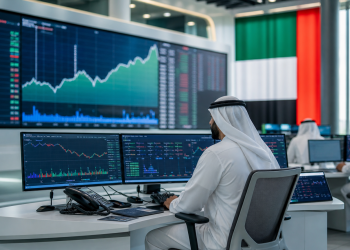
Investors across the UAE and wider Gulf region continue to monitor international capital markets as global economic conditions shape decisions on where to deploy funds. With interest rate policy, geopolitical developments and shifting trade relationships all weighing on sentiment, fund managers and sovereign allocators in the region are keeping a close watch on how global trends intersect with local opportunities. The broader investment landscape has grown increasingly complex in recent years, with capital moving more selectively between regions, asset classes and sectors as investors weigh risk against return in an environment marked by persistent uncertainty.
For the UAE specifically, this global backdrop matters because of the emirate’s position as a regional financial hub and gateway for capital flowing into and out of the Middle East. Abu Dhabi and Dubai have each built substantial financial infrastructure designed to attract international investors, asset managers and family offices, and the performance of global markets directly affects the appetite of these players to commit capital locally. When international conditions are favourable, Gulf financial centres tend to see increased activity from foreign funds seeking diversification and yield; when conditions tighten, the same centres often see a flight to perceived safety, which can still benefit UAE-based platforms given their reputation for stability and regulatory clarity.
Why Gulf Investors Should Pay Attention
Sovereign wealth funds based in the UAE and across the GCC have long played an outsized role in global investment activity, deploying capital into equities, private markets, infrastructure and real estate well beyond their home region. This gives Gulf institutions a direct stake in how global markets perform, independent of local economic conditions. A downturn or rally in major international markets can therefore have a measurable effect on the balance sheets of these funds, even as domestic economies in the Gulf continue to diversify away from hydrocarbon dependence.
At the same time, the Gulf’s growing emphasis on economic diversification means local investors, both institutional and retail, are increasingly exposed to sectors such as technology, renewable energy and financial services that are themselves sensitive to global capital movements. This cross-exposure means that shifts in international investor sentiment, whether driven by central bank policy, trade tensions or structural changes in major economies, can ripple through to opportunities and valuations within the region itself.
Analysts tracking regional markets note that the UAE’s efforts to position itself as a hub for emerging asset classes, including digital assets and alternative investments, add another layer of interconnection with global trends. As international regulatory frameworks evolve and investor appetite for new asset categories shifts, UAE-based platforms and funds are often among the first in the region to adapt, reflecting the country’s broader strategy of aligning with global best practice while carving out a distinct competitive position.
For everyday investors and expatriates based in the UAE, the practical takeaway is that global market movements are rarely confined to their country of origin. Pension funds, investment platforms and wealth managers operating in the UAE typically maintain exposure to international markets as part of standard portfolio construction, meaning that developments abroad can directly affect returns on products marketed locally. As global investment conditions continue to shift, market participants in the UAE and across the GCC are expected to maintain close attention to international developments, balancing opportunities for growth against the need for prudent risk management in an increasingly interconnected financial system.