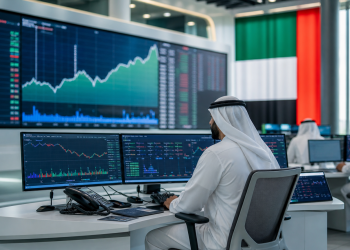

Investors worldwide continue to reassess portfolio strategies as economic conditions evolve, with capital increasingly moving toward markets perceived as stable and growth-oriented. While no single catalyst has driven this shift, a combination of interest rate adjustments, geopolitical developments and sector-specific opportunities has kept global investment activity in a state of ongoing recalibration. Fund managers and institutional allocators are weighing where best to position capital, with emerging markets, technology, energy transition projects and infrastructure development frequently cited as areas drawing renewed attention.
Analysts tracking cross-border capital movement note that diversification remains a central theme for large institutional investors, including sovereign wealth funds and pension managers, as they seek to balance risk across asset classes and geographies. This approach has become particularly relevant for funds managing long-term liabilities, which require steady returns across multiple economic cycles rather than short-term gains tied to any single market or sector.
UAE and GCC Investors Positioned Amid Global Recalibration
The United Arab Emirates and its Gulf neighbors have, over recent years, built a reputation as active participants in global capital markets, with sovereign wealth vehicles and private investment firms based in the region expanding their footprint across sectors ranging from technology and logistics to renewable energy and real estate. This positioning reflects a broader regional strategy of channeling oil-linked revenues into diversified, long-term holdings designed to support economic diversification goals outlined in national visions across the Gulf Cooperation Council.
For UAE-based investors and the wider expatriate business community, shifts in global investment sentiment carry direct relevance. Abu Dhabi and Dubai have each cultivated ecosystems that attract international capital while also serving as launchpads for outbound investment by regional entities. Financial free zones, favorable regulatory frameworks and growing fintech infrastructure have reinforced the Emirates’ role as a conduit between global capital and regional opportunity, a dynamic that market participants expect to continue regardless of short-term volatility elsewhere.
Observers note that Gulf investors are not merely passive recipients of global trends but active shapers of them, given the scale of assets under management held by regional sovereign funds and the growing sophistication of private capital firms headquartered in the UAE and Saudi Arabia. This has implications for how global fund managers approach the region — not only as a source of capital but as a partner in co-investment structures, particularly in sectors such as infrastructure, technology and sustainable energy where long investment horizons align with Gulf strategic priorities.
As global markets continue to adjust to shifting monetary policy, inflation dynamics and geopolitical uncertainty, the interplay between international capital flows and Gulf-based institutional strategy is likely to remain a focal point for analysts and policymakers alike. For UAE residents, investors and businesses tracking these developments, the broader picture underscores a continuing trend: capital is becoming more mobile, more diversified, and increasingly attentive to regions — including the Gulf — that offer both stability and growth potential in an otherwise uncertain global landscape.
While specific transactions and figures tied to this period were not detailed in available reporting, market participants broadly agree that the coming months will test how resilient current investment strategies prove to be, particularly as central banks and regional policymakers continue to calibrate responses to evolving economic signals.