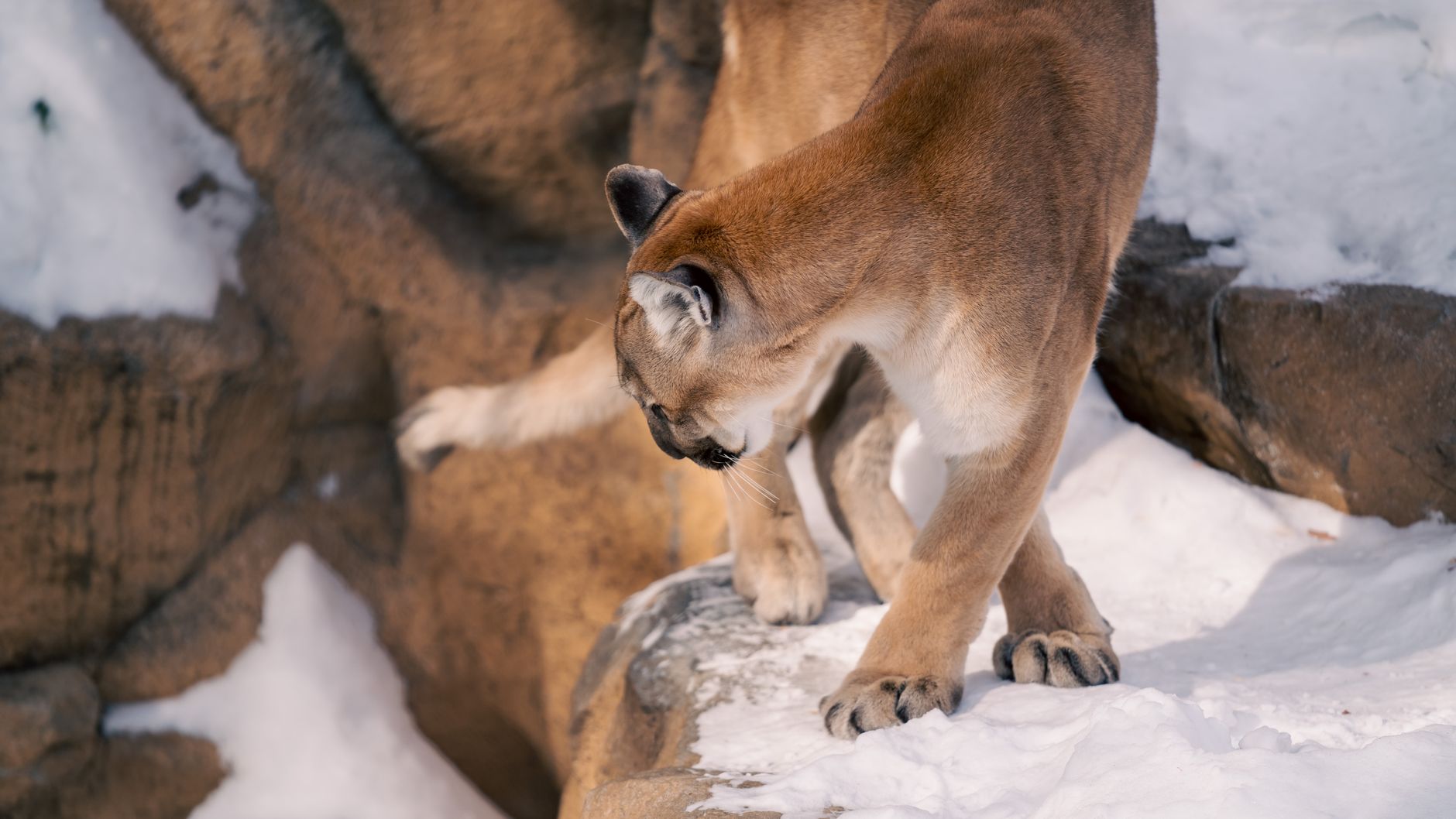
New ecological research shows that cougars, one of North America’s most formidable apex predators, may be doing more than maintaining balance in forest ecosystems — they could also be helping to prevent car crashes. According to findings examining the relationship between cougar predation and deer behavior, the mere presence of these big cats is enough to push deer populations away from roadsides and deeper into wooded terrain, indirectly lowering the number of vehicle-wildlife collisions.
The study centers on a phenomenon ecologists describe as a “landscape of fear,” in which prey species alter their habits, movement patterns, and habitat use in response to the perceived risk of predation, even without direct encounters. In regions where cougars are active, deer appear to avoid open areas such as road edges and clearings, since these spaces leave them exposed to both predators and passing vehicles. Instead, deer tend to retreat into denser forest cover, where they can better evade detection and ambush from cougars.
Researchers say this behavioral shift has a secondary, unintended benefit for motorists. Roads that cut through cougar territory tend to see fewer deer-related collisions, since fewer deer linger near the roadway in the first place. The effect illustrates how the ecological influence of a single predator species can ripple outward to touch human safety concerns typically addressed through infrastructure or wildlife-management interventions, such as fencing, warning signage, or population culls.
Implications for Predator Conservation and Traffic Safety
The findings add to a growing body of evidence suggesting that apex predators provide ecological services extending well beyond their immediate role in food webs. By naturally regulating herbivore distribution, large carnivores like cougars may reduce the need for costly human-driven wildlife management strategies aimed at preventing roadway accidents. Vehicle-wildlife collisions remain a significant safety and economic issue across parts of North America, often resulting in property damage, injury, and occasionally fatalities for both drivers and animals.
Conservationists argue that such research strengthens the case for protecting and restoring predator populations in areas where they have been diminished or eliminated, framing large carnivore conservation not only as an ecological priority but also as a potential public safety consideration. The study underscores how top-down effects in ecosystems — where predators influence prey behavior, which in turn affects broader environmental and human outcomes — can produce benefits that extend into unexpected areas of everyday life, including road safety statistics.
The research is geographically specific to North American landscapes where cougars and deer coexist, and its findings do not translate directly to the UAE or wider Gulf region. Cougars are not native to the Arabian Peninsula, and the desert and urban ecosystems that characterize much of the UAE differ substantially from the forested and semi-forested habitats studied in the research. Vehicle-wildlife collisions in the Gulf region typically involve different species and environmental dynamics, meaning local road safety strategies rely on separate approaches, including infrastructure design, speed regulation, and driver awareness campaigns rather than predator-based ecological management.
Even so, the study offers a broader lesson in how conservation efforts tied to apex predators can generate benefits that extend beyond wildlife protection alone, a concept of growing interest to ecologists and policymakers examining the intersections between biodiversity, land use, and human safety worldwide.