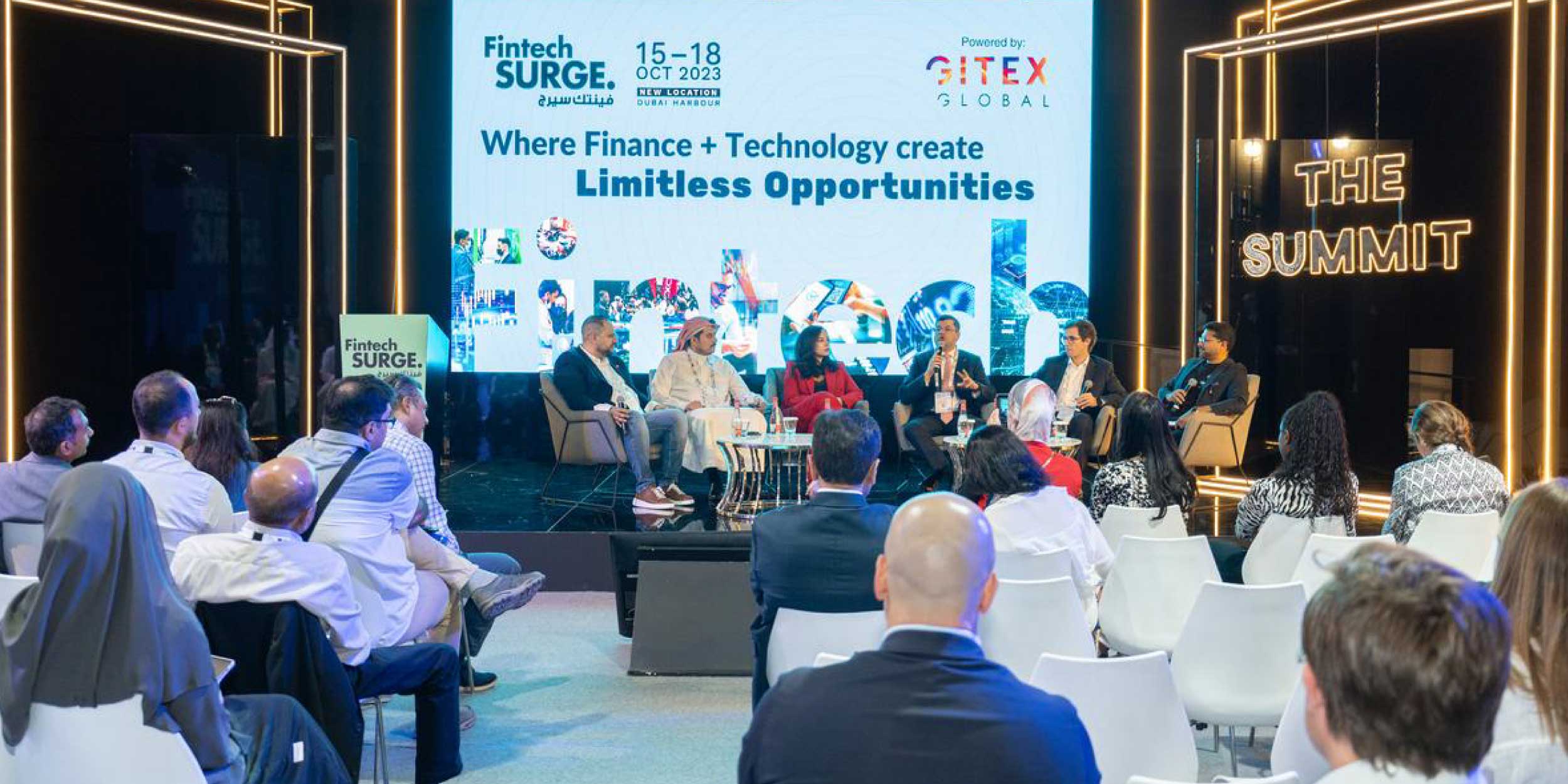
Industry Leaders at GITEX Explore the Next Wave of Financial Innovation
The financial services industry is undergoing one of the most significant transformations in its history. Driven by digital technology, changing consumer expectations, and the rise of embedded financial services, traditional banking models are being redefined at an unprecedented pace.
These themes were at the center of discussion during the “Fintech Surge – Digital Banking and Finance Summit” at GITEX Global 2023, where industry leaders examined how fintech innovation is reshaping payments, banking, customer experience, and financial inclusion across the Middle East and beyond.
Moderated by renowned technology journalist David Rowan, Founding Editor-in-Chief of WIRED, the panel brought together Muhammad Nana, Vice President of Fintech Partnerships for Eastern Europe, Middle East and Africa at Mastercard; Madiha Sattar, Vice President of Strategy and Transformation at Careem; and Kartik Taneja, Executive Vice President and Head of Payments and Consumers at Mashreq.
Together, they explored how digital transformation is creating a new financial ecosystem where technology companies, banks, and payment providers increasingly collaborate rather than compete.
The Rise of Digital-First Consumers
One of the key themes emerging from the discussion was the changing behavior of consumers.
Today’s customers expect financial services to be instant, seamless, and integrated into their daily lives. Whether making payments, accessing credit, transferring money, or managing investments, consumers increasingly demand experiences that mirror the simplicity and convenience of digital platforms.
This shift is forcing banks and financial institutions to rethink traditional service delivery models.
The panel noted that digital banking is no longer simply about moving services online. Instead, it is about creating intelligent, personalized experiences that anticipate customer needs and reduce friction at every stage of the financial journey.
Embedded Finance Changes the Game
A major topic of discussion was the growing influence of embedded finance.
Companies that were once considered technology or mobility platforms are increasingly offering financial services directly within their ecosystems. Ride-hailing applications, e-commerce platforms, delivery services, and digital marketplaces are integrating payments, wallets, lending, and insurance products into customer experiences.
Careem was highlighted as an example of how technology platforms are evolving into broader digital ecosystems. By embedding financial services into everyday activities, companies can create greater convenience while expanding access to financial tools for underserved populations.
This convergence of technology and finance is blurring the traditional boundaries between banks and non-bank service providers.
Collaboration Over Competition
Despite concerns that fintech startups may disrupt traditional banks, the panel emphasized that collaboration is becoming the dominant trend.
Financial institutions possess regulatory expertise, customer trust, and infrastructure, while fintech companies bring agility, innovation, and customer-centric design. Together, these strengths can accelerate innovation and create more effective solutions for consumers.
Mastercard’s growing network of fintech partnerships demonstrates how global payment companies are supporting innovation by connecting emerging technology firms with financial ecosystems and infrastructure.
The future of finance, participants suggested, will be defined less by competition and more by strategic partnerships.
Payments at the Center of Transformation
Payments remain one of the most dynamic areas of fintech innovation.
The panel discussed how digital wallets, contactless transactions, real-time payments, and alternative payment methods are rapidly changing consumer behavior. As cash usage continues to decline in many markets, businesses are investing heavily in payment technologies that offer greater speed, security, and convenience.
The UAE has emerged as one of the leading markets globally for digital payment adoption, supported by strong government initiatives, advanced infrastructure, and high smartphone penetration.
This environment is creating opportunities for both established institutions and emerging fintech companies to develop new products and services.
Artificial Intelligence and the Future of Banking
Artificial intelligence is increasingly becoming a critical component of financial services.
From fraud detection and risk management to customer support and personalized financial recommendations, AI is enabling institutions to improve efficiency while delivering better customer experiences.
The discussion highlighted that the next generation of banking will be increasingly data-driven. Organizations capable of effectively leveraging data and artificial intelligence will be better positioned to understand customer behavior, reduce operational costs, and identify new growth opportunities.
At the same time, maintaining trust, transparency, and responsible data practices will remain essential.
Financial Inclusion Through Technology
Beyond convenience and efficiency, fintech innovation also has the potential to expand financial inclusion.
Millions of people globally remain underserved by traditional financial systems. Digital technologies can help bridge this gap by reducing costs, expanding access, and creating alternative pathways to financial participation.
The panel emphasized that technology should not only improve services for existing customers but also enable broader access to financial opportunities for individuals and businesses that have historically been excluded from formal financial systems.
Dubai’s Growing Role as a Fintech Hub
The discussion also highlighted Dubai’s emergence as one of the world’s fastest-growing fintech ecosystems.
Supported by progressive regulation, strong infrastructure, and a strategic geographic position connecting Asia, Africa, and Europe, the city continues to attract entrepreneurs, investors, and financial institutions seeking to shape the future of finance.
Initiatives across digital banking, open finance, payments innovation, and artificial intelligence are reinforcing Dubai’s ambition to become a global center for financial technology.
As fintech investment continues to grow across the region, Dubai is increasingly serving as a platform where innovation, capital, and talent converge.
Looking Ahead
The conversations at GITEX made one thing clear: the future of finance will be digital, connected, and increasingly integrated into everyday life.
Banks, fintech startups, technology platforms, and payment providers are no longer operating in separate worlds. Instead, they are becoming part of a shared ecosystem focused on delivering faster, smarter, and more inclusive financial services.
As consumer expectations continue to evolve and technology advances accelerate, organizations that embrace innovation while maintaining trust and security will be best positioned to lead the next chapter of financial transformation.
The fintech surge is no longer on the horizon—it is already reshaping how people live, work, transact, and participate in the global economy.