Deel’s Dan Westgarth and WIRED’s David Rowan Explore the Rise of Global Employment
The traditional concept of work is undergoing a profound transformation.
For generations, employment was largely tied to geography. Companies hired talent within commuting distance of an office, employees relocated to pursue opportunities, and national labor markets largely operated within their own boundaries. Today, technology is dismantling those constraints, creating a global workforce where talent can be sourced, managed, and developed from virtually anywhere.
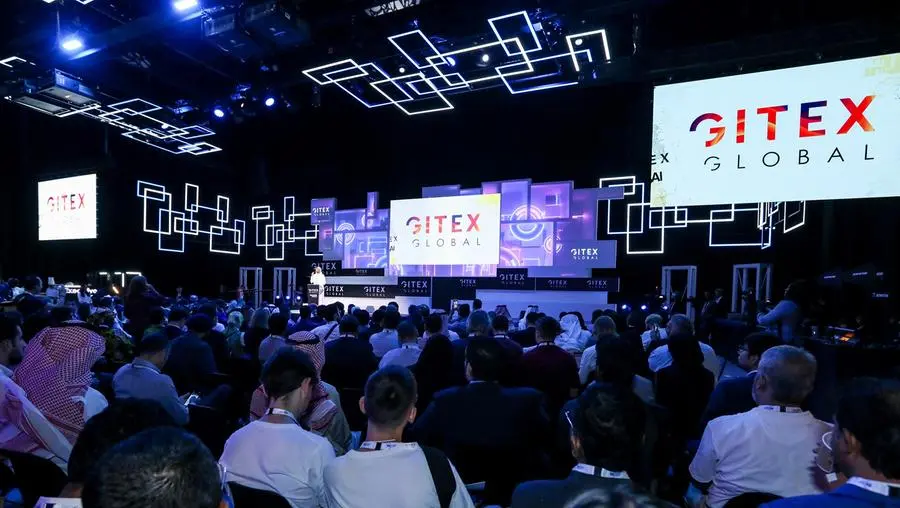
These themes were explored during a conversation between Dan Westgarth, Co-Founder and COO of Deel, and David Rowan, Founding Editor-in-Chief of WIRED, at GITEX Global 2023 in Dubai.
The discussion highlighted how digital platforms, remote work technologies, and changing workforce expectations are reshaping employment, creating new opportunities for businesses and professionals alike.
The Global Talent Revolution
The pandemic accelerated a trend that had already begun to emerge: the decentralization of talent.
Organizations discovered that productivity was no longer dependent on physical proximity. Teams could collaborate across continents, recruit from broader talent pools, and build distributed workforces without sacrificing performance.
As a result, companies increasingly shifted their focus from hiring locally to hiring globally.
This transformation has fundamentally altered the dynamics of talent acquisition. Employers are now competing for skilled professionals on a worldwide scale, while workers have access to opportunities that were previously limited by geography.
The discussion emphasized that talent is becoming the most important competitive advantage in the digital economy.
Technology as the Enabler
Managing international teams, however, presents significant operational challenges.
Employment regulations, payroll compliance, taxation, benefits administration, and workforce management requirements vary dramatically across jurisdictions. Historically, these complexities made international hiring difficult and expensive.
Technology platforms are changing that reality.
By automating compliance processes and simplifying cross-border employment, companies can now access talent from dozens of countries without establishing physical operations in every market.
The conversation highlighted how digital infrastructure is enabling organizations to build truly global teams while maintaining compliance and operational efficiency.
The Rise of the Borderless Company
One of the most significant trends discussed was the emergence of borderless organizations.
Rather than concentrating employees in a single headquarters, many modern companies are adopting distributed structures that allow teams to work across multiple countries and time zones.
This model offers several advantages. Organizations gain access to larger talent pools, increase workforce diversity, and improve resilience by reducing dependence on specific geographic locations.
For employees, borderless work creates greater flexibility and access to international career opportunities without requiring relocation.
The result is a new organizational model that challenges many of the assumptions that have shaped business for decades.
Employee Expectations Are Changing
The discussion also examined how workforce expectations are evolving.
Today’s professionals increasingly value flexibility, autonomy, and work-life integration alongside traditional compensation and career progression opportunities.
Many employees now prioritize organizations that offer remote or hybrid work arrangements, viewing flexibility as a core component of workplace culture rather than a temporary benefit.
Businesses that fail to adapt to these changing expectations may find it increasingly difficult to attract and retain top talent.
The future of work, participants argued, will be defined not only by technology but by an organization’s ability to create environments where people can thrive regardless of location.
Artificial Intelligence and Workforce Transformation
Artificial intelligence is expected to further accelerate changes in the labor market.
AI-powered tools are already improving productivity, automating repetitive tasks, and enhancing collaboration across distributed teams. While concerns remain regarding job displacement, the discussion emphasized that AI is more likely to transform roles than eliminate work altogether.
Organizations that successfully integrate AI into their operations can enable employees to focus on higher-value activities such as creativity, problem-solving, and strategic decision-making.
The challenge for businesses will be ensuring that workforce development keeps pace with technological change.
Dubai’s Growing Role in the Future of Work
The conversation also highlighted Dubai’s emergence as a global hub for remote workers, entrepreneurs, and digital businesses.
The city’s advanced infrastructure, business-friendly environment, and international connectivity have made it an attractive destination for companies embracing distributed work models.
As governments compete to attract talent and innovation, cities that support flexible working arrangements and digital entrepreneurship are likely to gain significant advantages.
Dubai’s continued investment in technology and digital transformation positions it well within this evolving landscape.
Looking Ahead
The future of work is no longer a theoretical discussion. It is unfolding in real time.
Technology is removing geographic barriers, enabling organizations to access talent globally and empowering professionals to pursue opportunities beyond traditional borders. At the same time, workforce expectations are shifting toward greater flexibility, autonomy, and purpose.
The conversation between Dan Westgarth and David Rowan underscored a simple but powerful reality: the companies that succeed in the coming decade will be those that embrace a global mindset, invest in digital infrastructure, and place talent at the center of their strategy.
As the workforce becomes increasingly borderless, the ability to connect people, opportunities, and innovation across geographies may become one of the defining competitive advantages of the modern economy.