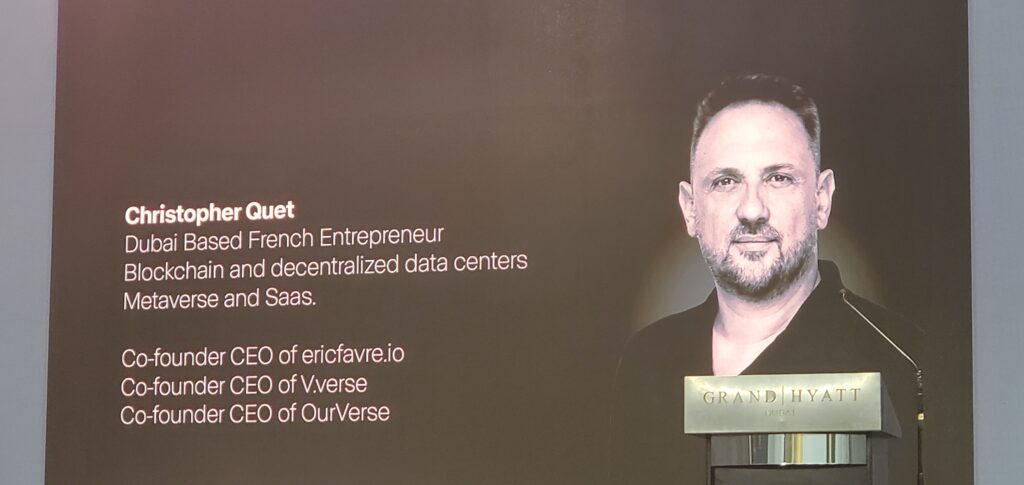
T&I News speaks to the founder and CEO of Vverse Christopher Quet
How Virtual Worlds Are Evolving from Concept to Commercial Reality
The evolution of the internet has entered a new chapter. From static websites to social media platforms, mobile applications, and immersive digital ecosystems, technology continues to reshape how individuals and businesses connect, communicate, and conduct commerce. Today, the next frontier is the metaverse—a digital environment where virtual experiences increasingly mirror, complement, and enhance the physical world.
Among the platforms helping to shape this emerging landscape is VVerse, an innovative metaverse platform designed to empower users, businesses, creators, and organizations to build, interact within, and share customized virtual experiences. As interest in immersive technologies continues to grow, VVerse is positioning itself as a practical gateway into the evolving digital economy.
Rather than viewing the metaverse as a futuristic concept, VVerse focuses on real-world applications that allow businesses and communities to leverage virtual environments for commerce, engagement, collaboration, and entertainment.
Beyond the Hype: A Practical Vision for the Metaverse
For several years, the term “metaverse” has generated significant excitement across the technology sector. While much of the conversation initially centered on gaming, virtual reality, and digital assets, industry leaders increasingly recognize that the true value of the metaverse lies in its practical applications.
Businesses are beginning to explore how immersive digital environments can improve customer engagement, create new revenue streams, facilitate collaboration, and deliver experiences that are difficult to replicate through traditional online platforms.
VVerse embraces this approach by providing sophisticated tools that enable users to create personalized virtual spaces tailored to specific objectives. Whether hosting a virtual conference, launching a digital storefront, showcasing products, or building an interactive community, the platform seeks to make metaverse development accessible and scalable.
Creating a Personalized Digital Presence
One of the defining characteristics of VVerse is its emphasis on customization.
In traditional digital environments, users often operate within predefined templates and limited interaction models. The metaverse introduces the possibility of creating highly personalized experiences that reflect individual identities, brand values, and business objectives.
VVerse enables users to design and customize virtual environments that align with their specific needs. Organizations can create immersive brand experiences, while creators can develop unique digital spaces that foster engagement and interaction.
This level of customization represents a significant shift from conventional websites and social platforms, where user experiences are often constrained by standardized formats.
As digital identity becomes increasingly important, personalized virtual environments may become a central component of how individuals and organizations establish their presence online.
Transforming eCommerce Through Immersive Experiences
One of the most promising applications of metaverse technology lies in eCommerce.
Traditional online shopping has delivered convenience and accessibility, but it often lacks the sensory engagement associated with physical retail environments. Virtual commerce seeks to bridge this gap by creating interactive shopping experiences that combine convenience with immersion.
Through VVerse, businesses can develop virtual stores where customers can explore products, interact with digital representations of merchandise, and engage with brands in entirely new ways.
Consumers are no longer limited to viewing static product images or scrolling through catalogs. Instead, they can navigate immersive environments designed to replicate or enhance physical retail experiences.
This evolution has the potential to transform customer engagement while opening new opportunities for product discovery, brand storytelling, and experiential marketing.
Reinventing Virtual Events and Conferences
The events industry has experienced significant transformation in recent years, driven by digital technologies and changing audience expectations.
Virtual events have become an important component of modern engagement strategies, allowing organizations to reach global audiences while reducing logistical barriers. However, many digital events still struggle to replicate the networking and interaction opportunities associated with in-person gatherings.
VVerse addresses this challenge by creating immersive environments where participants can engage more naturally with speakers, exhibitors, and fellow attendees.
Virtual conferences, trade shows, product launches, and networking events can be hosted within customized digital spaces that facilitate meaningful interaction and collaboration.
For organizers, this creates opportunities to expand audience reach while enhancing engagement and participation.
Digital Exhibitions and Creative Expression
Museums, galleries, artists, and creative organizations are also exploring the possibilities offered by immersive virtual environments.
Digital exhibitions allow creators to reach audiences beyond geographic limitations while experimenting with new forms of artistic presentation and interaction.
VVerse provides a platform where exhibitions can become dynamic experiences rather than static displays. Visitors can explore curated spaces, interact with content, and engage with creators in ways that extend beyond traditional viewing experiences.
This capability is particularly valuable in a globalized digital economy where accessibility and audience reach are increasingly important considerations.
By removing physical barriers, virtual exhibitions enable creative work to be experienced by diverse audiences regardless of location.
The Business Case for Virtual Worlds
As organizations evaluate emerging technologies, a key question remains: what is the business value of the metaverse?
While early discussions often focused on speculation and experimentation, attention is increasingly shifting toward measurable outcomes.
Businesses adopting immersive platforms are exploring applications including customer engagement, employee training, product demonstrations, internal collaboration, education, and community building.
VVerse reflects this transition from concept to implementation by emphasizing practical functionality and real-world use cases.
Organizations can use virtual environments not only to showcase innovation but also to achieve strategic objectives such as increasing engagement, improving customer experiences, and expanding market reach.
As technology adoption grows, virtual environments may become a standard component of digital transformation strategies.
The Future of Digital Interaction
The broader significance of platforms like VVerse extends beyond individual applications.
The internet has continuously evolved toward more interactive and immersive forms of communication. Social media transformed how people connect. Mobile technology changed how they access information. The metaverse may represent the next stage in this progression.
Future digital experiences are likely to become increasingly experiential, combining visual immersion, real-time interaction, artificial intelligence, and personalized environments.
Rather than navigating isolated applications, users may move seamlessly between interconnected digital spaces designed around work, commerce, entertainment, and social interaction.
Platforms capable of supporting these experiences will play an important role in shaping the future digital economy.
Looking Ahead
As immersive technologies continue to mature, the conversation surrounding the metaverse is gradually shifting from possibility to practicality.
Businesses, creators, educators, and organizations are increasingly exploring how virtual environments can create value, foster engagement, and unlock new opportunities for innovation.
VVerse represents a growing movement toward making these capabilities accessible through tools that enable users to build, interact, and share customized digital experiences. By focusing on real-world applications across commerce, events, exhibitions, and community engagement, the platform demonstrates how virtual worlds can evolve beyond experimentation and become meaningful extensions of everyday life.
The future of the internet may not simply be about consuming content. It may be about participating in immersive experiences where physical and digital realities increasingly converge. As this transformation unfolds, platforms such as VVerse are helping define what that future could look like.