New Advanced Air Mobility Initiative Signals Abu Dhabi’s Ambition to Lead the Global Aviation Technology Revolution
The announcement of a strategic partnership between the Abu Dhabi Investment Office (ADIO), the General Civil Aviation Authority (GCAA), and Abu Dhabi Mobility may appear at first glance to be another infrastructure initiative. However, a deeper analysis suggests that Abu Dhabi is positioning itself at the forefront of one of the most transformative shifts in transportation since the advent of commercial aviation.
The agreement, signed under the supervision of the Smart and Autonomous Systems Council and in the presence of Sheikh Hamdan bin Saeed bin Tahnoon Al Nahyan, aims to strengthen the emirate’s role in developing innovative and sustainable aviation technologies.
The agreement, which aims to establish Al Ain as a global centre for Advanced Air Mobility (AAM), signals a broader ambition: transforming the UAE from a consumer of aviation technologies into a designer, manufacturer, regulator, and exporter of next-generation mobility solutions.
The Race for the Skies Has Already Begun
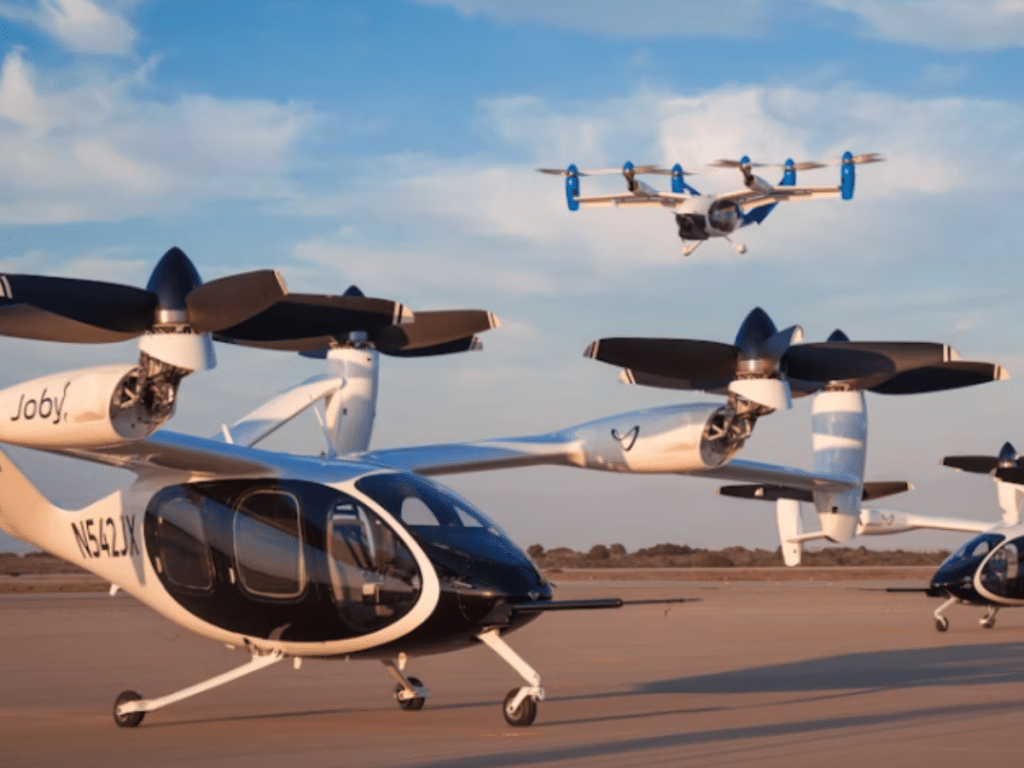
Around the world, governments and technology companies are investing billions of dollars into Advanced Air Mobility systems, including electric vertical take-off and landing (eVTOL) aircraft, autonomous cargo drones, urban air taxis, and intelligent logistics networks.
Industry leaders such as Joby Aviation, Archer Aviation, EHang, Lilium, and Vertical Aerospace are accelerating efforts to commercialize aircraft capable of transforming urban transportation, emergency services, logistics, and regional connectivity.
The challenge facing many nations is not merely developing aircraft but creating the regulatory, certification, testing, and manufacturing ecosystems necessary to support their deployment.
This is where Abu Dhabi’s latest initiative becomes strategically significant.
Why Al Ain Matters
Historically known for its cultural heritage, agriculture, and educational institutions, Al Ain is increasingly emerging as a strategic innovation zone within Abu Dhabi’s long-term economic diversification agenda.
Unlike densely populated urban centres, Al Ain offers extensive land availability, controlled airspace environments, proximity to industrial facilities, and opportunities for large-scale testing and manufacturing operations.
These factors make it an ideal location for creating what could become the Middle East’s first fully integrated Advanced Air Mobility ecosystem.
Saif Mohammed Al Suwaidi, Director-General of the GCAA, said the UAE continues to lead globally in aviation safety and regulation, adding that the partnership will strengthen the country’s ability to certify next-generation aircraft technologies.
The Convergence of AI, Robotics and Aviation
Advanced Air Mobility is not solely an aviation story.
It represents the convergence of several emerging technologies, including artificial intelligence, robotics, autonomous systems, advanced materials, digital twins, sensor networks, battery innovation, and next-generation communications infrastructure.
The involvement of the Smart and Autonomous Systems Council underscores this reality.
Badr Al-Olama, Director-General of ADIO, described advanced air mobility as a key pillar of sustainable innovation, saying Al Ain’s growing ecosystem will help establish a world-class centre for testing, design and manufacturing.
Future air mobility systems will increasingly rely on AI-driven navigation, predictive maintenance, autonomous decision-making, fleet optimization, and real-time traffic management.
In effect, future aircraft may operate as flying computers integrated into broader smart city ecosystems.
This convergence aligns closely with Abu Dhabi’s ambitions to become a global hub for autonomous systems across land, sea, and air domains.
From Smart Cities to Smart Skies
Much of the discussion surrounding smart cities has focused on connected infrastructure, digital government services, and autonomous ground transportation.
Advanced Air Mobility introduces a new dimension: smart skies.
Future urban environments may feature integrated transportation systems where autonomous vehicles, drones, logistics platforms, and air taxis operate within coordinated digital ecosystems.
Dr Abdulla Hamad AlGhfeli, Acting Director-General of Abu Dhabi Mobility, said the collaboration would create a strong regulatory and operational framework to integrate advanced air mobility into Abu Dhabi’s transport system.
The infrastructure and regulatory frameworks being established in Al Ain may therefore serve as a foundation for future mobility applications that extend far beyond passenger transport.
A Strategic Long-Term Bet
While commercial air taxis continue to capture public attention, the real significance of Abu Dhabi’s latest initiative lies in its long-term vision.
The emirate is not merely preparing for the arrival of Advanced Air Mobility—it is positioning itself to help define how the industry develops globally.
If successful, Al Ain could evolve into a regional centre for aviation innovation, autonomous systems development, and next-generation aircraft manufacturing.
In doing so, Abu Dhabi would further strengthen its position within the global technology landscape while creating new pathways for economic diversification, talent development, and international investment.
The skies above Al Ain may soon become more than a transportation corridor—they could become a testing ground for the future of mobility itself.