Neom is quietly swapping its futuristic city dreams for factories, ports and data centres — and if you’re watching Saudi Arabia’s $500bn gigaproject from the UAE or anywhere in the GCC, this shift matters. The headline-grabbing Line and the Trojena winter games have slowed down, but the industrial side of Neom is moving fast, with billions of dollars already spent and more projects lining up.
Why Neom is pivoting from futuristic city to industrial powerhouse
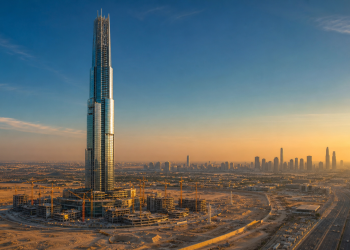
For the last couple of years, “reprioritisation” has been the word everyone in Saudi Arabia keeps using. Nowhere is that clearer than at Neom. The Line, the vertical city meant to house millions, has scaled back. The 2029 Asian Winter Games planned for the mountain resort Trojena has been postponed. Both stories made global headlines, and not always the good kind.
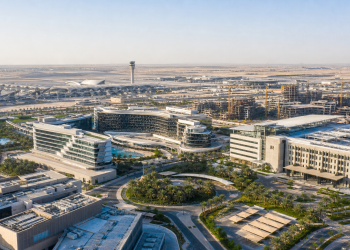
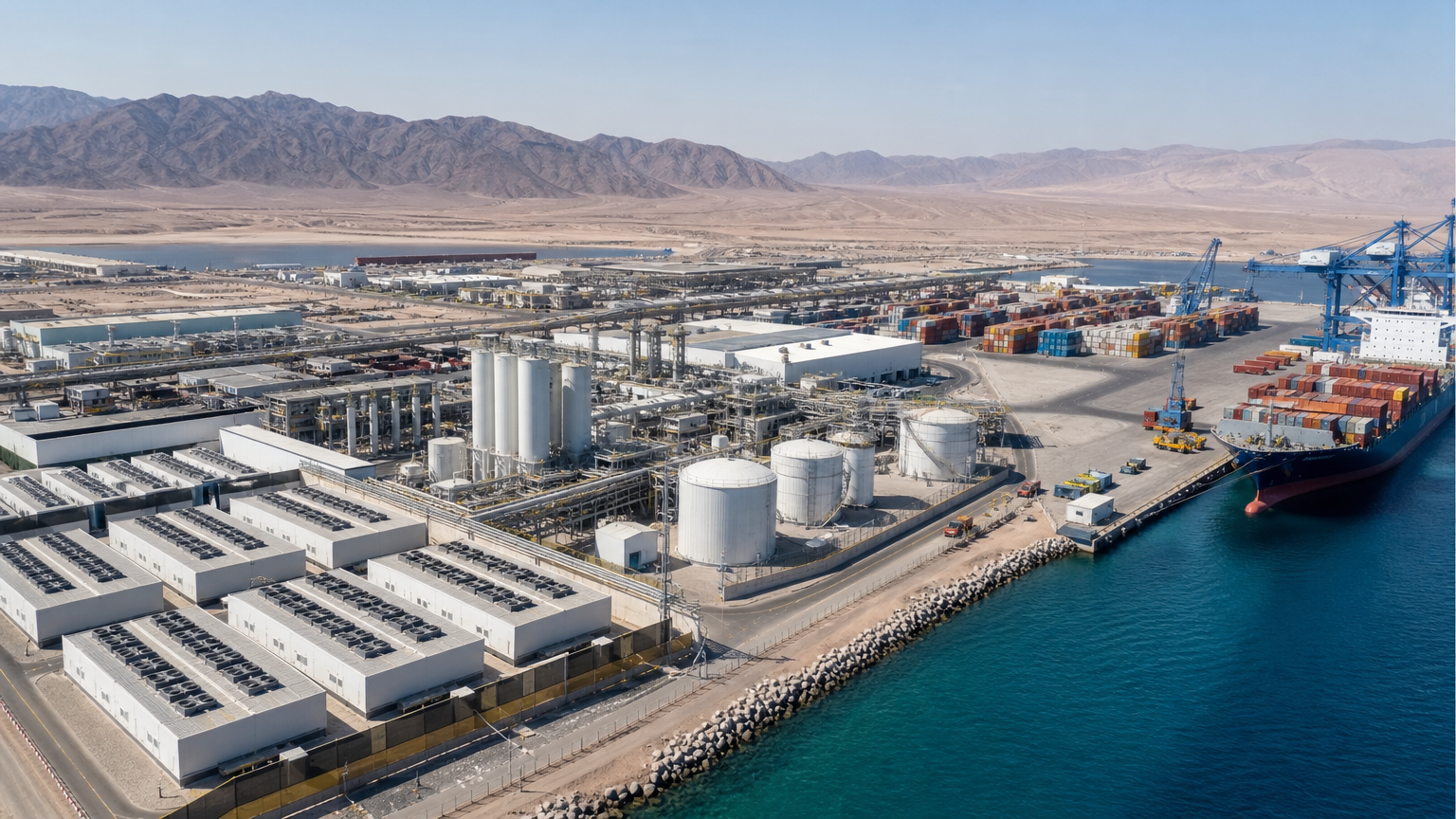
But while those two projects grabbed attention, something else has been quietly gathering pace: Oxagon, Neom’s industrial and logistics hub. It’s now become the project’s flagship development. And unlike some of Neom’s more conceptual ambitions, this part is already producing real, finished infrastructure.
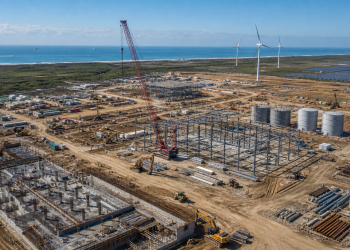
The clearest proof came in August, when the $8.5bn Neom Green Hydrogen project was commissioned. It’s described as Neom’s most significant completion to date — a genuinely large-scale industrial asset, not a rendering or a masterplan. For GCC investors and businesses watching how Saudi Arabia is executing its giga-projects, this is the kind of milestone that signals the industrial bet is paying off, even as the glossier city plans slow down.
What this means for AI, jobs and trade across the GCC
There’s more coming at Oxagon beyond hydrogen. An AI data-centre campus, developed by Humain and DataVolt, has broken ground on its first phase — 100 megawatts of capacity backed by $5bn in investment, targeted to go live in 2028. For a region racing to build out AI infrastructure, this is one more sign that Saudi Arabia wants a serious seat at that table, alongside the UAE’s own data-centre and AI ambitions.
Neom is also building out the logistics backbone to support all this industry. It’s issued an expression of interest for a rail line connecting the Port of Neom to Saudi Arabia Railways’ North-South network. Tenders are out for an industrial wastewater plant and an upgrade to Highway 55. And the port itself is working toward handling 1.5 million TEUs (twenty-foot equivalent units, the standard measure for shipping containers) by 2030 — a target that would put it firmly on the regional trade map.
This industrial build-out isn’t happening in isolation. Saudi Arabia’s broader projects market is holding up despite regional conflict-related disruption, with $68bn in contract awards recorded so far this year. The kingdom’s power sector is diversifying too, with companies like Aljomaih, EDF and Kepco more than tripling their net generation capacity in recent years, even as Acwa Power keeps its position as the market leader. For businesses across the UAE and GCC that supply, finance or partner with Saudi contractors, this steady flow of awards is a reminder that the opportunity hasn’t dried up — it’s just shifting shape, from spectacle projects to industrial fundamentals.
That shift matters if you’re trying to read where the real money and opportunity in Saudi Arabia’s giga-projects actually sits right now. The Line and Trojena may still dominate headlines when they make news, but the port, the hydrogen plant and the AI campus at Oxagon are where contracts, jobs and investment are actually landing today. For more stories tracking how technology and major projects are reshaping the region, check out TAI News’s innovation coverage.
Worth watching next: whether the Port of Neom hits its 1.5 million TEU target by 2030, how fast the Humain-DataVolt AI campus scales past its first 100MW phase, and whether Saudi Arabia’s $68bn pace of contract awards holds steady through the rest of the year. Details first reported by MEED.