At almost every moment in modern life, a silent partnership is unfolding between humans and machines. A doctor reads an X-ray supported by an algorithm. A farmer studies satellite data before planting crops. A musician experiments with AI-generated melodies. Digitalization—once merely a technical term—has become the defining force of our age.
Yet beneath the surface of this transformation lies a profound question: Is digitalization replacing humans, or empowering them to overcome the odds of an increasingly complex world?
The answer may determine not only the future of work, but the future of human identity itself.
The Great Anxiety of the Digital Age
Every technological revolution brings a wave of fear. When mechanization swept through factories in the 19th century, workers feared losing their livelihoods to machines. When computers entered offices in the late 20th century, clerks and typists wondered whether they would become obsolete.
Today, the anxiety has returned—this time amplified by artificial intelligence.
Algorithms can write articles, generate art, diagnose diseases, and even compose symphonies. Digital platforms automate financial trading, optimize logistics networks, and increasingly make decisions once reserved for human judgment.
For some observers, this appears to be a zero-sum equation: digitalization versus humans.
If machines become faster, smarter, and cheaper, what role remains for people?
But history suggests the story is rarely that simple.
Technology Has Always Been a Partner
The paradox of technological progress is that it simultaneously replaces certain human tasks while expanding human potential in unexpected ways.
Consider aviation. When autopilot systems were first introduced, critics warned that pilots would become irrelevant. Instead, aviation safety improved dramatically because technology augmented human decision-making rather than eliminating it.
The same pattern appears across industries.
In medicine, digital imaging systems analyze scans with extraordinary precision. Yet the final diagnosis still relies on the intuition and experience of a physician.
In finance, algorithms can process millions of transactions per second. But strategic investment decisions often depend on human judgment, risk perception, and ethical considerations.
Digitalization, in other words, rarely removes humans entirely. Instead, it reshapes what humans do best.
The Rise of Human–Machine Collaboration
The real transformation of the digital age may not be automation but collaboration.
Instead of humans competing against machines, the most powerful systems combine both. This concept—often called “augmented intelligence”—recognizes that machines excel at processing data, while humans excel at context, creativity, and moral reasoning.
The partnership is already visible in many fields.
Architects use advanced design software that generates thousands of structural possibilities in seconds. The architect then selects and refines the most promising options.
Scientists rely on AI systems to analyze enormous datasets in genomics or climate modeling. But the interpretation of those patterns—the “why” behind the data—remains a human endeavor.
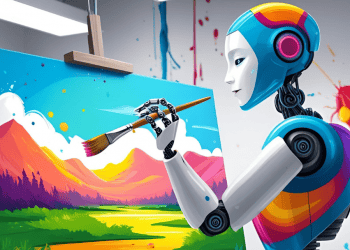
Even in art, digital tools are expanding creative horizons. Musicians collaborate with AI to explore new sounds. Filmmakers use digital environments to visualize entire worlds before cameras begin rolling.
Rather than replacing creativity, technology is becoming its amplifier.
The Real Battle: Adaptation
If digitalization does not necessarily eliminate humans, where does the tension arise?
The challenge lies in adaptation.
Technological change often moves faster than social institutions—education systems, labor markets, and regulatory frameworks. When new tools appear, societies struggle to adjust.
Jobs evolve. Skills become obsolete. Entire industries transform.
The printing press reshaped communication. Electricity reorganized cities and industries. The internet transformed global commerce.
Digitalization, driven by artificial intelligence and global connectivity, may be even more disruptive.
The question is not whether humans will survive this transformation—history suggests we will—but whether we will adapt quickly enough to harness its benefits.
The Human Advantage
In discussions about technology, it is easy to forget the qualities that remain uniquely human.
Machines can analyze patterns, but they lack empathy.
They can generate text, but they do not experience meaning.
They can simulate conversation, but they do not possess consciousness.
Human intelligence is not merely computational. It is emotional, social, ethical, and cultural. It includes imagination, curiosity, and moral responsibility.
These traits are difficult—perhaps impossible—to digitize.
In fact, as automation spreads, these human qualities may become more valuable, not less.
Leadership, creativity, empathy, and critical thinking are increasingly the skills that differentiate humans in a digital world.
Digitalization Against the Odds
Seen from another perspective, digitalization may be humanity’s most powerful tool for confronting the challenges of the 21st century.
Consider the scale of those challenges: climate change, global health crises, resource scarcity, and rapidly growing urban populations.
Traditional approaches may struggle to address problems of such magnitude. Digital technologies, however, offer unprecedented capabilities.
Artificial intelligence can accelerate scientific discovery.
Blockchain technologies may reshape trust in global transactions.
Smart infrastructure can optimize energy use in cities.
Digital platforms connect billions of people, enabling collaboration across continents.
In this sense, the real equation may not be digitalization versus humans, but humans with digitalization versus the odds facing our civilization.
The Risk of Losing the Human Core
Yet optimism must be balanced with caution.
Technology is not inherently benevolent. Its impact depends on how societies choose to deploy it.
Digital platforms can empower communication, but they can also spread misinformation.
Artificial intelligence can support decision-making, but it can also amplify bias if poorly designed.
Automation can increase productivity, but it can widen inequality if its benefits are concentrated among a small number of companies or individuals.
Perhaps the greatest risk is not that machines will replace humans, but that societies will forget the human values that technology should serve.
Digitalization must remain a tool, not a master.
Education for the Digital Era
One of the most critical responses to digital transformation lies in education.
Traditional educational systems were designed during the industrial era, preparing individuals for stable careers and predictable professions.
But the digital age demands continuous learning.
Workers will need to reskill multiple times during their careers. Universities must teach not only technical knowledge but adaptability, creativity, and interdisciplinary thinking.
In a world where algorithms can instantly retrieve information, the most valuable human skill may be the ability to ask the right questions.
A New Social Contract
Beyond education, societies may need to rethink the relationship between technology, work, and economic security.
Automation could increase productivity dramatically, but it might also disrupt traditional employment structures. Governments and businesses may need to explore new frameworks—from lifelong learning programs to revised social safety nets—to ensure that technological progress benefits everyone.
The digital revolution should not be judged solely by how efficiently it produces wealth, but by how fairly that wealth is distributed.
The Future: Partnership, Not Rivalry
The narrative of “humans versus machines” is powerful, but it is ultimately misleading.
Technology has never been purely a competitor. It has always been an extension of human capability—from the first stone tools to the most advanced neural networks.
Digitalization is simply the latest chapter in that long story.
The real challenge is ensuring that this partnership strengthens rather than weakens humanity.
If managed wisely, digital tools could help solve problems once considered impossible. They could expand human creativity, deepen global collaboration, and open new frontiers of knowledge.
But achieving that future requires conscious choices—ethical design, responsible governance, and a clear understanding that technology exists to serve human flourishing.
Conclusion
The debate between digitalization versus humans may ultimately be the wrong question.
The more important question is whether humans will learn to harness digitalization effectively enough to confront the unprecedented challenges ahead.
Because the future will not belong to machines alone.
Nor will it belong to humans who reject technology.
It will belong to those who understand how to combine human imagination with digital power—and together face the odds of a rapidly changing world.