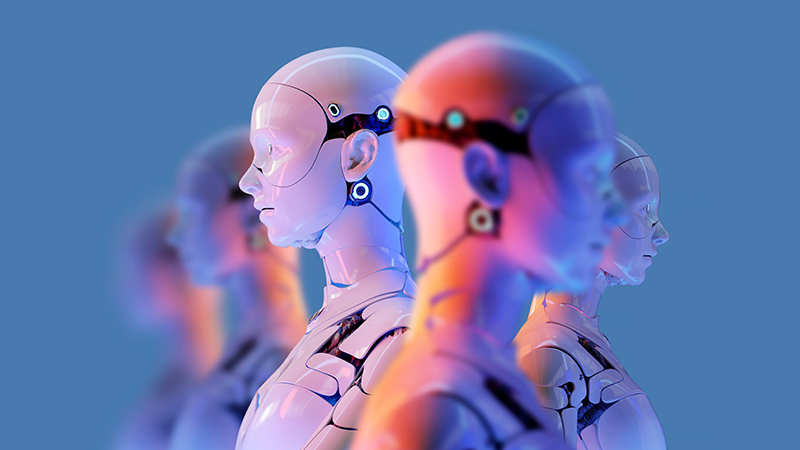
In a brightly lit robotics lab in Istanbul, a humanoid robot bows politely before greeting a visitor. Its movements are measured, its voice calm, its gaze almost attentive. Across the room, engineers observe closely, not just evaluating its technical performance, but studying something more elusive: the human reaction. Does the visitor feel comfortable? Curious? Uneasy? This moment—quiet, controlled, and deeply symbolic—captures the central question of a rapidly approaching future: what happens when humans begin to share their world with machines that resemble them?
Humanoid robots, once confined to the realm of science fiction, are steadily becoming part of everyday reality. Designed to mimic the human body in form and function, these machines are built to operate in environments shaped by human needs—homes, hospitals, offices, and public spaces. But their significance goes beyond practicality. Humanoids represent a technological ambition that is as philosophical as it is functional: to create machines that not only work like us, but also, in some ways, relate to us.
This ambition sits at the intersection of engineering, artificial intelligence, and human psychology. Advances in AI have given humanoids the ability to process language, recognize faces, and respond to emotional cues. Improvements in hardware have made their movements more fluid and their presence more lifelike. Together, these developments are narrowing the gap between human and machine interaction, transforming it from a mechanical exchange into something that can feel, at times, almost social.
Yet this transformation raises profound questions about the nature of humanity itself. For centuries, humans have defined themselves in contrast to their tools. A hammer does not think; a computer does not feel. But what happens when a machine can simulate conversation, interpret emotions, and adapt its behavior in real time? Even if these abilities are rooted in algorithms rather than consciousness, they challenge intuitive distinctions between human and artificial.
One of the most immediate impacts of humanoid robots lies in the workplace. As industries grapple with labor shortages and rising demands for efficiency, humanoids are increasingly seen as a versatile solution. Unlike traditional machines, which are designed for specific tasks, humanoids can adapt to a range of activities. They can lift, carry, assemble, and even interact with customers.
In sectors such as healthcare, this adaptability is particularly valuable. A humanoid robot can assist with physically demanding tasks, such as lifting patients, while also engaging in basic communication. For overburdened healthcare workers, this could provide much-needed relief. For patients, it introduces a new kind of interaction—one that is neither fully human nor entirely mechanical.
But the integration of humanoids into human-centered professions also raises concerns. Care, for instance, is not just a set of tasks; it is a relationship built on empathy, trust, and understanding. While a robot can be programmed to simulate empathy—through tone of voice, facial expressions, or verbal responses—it does not experience emotions. This distinction matters, particularly in contexts where emotional authenticity is essential.
The question, then, is not simply whether humanoids can perform certain roles, but whether they should. Replacing human interaction with machine-mediated engagement may improve efficiency, but it risks altering the quality of human experience. In elder care, for example, a humanoid companion might alleviate loneliness in the short term, but it could also reduce opportunities for meaningful human connection.
At the same time, it would be simplistic to dismiss the potential benefits of humanoid companionship. In a world where social isolation is a growing concern, particularly among aging populations, even simulated interaction can have positive effects. Studies have shown that people often respond emotionally to robots, especially those designed with human-like features. A humanoid that listens, responds, and remembers preferences can provide a sense of presence that is difficult to achieve with other forms of technology.
This emotional dimension highlights a key aspect of human–humanoid interaction: perception. Humans are wired to recognize patterns associated with life—faces, voices, gestures—and to respond accordingly. Humanoid robots leverage this tendency, creating interactions that feel intuitive. But this also introduces the risk of misperception. When a machine appears human-like, people may attribute to it qualities it does not possess, such as understanding, intention, or moral awareness.
This phenomenon, often referred to as anthropomorphism, is not inherently problematic. It can make technology more accessible and easier to use. However, it becomes ethically complex when it leads to misplaced trust or emotional dependency. A humanoid designed to appear caring could influence behavior in subtle ways, from encouraging certain decisions to shaping opinions. Ensuring that users understand the limits of these systems will be crucial.
Another dimension of the human–humanoid relationship is control. Traditional machines are tools, operated directly by humans. Humanoid robots, particularly those powered by advanced AI, operate with a degree of autonomy. They can make decisions based on data, adapt to new situations, and even learn from experience. This autonomy raises questions about responsibility. If a humanoid makes a mistake, who is accountable—the developer, the owner, or the machine itself?
Legal and regulatory frameworks are still catching up to these questions. As humanoids become more integrated into society, there will be a growing need for clear guidelines on their use, capabilities, and limitations. This includes not only safety standards, but also ethical considerations, such as how they should interact with vulnerable populations.
The economic implications are equally significant. The widespread adoption of humanoid robots could reshape labor markets, particularly in roles that involve routine physical or cognitive tasks. While this may lead to increased productivity, it also raises concerns about job displacement and inequality. Workers whose roles are replaced by humanoids may face challenges in transitioning to new forms of employment.
However, history suggests that technological change also creates new opportunities. The rise of humanoids could generate demand for new skills, from robot maintenance and programming to human–robot interaction design. The challenge will be ensuring that these opportunities are accessible and that the transition is managed in a way that minimizes disruption.
Culturally, humanoids are likely to have a profound impact. They are not just tools, but symbols—representations of human ingenuity and ambition. Their presence in everyday life will influence how people think about technology, identity, and even themselves. In literature and film, humanoid robots have long been used to explore questions about consciousness, morality, and the nature of existence. As these machines become real, those questions will move from fiction to lived experience.
One of the most intriguing aspects of this shift is how it may change human behavior. Interaction is a two-way process; as humans adapt to humanoids, humanoids are also designed to adapt to humans. Over time, this mutual adjustment could lead to new social norms. People may become more comfortable giving instructions to machines, or more accustomed to receiving assistance from non-human agents. At the same time, expectations of technology may increase, with users demanding more natural and responsive interactions.
There is also the possibility that humanoids could influence how humans relate to each other. If machines can provide certain forms of interaction—information, assistance, even companionship—what role do human relationships play? Rather than replacing human connection, humanoids may reshape it, shifting the balance between independence and interdependence.
Environmental considerations add another layer to the discussion. The production and operation of humanoid robots require resources, including energy and raw materials. As their use expands, it will be important to consider their environmental footprint and to develop sustainable practices. This includes not only efficient design, but also responsible disposal and recycling of components.
Despite the many challenges, the integration of humanoids into human society is not a distant possibility; it is an ongoing process. Pilot programs, prototypes, and early deployments are already providing insights into how these machines function in real-world settings. These experiences will be critical in shaping future development, highlighting both the potential and the limitations of current technology.
Ultimately, the relationship between humans and humanoids is not defined solely by what machines can do, but by how humans choose to engage with them. Technology does not exist in a vacuum; it reflects the values and priorities of the societies that create it. Decisions about how humanoids are designed, deployed, and regulated will shape their impact on human life.
The future of humanoids and humans is not a story of replacement, but of coexistence. It is about finding ways for machines to augment human capabilities without diminishing what makes human life meaningful. This requires a careful balance—embracing innovation while preserving the qualities that define human experience.
In the end, humanoid robots serve as a mirror, reflecting both the possibilities and the tensions of technological progress. They embody a desire to extend human potential, but also a need to understand its limits. As they become more present in daily life, they will challenge assumptions, provoke debate, and inspire new ways of thinking about what it means to be human.
The path forward is neither simple nor predetermined. It will require collaboration across disciplines, from engineering and design to ethics and public policy. It will demand ongoing dialogue, not only among experts, but within society as a whole. And it will depend on a willingness to confront difficult questions about identity, agency, and the role of technology in human life.
Humanoids are not just machines of the future; they are participants in an evolving story—one in which humans remain central, not because they are unmatched, but because they are the ones writing the narrative.