From Generative AI to Economic Transformation, Experts Examine the Opportunities and Risks of the Intelligence Age
Artificial intelligence is rapidly moving from research laboratories into the center of global economic, political, and business strategy. What was once considered a future technology is now reshaping industries, redefining productivity, and influencing how nations compete in the digital economy.
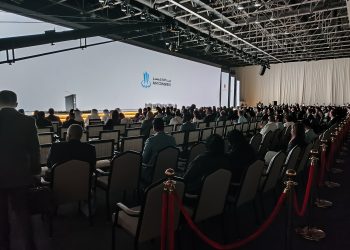
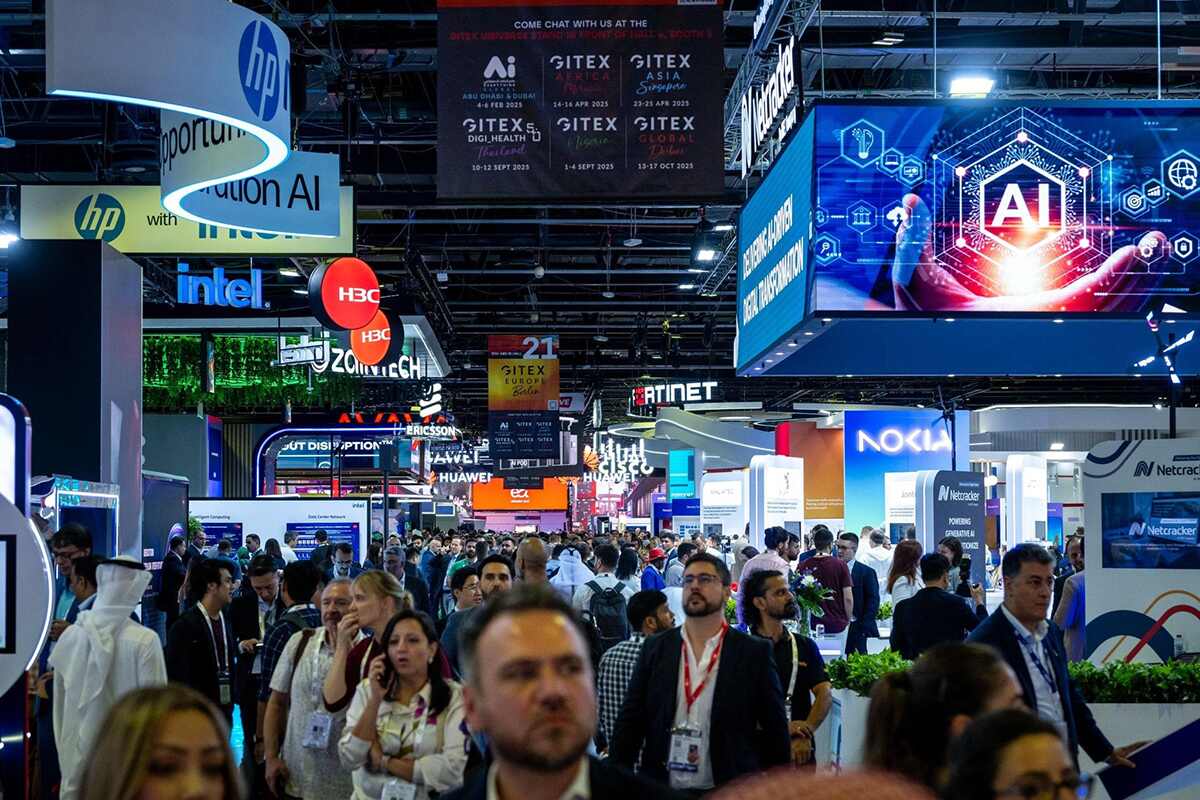
These themes dominated a high-profile discussion at GITEX Dubai, where some of the world’s leading voices in technology, finance, and public policy explored the transformative impact of artificial intelligence and what lies ahead for governments, businesses, and society.
The conversation brought together H.E. Omar Sultan Al Olama, UAE Minister of State for Artificial Intelligence, Digital Economy and Remote Work Applications; Emad Mostaque, Co-Founder and CEO of Stability AI; Mohamed Gouled, Vice President of the International Finance Corporation (IFC); and David Rowan, Founding Editor-in-Chief of WIRED, who moderated the discussion.
The Arrival of the Intelligence Economy
Artificial intelligence is increasingly being viewed as a foundational technology comparable to electricity, the internet, and mobile communications. The panel emphasized that AI’s impact extends far beyond automation and efficiency gains.
Rather than simply replacing tasks, AI is creating entirely new economic possibilities. From healthcare and education to finance and manufacturing, intelligent systems are enabling organizations to solve problems at unprecedented speed and scale.
Participants agreed that nations that successfully embrace AI innovation will be better positioned to compete in the global economy over the coming decades.
The UAE’s Ambition to Lead
The UAE has emerged as one of the most proactive nations in developing a comprehensive artificial intelligence strategy. Under the leadership of H.E. Omar Sultan Al Olama, the country has invested heavily in digital infrastructure, talent development, and technology adoption.
The discussion highlighted the importance of creating regulatory environments that encourage innovation while ensuring responsible development. The UAE’s approach seeks to position the country not only as a consumer of technology but also as a global hub for AI research, entrepreneurship, and investment.
Dubai’s growing ecosystem of startups, investors, and technology companies reflects this ambition and is attracting increasing international attention.
Generative AI Changes the Rules
Few technological developments have captured global attention as quickly as generative AI.
Emad Mostaque discussed how advances in large language models and generative systems are dramatically reducing barriers to creativity, software development, content creation, and innovation. Technologies that once required specialized expertise are becoming accessible to a far broader population.
This democratization of intelligence has the potential to unlock unprecedented levels of productivity and entrepreneurship.
However, participants also acknowledged that the pace of change presents significant challenges. Questions surrounding governance, transparency, misinformation, intellectual property, and workforce adaptation remain central to ongoing debates.
AI and Economic Inclusion
One of the most compelling themes of the discussion focused on the potential for AI to drive inclusive economic growth.
Mohamed Gouled emphasized that emerging markets stand to benefit significantly from AI-driven innovation if the necessary infrastructure, investment, and education systems are put in place.
Artificial intelligence can help bridge development gaps by improving access to healthcare, financial services, education, and government services. For developing economies, the technology represents an opportunity to leapfrog traditional stages of economic development.
However, realizing these benefits will require coordinated efforts among governments, international institutions, investors, and the private sector.
Innovation Requires Responsibility
While optimism surrounding AI remains strong, the panel stressed the importance of responsible innovation.
As AI systems become more capable and widely adopted, policymakers and industry leaders face growing pressure to establish ethical frameworks that balance innovation with accountability.
The discussion explored the need for transparency, human oversight, data governance, and international cooperation to ensure that AI technologies serve the broader interests of society.
The challenge is not whether AI will transform industries and economies, but how that transformation can be guided in a way that maximizes benefits while minimizing risks.
The New Competitive Advantage
A recurring theme throughout the conversation was that the future competitive advantage of nations and businesses will increasingly depend on their ability to leverage intelligence rather than simply capital or labor.
Organizations capable of integrating AI into decision-making, operations, and customer experiences are likely to outperform those that fail to adapt. Similarly, countries that invest early in AI capabilities may gain significant economic advantages in the decades ahead.
The panel suggested that AI should be viewed not merely as a technological tool but as a strategic asset capable of reshaping entire industries and economies.
Looking Ahead
The discussion concluded with a shared sense that the world is entering a new era defined by intelligent systems and rapid technological advancement.
Artificial intelligence is no longer a distant possibility. It is becoming a central force shaping business models, government policies, investment strategies, and everyday life.
For Dubai and the UAE, the opportunity lies in positioning themselves at the forefront of this transformation by fostering innovation, attracting global talent, and creating an ecosystem where emerging technologies can thrive.
As conversations at GITEX demonstrated, the future of AI will not be determined solely by technology companies. It will be shaped by collaboration between governments, investors, entrepreneurs, and society itself.
The intelligence economy has begun, and the decisions made today will influence how its benefits are distributed for generations to come.