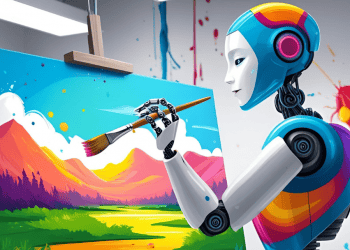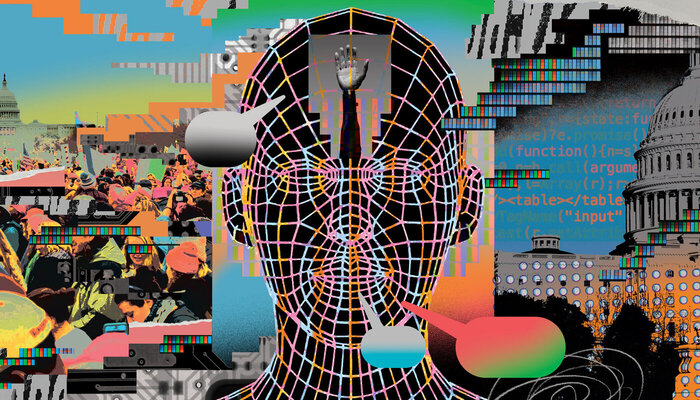
The proliferation of synthetic videos could—at least for some media audiences—be an incentive for more conscious information consumption. Understanding that artificial intelligence can realistically visualize virtually any story can “rationalize” perception, gradually reducing the emotional element. However, other scenarios cannot be ruled out, in which awareness of the inherent implausibility of content will not be a barrier to its consumption.
On September 11, 2001, millions of people around the world witnessed an unprecedented event in real time: the destruction of New York’s Twin Towers, one of the most potent symbols of American power, in a terrorist attack remarkable for its audacity and brutality. The tragedy not only reshaped global politics and homeland security but also reaffirmed the central role of visual media in shaping public perception. At the time, television—the dominant and most advanced medium—delivered the images that served as the audience’s primary benchmark of truth. “I saw it with my own eyes” carried the weight of irrefutable fact. Victor Pelevin’s seminal novel Babylon had already been written by then, yet its dark satire on television and manufactured reality was still perceived as psychedelic exaggeration. Today, it reads as a prescient vision of the future.
A quarter of a century later, visual content remains dominant, but both its sources and its relationship to truth have changed profoundly. First, content creation ceased to be the exclusive domain of professionals. The proliferation of mobile devices in the first two decades of the 21st century triggered an explosion of user-generated material. Coupled with increasingly affordable broadband and mobile internet, video-sharing platforms turned the web into the primary distribution channel. Meanwhile, online personalities and influencers emerged as major news sources in their own right. According to the Reuters Institute’s 2025 Digital News Report, the proportion of users accessing news via social media and video networks in the United States (54%) overtook both TV news (50%) and news websites/apps (48%) for the first time.
The third decade of the century has been defined by artificial intelligence and its unprecedented ability to generate hyper-realistic yet entirely synthetic images and videos. As one large language model asked to discuss this article observes, generative AI “not only blurs the line between the real and the constructed, but renders that line virtually imperceptible to human judgment.” Even allowing for the AI’s characteristic overconfidence, the warning is well-founded.
Users—who now function as both viewers and readers—have more reason than ever to doubt what they see. Traditional manipulation techniques such as montage and selective editing are being eclipsed by increasingly sophisticated deepfakes. Those audiences skilled in fact-checking either begin to seek confirmation/refutation of what they see, or adopt a hypercritical stance: any video content, especially if it goes viral, begins to be perceived as potentially fake.
At the same time, many others continue to consume even blatantly inauthentic content uncritically. As Yury Kolotaev has noted in his article on AI-generated spam, “truth is now defined not as what corresponds to reality, but as what is emotionally appealing.” However, confirmation of pre-existing beliefs has always mattered more to most people than objective truth. Consciously or not, users increasingly curate their own digital bubbles, in which visual reinforcement of what they “already know” is welcomed regardless of authenticity. Another significant shift is the rise of short-form video as the dominant format for information consumption, especially among younger audiences. Recent studies have documented its negative effects on attention span and cognitive processing—creating fertile ground for manipulation.
However, two important caveats must be made. The human inclination toward confirmation bias was described centuries ago by Francis Bacon in his Novum Organum: “The human understanding, when it has once adopted an opinion… draws all things else to support and agree with it.” And moral panics over new media—or even media as such—are hardly new. In Plato’s Phaedrus, Socrates criticizes writing itself for weakening memory and offering only the appearance of wisdom: “He would be a very simple person … who should leave in writing or receive in writing any art under the idea that the written word would be intelligible or certain” . Every subsequent technology—printing, radio, television—triggered similar fears of intellectual degradation, with anxiety specifically focused on the expected decline in human cognitive abilities.
“Since such predictions have generally failed to materialize, it can be assumed that artificial intelligence will not lead to a fundamental change in human nature—but it is quite clear that it will create both new opportunities and unprecedented risks.”
Returning to visual content, the proliferation of synthetic videos could—at least for some media audiences—be an incentive for more conscious information consumption. Understanding that artificial intelligence can realistically visualize virtually any story can “rationalize” perception, gradually reducing the emotional element.
However, other scenarios cannot be ruled out, in which awareness of the inherent implausibility of content will not be a barrier to its consumption. A significant trend of the current era is news fatigue and the increasing number of people consciously avoiding it. According to the Digital News Report, the three main reasons for people to avoid news are that news has a negative effect on their mood (39%), they are worn out by the amount of news (31%), and there is too much coverage of conflict/war (30%). The share of those avoiding news increases sharply among audiences under 35, with news being too hard to follow or understand as a key reason. Stimulating interest in news itself may well become a key challenge for the media of the future, and it’s not difficult to imagine the generation of synthetic content tailored to the interests (and cognitive abilities) of a specific user without negatively impacting their mood.
However, predicting the direction of media evolution is a rather thankless task. New technologies don’t displace old ones, but rather complement them. The decline in the role of “yesterday’s” media—such as radio, television, and, ultimately, newspapers—is occurring, albeit extremely slowly. Social media and video hosting sites, having experienced explosive growth at the beginning of the last decade, are now in a phase of stable development. As for artificial intelligence, we are only just beginning. One thing is certain: no matter how user preferences and information consumption patterns change, the influence of platforms equipped with the technologies to deliver content will only grow, as will the resistance from governments seeking to curb that influence.