The fusion energy sector has crossed a significant financial threshold, with a growing roster of startups now reporting cumulative funding in excess of $100 million each, according to industry tracking cited by TechCrunch. The milestone underscores a broader shift in investor appetite, as venture capital, sovereign funds and strategic energy players increasingly treat fusion not as a speculative science project but as a credible long-term bet on the future of power generation.
For decades, nuclear fusion — the process that powers the sun, in which light atomic nuclei combine to release enormous amounts of energy — was considered a research pursuit confined to government laboratories and multinational consortia. That has changed markedly over the past several years, as a wave of privately backed companies has emerged, each pursuing distinct reactor designs and confinement technologies with the shared goal of demonstrating net energy gain and, eventually, commercial-scale electricity production.
The fact that multiple companies have now individually raised nine-figure sums signals that institutional investors are prepared to fund fusion development over long time horizons, despite the technology remaining pre-commercial and the timeline to grid-scale deployment still uncertain. Backers in this space span traditional venture capital firms, corporate strategic investors from the energy and technology sectors, and increasingly, state-linked and sovereign capital seeking early exposure to a potential future pillar of the global energy mix.
Why the Gulf Should Be Watching
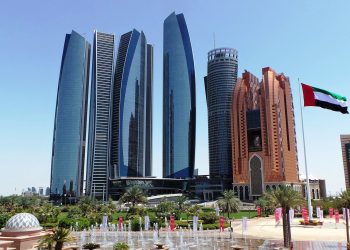
The surge in fusion financing carries direct relevance for the UAE and wider GCC region, where sovereign wealth funds and state energy companies have been actively diversifying investment portfolios beyond traditional oil and gas holdings. Gulf-based investors have in recent years shown growing interest in frontier energy technologies, including hydrogen, advanced nuclear, and carbon capture, as part of broader economic diversification strategies tied to national visions in Saudi Arabia, the UAE and Qatar.
Fusion energy, if commercialized, would offer a low-carbon, high-density power source that could complement regional efforts to meet rising domestic electricity demand while supporting climate commitments made ahead of and following the UAE’s hosting of COP28. The Gulf’s sovereign funds — among the largest pools of long-duration capital globally — are well positioned to participate in exactly the kind of patient, high-risk, high-reward funding rounds that fusion developers require, given the technology’s extended development timelines relative to conventional energy projects.
Regional energy companies have also been expanding research partnerships and innovation arms focused on next-generation power technologies, positioning themselves to engage with fusion developers as the sector matures. Should any Gulf-based investors or state entities take direct equity stakes in fusion startups, it would mark a notable extension of the region’s energy diversification strategy into an area still considered experimental by much of the global energy establishment.
Analysts tracking the sector note that the concentration of large funding rounds among a relatively small group of companies reflects both the high capital intensity of fusion research — which often requires specialized facilities, materials and engineering talent — and investors’ preference for backing ventures perceived to have the clearest technical and commercial pathways. As more capital flows into the space, competition among developers to demonstrate technical milestones is expected to intensify, potentially accelerating timelines that have historically been measured in decades rather than years.
For now, fusion remains a pre-revenue, pre-commercial industry, and no reactor design has yet achieved sustained, grid-ready power output. But the scale of recent fundraising suggests investors, including those with Gulf ties, are increasingly willing to treat fusion as a legitimate long-term component of the global energy transition rather than a fringe scientific pursuit.