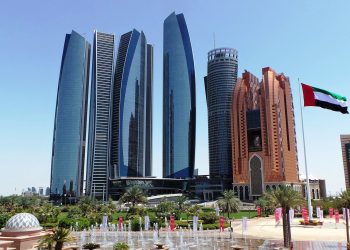
Gulf investors and international asset managers are continuing to watch the Middle East as one of the more resilient regions for capital deployment, even as global markets navigate uncertainty around interest rates, energy prices and geopolitical tension. The United Arab Emirates, alongside Saudi Arabia and Qatar, has positioned itself as a preferred destination for both institutional and private capital, drawing on sovereign wealth, sizeable infrastructure programmes and a policy environment designed to attract foreign direct investment.
Diversification Remains the Dominant Theme
Across the Gulf Cooperation Council, diversification away from hydrocarbon revenue continues to shape how sovereign funds and private investors allocate capital. Abu Dhabi and Dubai have both expanded their focus on technology, logistics, renewable energy, tourism and financial services, seeking to reduce dependence on oil price cycles while building sectors that can sustain long-term growth. This shift has been reinforced by government-led initiatives aimed at easing business licensing, expanding free zones and strengthening regulatory frameworks for emerging asset classes, including digital assets and private credit.
Regional sovereign wealth vehicles have also broadened their international footprint, taking stakes in sectors ranging from clean energy to advanced manufacturing and artificial intelligence infrastructure. Analysts covering the wider investment landscape note that Gulf capital has become increasingly influential in shaping deal flow well beyond the region, with UAE-based funds and family offices participating in cross-border transactions across Europe, Asia and North America. For UAE residents and Gulf-based businesses, this growing international exposure translates into greater access to global opportunities, but it also means local markets are more closely tied to swings in global risk sentiment than in previous decades.
What It Means for UAE and GCC Stakeholders
For everyday investors, business owners and expatriates based in the UAE, the broader trend underscores why local economic policy continues to prioritise stability and predictability. A steady flow of foreign capital into real estate, financial services and technology has helped underpin non-oil economic activity in Dubai and Abu Dhabi, while regulatory efforts to support fintech, venture capital and green finance aim to keep the country competitive against other emerging investment hubs in Asia and Europe.
Market participants in the region are also monitoring how monetary policy shifts elsewhere, particularly moves by major central banks, could influence capital flows into Gulf assets. Because most GCC currencies, including the UAE dirham, are pegged to the US dollar, changes in US interest rate policy tend to filter directly into regional borrowing costs and liquidity conditions, making this an area of continued attention for banks, developers and institutional investors operating across the Emirates.
While specific transaction details and updated figures for the latest reporting period were not immediately available, the broader direction of travel remains consistent with recent years: Gulf economies are working to deepen and diversify their investment base, attract long-term strategic capital, and position local markets as credible alternatives to more traditional financial centres. For UAE and wider GCC audiences, that positioning carries direct implications, from job creation in emerging sectors to the pricing of local assets and the pace at which new investment vehicles, from private equity funds to digital asset platforms, become available domestically.
As global economic conditions evolve, further clarity on regional investment flows, sector-specific allocations and policy adjustments is expected to emerge in the coming months, with regulators and market participants across the UAE and GCC likely to provide updated guidance as new data and initiatives are announced.