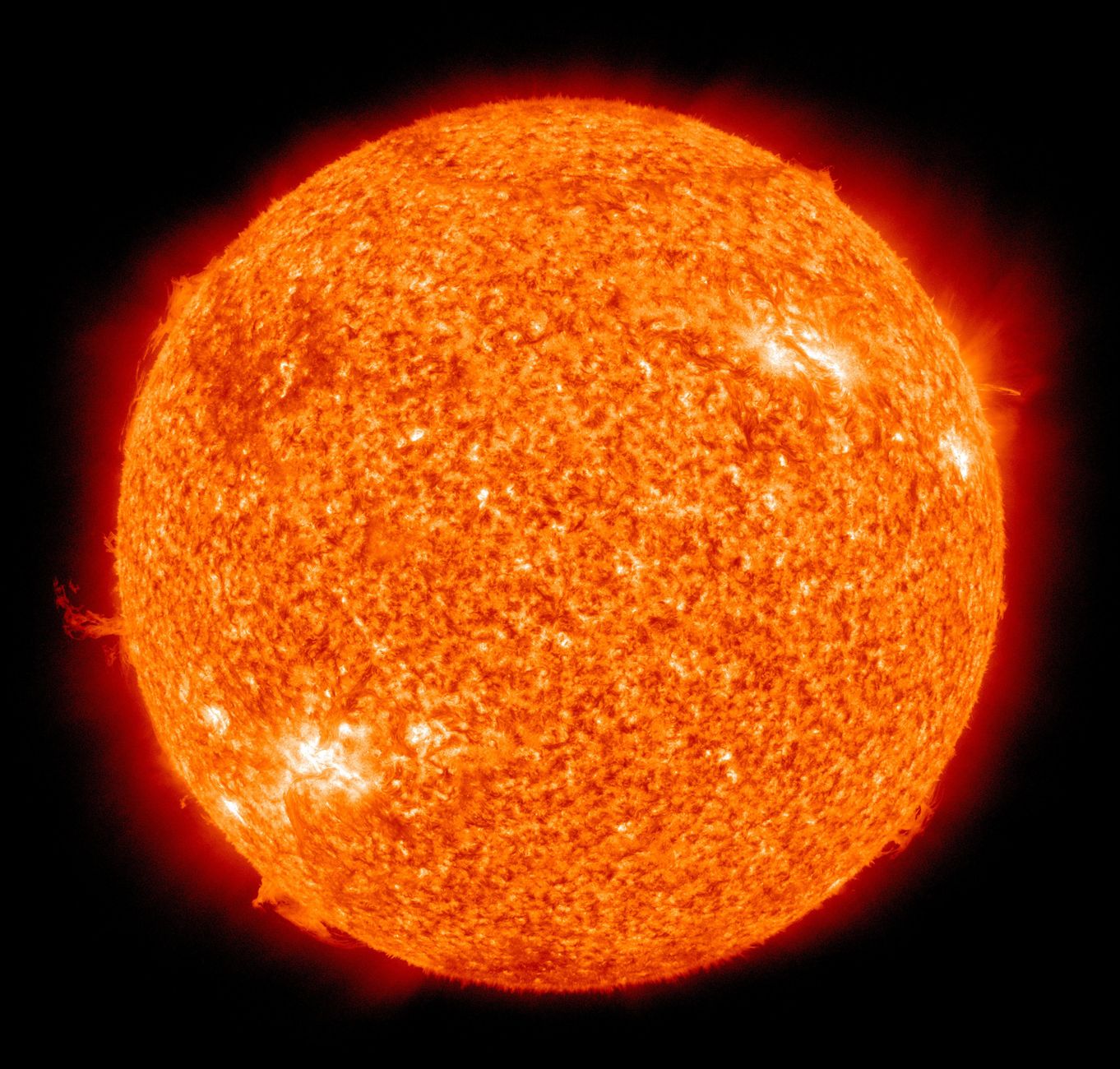
Astronomers have obtained the sharpest visible-light image of the Sun ever recorded, uncovering tiny, rotating plasma vortices in its outer layers that scientists had theorised about for more than a century but had never directly observed. The breakthrough was made possible by advanced solar imaging instruments capable of resolving extremely fine-scale structures in the Sun’s photosphere and chromosphere, the two lowest layers of its atmosphere.
The image shows swirling patterns of solar plasma at a level of detail previously unattainable, allowing researchers to identify small-scale vortex structures embedded within the turbulent motion of the Sun’s surface material. These features had long been predicted by theoretical models of solar plasma dynamics, but the technology to observe them directly had not existed until now.
The achievement is being described as a significant step forward in solar physics, closing a long-standing gap between theory and observation. For decades, physicists modelling the behaviour of ionised gas, or plasma, in the Sun’s atmosphere suggested that turbulent motion should naturally give rise to small, rotating eddies, similar in principle to vortices seen in fluid dynamics on Earth. Confirming their existence required imaging technology sensitive enough to capture structures far smaller than those visible in earlier generations of solar photographs.
Implications for Understanding Solar Activity
Scientists say the plasma vortices could play an important role in the transfer of energy through the Sun’s atmosphere, a process that remains only partially understood. The chromosphere and photosphere are dynamic environments where magnetic fields, heat and plasma interact in complex ways that influence broader solar behaviour, including the mechanisms that drive solar flares, heating of the outer solar atmosphere, and fluctuations in solar activity more generally.
Better observational data on these small-scale structures may help researchers refine models of how energy moves from the Sun’s interior outward, and how localized turbulence contributes to larger atmospheric processes. Because solar activity has downstream effects on space weather, satellite operations, and even long-term climate influences on Earth, improved understanding of these fundamental mechanisms carries implications well beyond theoretical physics.
Researchers note that this discovery represents a foundational advance rather than an application-ready development, but it strengthens the broader scientific understanding of stellar behaviour that underpins many areas of astrophysics and energy research.
Why It Matters for the Gulf
While the discovery itself has no direct industrial application in the UAE or wider Gulf region, solar physics research of this kind feeds into the global scientific foundation supporting renewable energy technologies, including solar power systems that are central to the energy diversification strategies pursued by Gulf states. As countries across the region continue investing heavily in solar energy infrastructure and long-term climate resilience planning, advances in understanding the Sun’s fundamental behaviour contribute indirectly to the broader scientific base informing renewable energy development, satellite operations, and space weather preparedness—all areas of growing strategic interest to the region.
The newly captured image is expected to serve as a reference point for future solar studies, with scientists likely to use the data to refine existing models of plasma behaviour and to guide further high-resolution observation campaigns aimed at studying the Sun’s atmosphere in greater detail.