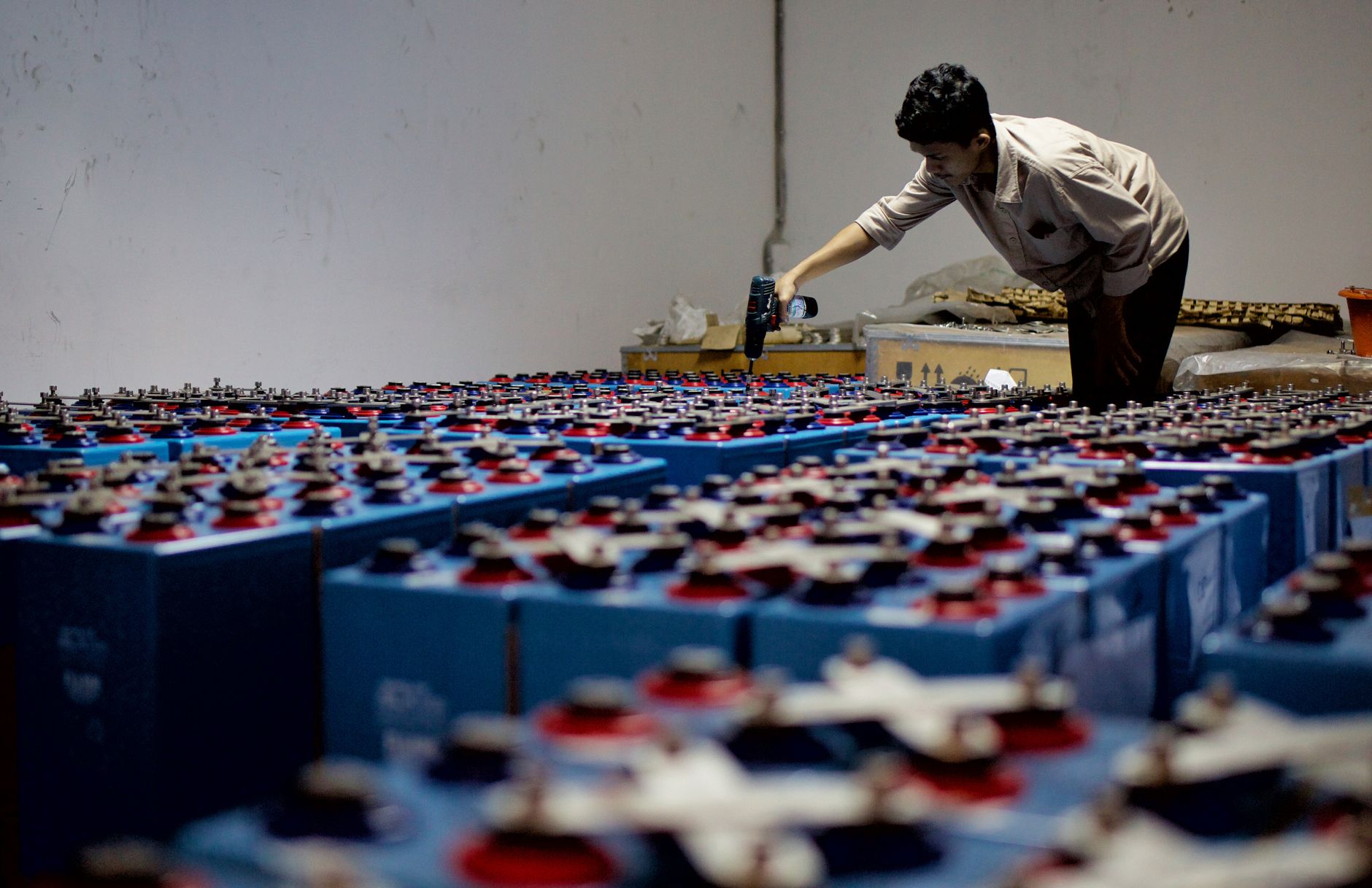
General Motors is advancing plans to build out battery production capacity inside the United States, a move aimed at cutting the company’s dependence on Chinese-sourced battery cells and raw materials that currently underpin much of the global electric vehicle industry. The initiative comes as automakers face mounting pressure from Washington to reduce their exposure to Chinese supply chains, a dependency that has become increasingly viewed as a strategic vulnerability rather than a simple cost-saving arrangement.
The push toward domestic battery manufacturing is not limited to vehicle production alone. GM’s strategy also extends to energy storage systems, signaling that the company sees battery technology as a broader industrial priority rather than a narrow automotive concern. By developing capabilities that serve both EV manufacturing and grid-scale or stationary storage applications, GM appears to be positioning itself to compete across multiple segments of the clean energy economy, insulating itself from swings in any single market while building leverage in negotiations with suppliers and policymakers alike.
The timing of GM’s announcement coincides with heightened scrutiny of automakers’ China relationships under the incoming Trump administration. The Department of Transportation has specifically targeted Ford over its existing business partnerships and supply arrangements in China, creating regulatory pressure that extends well beyond a single company. That scrutiny signals to the wider industry that continued reliance on Chinese manufacturing and materials could carry political and regulatory costs, not just commercial ones, effective immediately for firms with significant China-linked operations.
Global Supply Chains Under Strain
Battery cell production worldwide remains heavily concentrated in China, which controls a large share of raw material processing and manufacturing capacity for lithium-ion cells. That concentration has left American automakers exposed to geopolitical tensions, trade policy shifts, and potential supply disruptions, a vulnerability that has become more pronounced as U.S.-China trade relations have grown more contentious in recent years. GM’s domestic push reflects an industry-wide recalibration as manufacturers weigh the costs of restructuring supply chains against the risks of continued reliance on a single dominant source.
The development, first reported in a story titled GM plans U.S. battery development as Trump’s DOT attacks Ford for China ties, underscores how trade and industrial policy are increasingly shaping corporate strategy in the automotive sector, with implications reaching far beyond Detroit.
For the UAE and wider Gulf region, the shift carries tangible relevance. Regional automotive importers, dealerships, and investors with stakes in U.S. carmakers operating across the GCC could see downstream effects from changes in battery supply chains, including potential shifts in vehicle pricing, model availability, and the pace at which electric vehicles reach Gulf showrooms. As EV adoption continues to gain traction in the UAE and Saudi Arabia, any disruption or restructuring in how American manufacturers source battery components could influence timelines for new model launches in the region.
More broadly, the trend toward U.S. manufacturing self-sufficiency in critical technologies is likely to feature in future trade discussions between Washington and Gulf capitals, particularly as GCC sovereign funds and state-linked entities maintain significant holdings in American industrial and automotive firms. Analysts covering the business implications of this realignment note that policy-driven supply chain shifts of this scale rarely remain confined to a single market, and Gulf-based investors and policymakers are likely to watch closely how the standoff between Washington and major automakers over China ties develops in the months ahead.