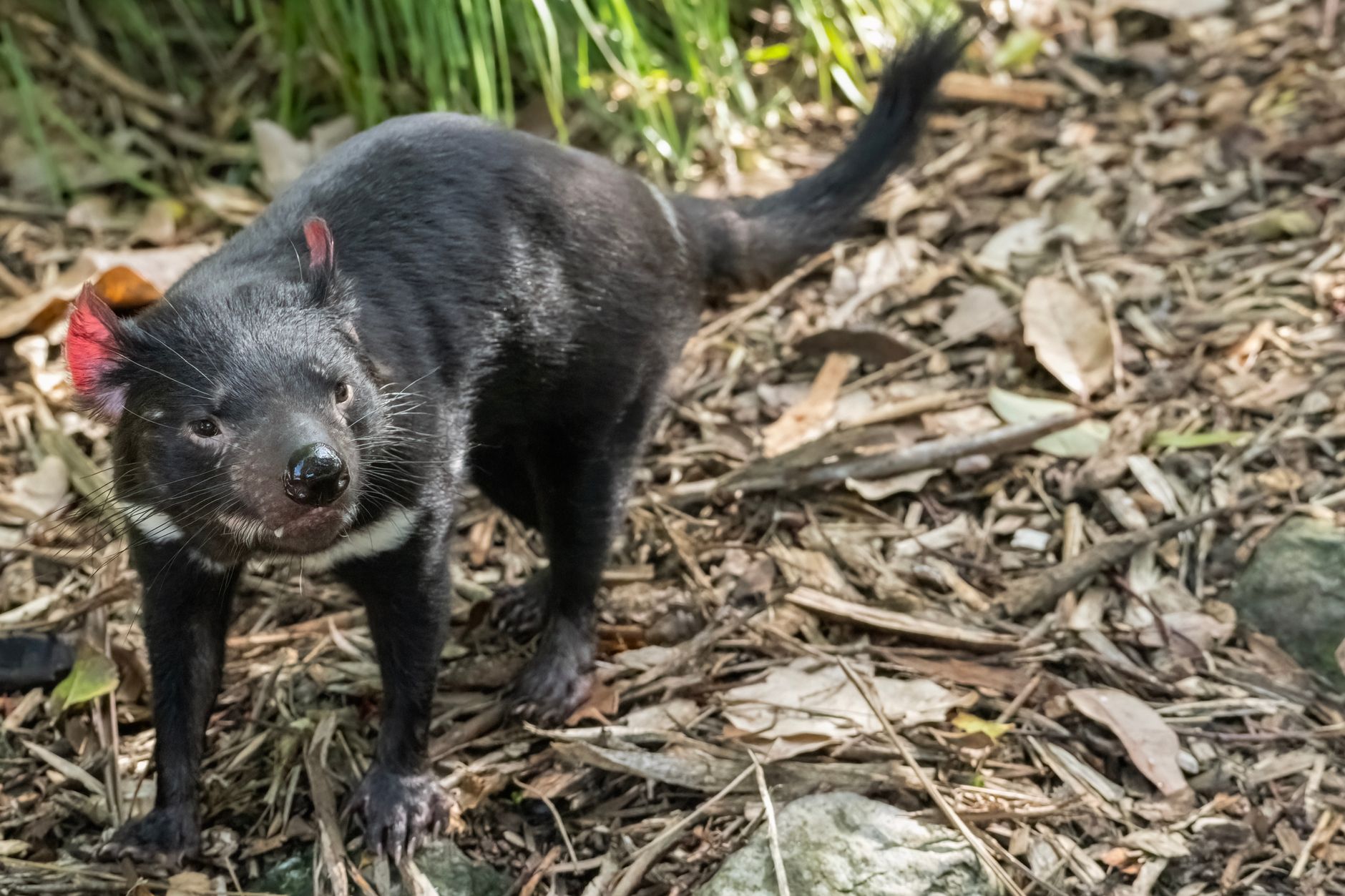
A decade-old effort to save Tasmania’s devils from extinction has produced a cautionary tale about the unpredictable ripple effects of conservation science. In 2012, Australian wildlife authorities moved 28 Tasmanian devils to Maria Island, a protected reserve off Tasmania’s east coast, in an attempt to establish an insurance population shielded from a contagious facial tumour disease that has decimated the species on the mainland. The disease, which spreads through biting and has no cure, has pushed devil numbers into steep decline over the past two decades, prompting scientists to search for isolated havens where the animals could breed without exposure to infected populations.
By most measures, the relocation worked. The devils adapted well to their new island home, free of the disease and largely free of natural predators, and their numbers climbed to roughly 90 individuals within a year. For a species facing a genuine extinction threat, that growth represented a meaningful conservation milestone and validated the logic behind moving vulnerable animals to a controlled, isolated environment.
Penguin colonies vanish as devils establish themselves
The success came at a steep and unexpected cost. Surveys of Maria Island’s little penguin colonies, once home to an estimated 3,000 breeding pairs, found the birds had vanished entirely. Researchers linked the collapse directly to the devils, which had begun preying on the ground-nesting penguins and their eggs, exploiting a food source that had no evolved defenses against a predator introduced to the island. What was designed as a safe haven for one endangered species effectively became a hunting ground that eliminated another, as first detailed in a report on 28 Tasmanian devils were moved to an island; 3,000 penguin pairs later disappeared.
The episode underscores a persistent challenge in wildlife management: island ecosystems, prized precisely because their isolation limits disease and predator exposure, are also fragile enough that introducing even a single new species can unravel long-established food chains. Conservationists have increasingly had to weigh such trade-offs when selecting relocation sites, recognising that an environment’s suitability for one animal does not guarantee neutrality for others already living there.
While the story is rooted entirely in Australian wildlife policy and carries no direct bearing on Gulf markets or regional environmental programmes, it resonates with a broader pattern seen across the global innovation landscape, where well-intentioned interventions in complex systems can produce outcomes their designers never anticipated. Whether in ecology, technology or urban planning, the Maria Island case has become a frequently cited example of how solving one problem can inadvertently create another, reinforcing calls among scientists for more rigorous ecological modelling before similar relocation efforts are attempted elsewhere.