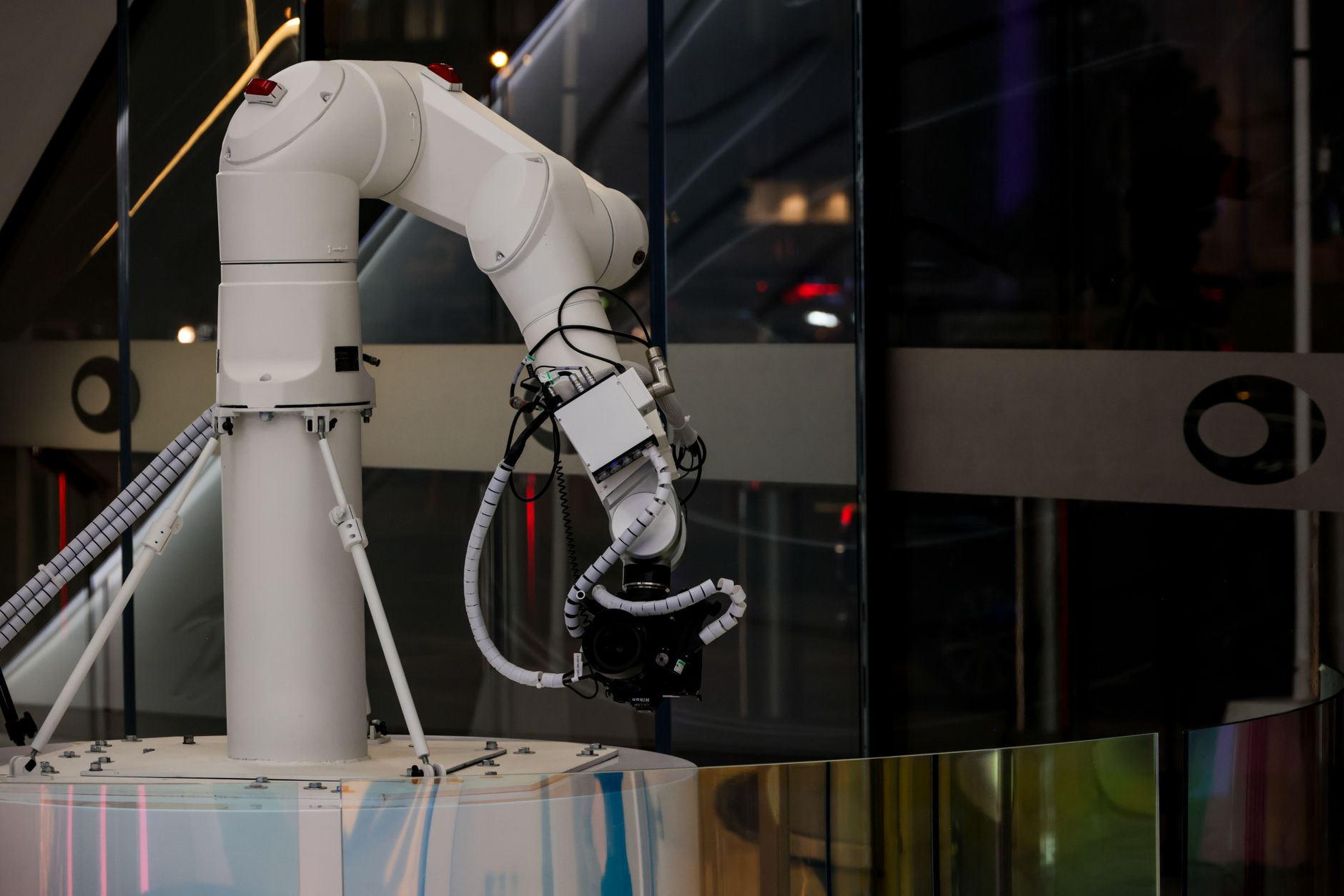
Chinese robotics developer RobotPlusPlus has closed a Series C funding round worth hundreds of millions of RMB, equivalent to tens of millions of US dollars, to accelerate international expansion and advance its embodied artificial intelligence technology. The company builds autonomous robots designed to carry out working-at-height tasks, a category of jobs long associated with elevated safety risks and chronic labour shortages in industries such as construction, facade maintenance and infrastructure upkeep.
The fresh capital injection, as first reported in RobotPlusPlus Raises Series C to Scale Working-at-Height Robots, will be directed toward two priorities: pushing further into overseas markets and deepening the firm’s embodied AI capabilities, which focus on enabling robots to physically sense, adapt to and learn from real-world environments rather than relying solely on software-based intelligence. This distinction has become increasingly significant for investors evaluating robotics firms, as embodied systems must contend with unpredictable physical conditions that purely digital AI models never encounter.
Why the Gulf Is Watching
While RobotPlusPlus is headquartered in China, the round arrives at a moment when automation investment is drawing sustained attention across the broader economy, particularly in sectors grappling with persistent labour constraints and rising safety compliance costs. Working-at-height robots occupy a niche that intersects with two pressing global concerns: protecting workers from fall-related injuries, which remain among the leading causes of workplace fatalities in construction, and offsetting shortages of skilled labour willing to take on high-risk elevated tasks.
That combination carries particular relevance for the UAE and wider GCC region, where large-scale construction and infrastructure projects depend heavily on expatriate workforces often deployed in physically demanding and elevated roles. Gulf governments and developers have repeatedly signalled interest in automation as a mechanism to reduce workplace injuries while addressing recurring labour supply pressures tied to visa policies, project timelines and skills availability. Robotics firms specialising in height-based tasks, such as facade inspection, cleaning, and structural maintenance, represent a plausible fit for the scale of vertical construction seen in cities including Dubai, Abu Dhabi and Riyadh.
Regional sovereign wealth funds and family offices have also grown more active in scouting advanced robotics and embodied AI investments, part of a broader diversification push away from hydrocarbon-dependent portfolios and toward frontier technologies. Although the source material does not specify which investors participated in RobotPlusPlus’s Series C round or detail a precise timeline for its international rollout, the emphasis on overseas expansion suggests the company is positioning itself to compete in markets beyond China, potentially including regions where labour-intensive construction and infrastructure spending remain elevated.
For now, RobotPlusPlus’s immediate plans center on scaling its core working-at-height technology and strengthening its embodied AI research, both of which will determine how quickly the company can translate fresh capital into deployable products for international clients. Whether Gulf markets feature directly in that expansion remains to be seen, but the underlying demand drivers, safety, labour costs and automation appetite, align closely with dynamics already shaping investment decisions across the region.