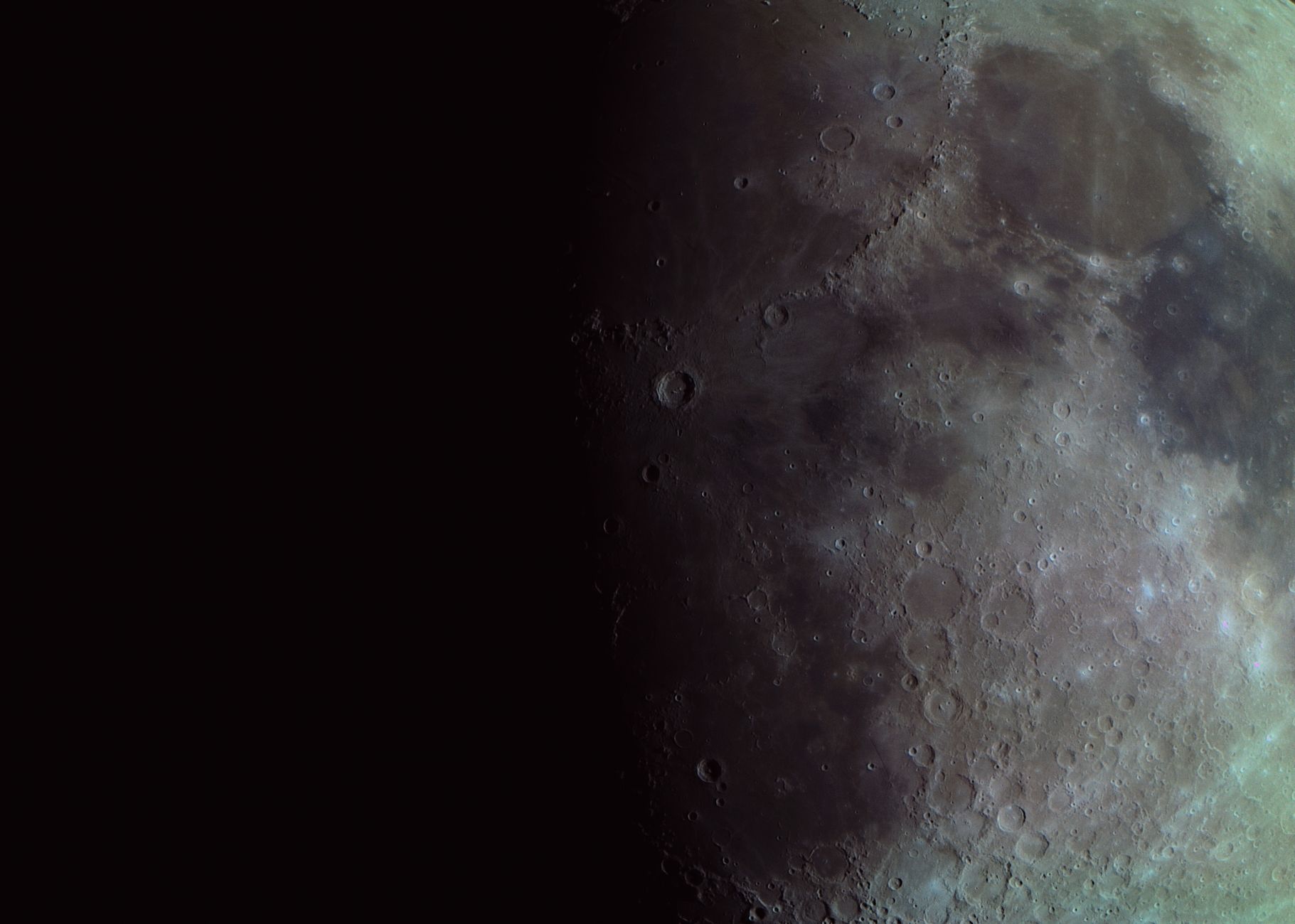
New images have surfaced showing a crater on the far side of the Moon believed to have been created by a discarded rocket stage associated with a SpaceX mission, offering researchers a rare visual record of how human-made debris can alter the lunar surface. The images mark one of the first confirmed instances of astronomers directly documenting the aftermath of an unintentional spacecraft-related impact on the Moon.
The event drew attention within the global space community after independent trackers and researchers had earlier calculated that a spent rocket body was on a collision course with the Moon, following years of drifting through space after completing its original mission. While such objects are typically expected to burn up, be recovered, or drift harmlessly through space, this piece of hardware is understood to have remained in an unstable orbit before eventually being pulled in by lunar gravity.
The resulting impact site, now visible in newly released imagery, has become a subject of interest for scientists studying how man-made objects behave once they leave Earth’s immediate orbit and enter deep space trajectories. Unlike planned lunar landings or controlled disposal maneuvers, this impact was not part of a designed mission profile, raising fresh questions about the long-term tracking and management of retired space hardware.
Implications for Space Debris Tracking
The discovery underscores a growing challenge facing space agencies and private launch companies alike: the difficulty of monitoring objects once they travel beyond low Earth orbit. While debris in Earth’s immediate vicinity is closely tracked to avoid collisions with satellites and crewed spacecraft, objects that drift into deep space or cislunar trajectories are harder to follow with precision, sometimes resulting in unexpected outcomes such as lunar impacts.
Space policy experts have increasingly called for clearer international standards on end-of-life disposal for rocket stages and other hardware used in missions beyond Earth orbit. As commercial spaceflight activity accelerates, with more private companies conducting lunar and deep-space missions, incidents like this are expected to add urgency to discussions about sustainable practices in space exploration.
For the Gulf region, the episode carries a note of relevance as the UAE continues to expand its footprint in lunar and deep-space exploration. The UAE Space Agency has been involved in lunar research initiatives, including contributions to rover missions and partnerships tied to lunar surface studies, positioning the country among a small group of nations with active interests in Moon-related science. As global conversations around space debris and responsible exploration intensify, regional stakeholders are likely to monitor how international bodies respond to incidents involving uncontrolled lunar impacts.
Scientists studying the newly imaged crater are expected to examine its dimensions and structure to better understand the dynamics of the impact, including the speed and angle at which the object struck the lunar surface. Such analysis could offer insights applicable to future mission planning, particularly as space agencies and private firms weigh the risks associated with leaving retired equipment in orbits that may eventually intersect with the Moon.
No official statement addressing the long-term implications of the impact has been issued by the companies or agencies associated with the original rocket mission. Researchers continue to study the images as part of broader efforts to catalogue and understand human-made impacts on the lunar surface, an area of study expected to grow as lunar exploration activity increases in the coming years.