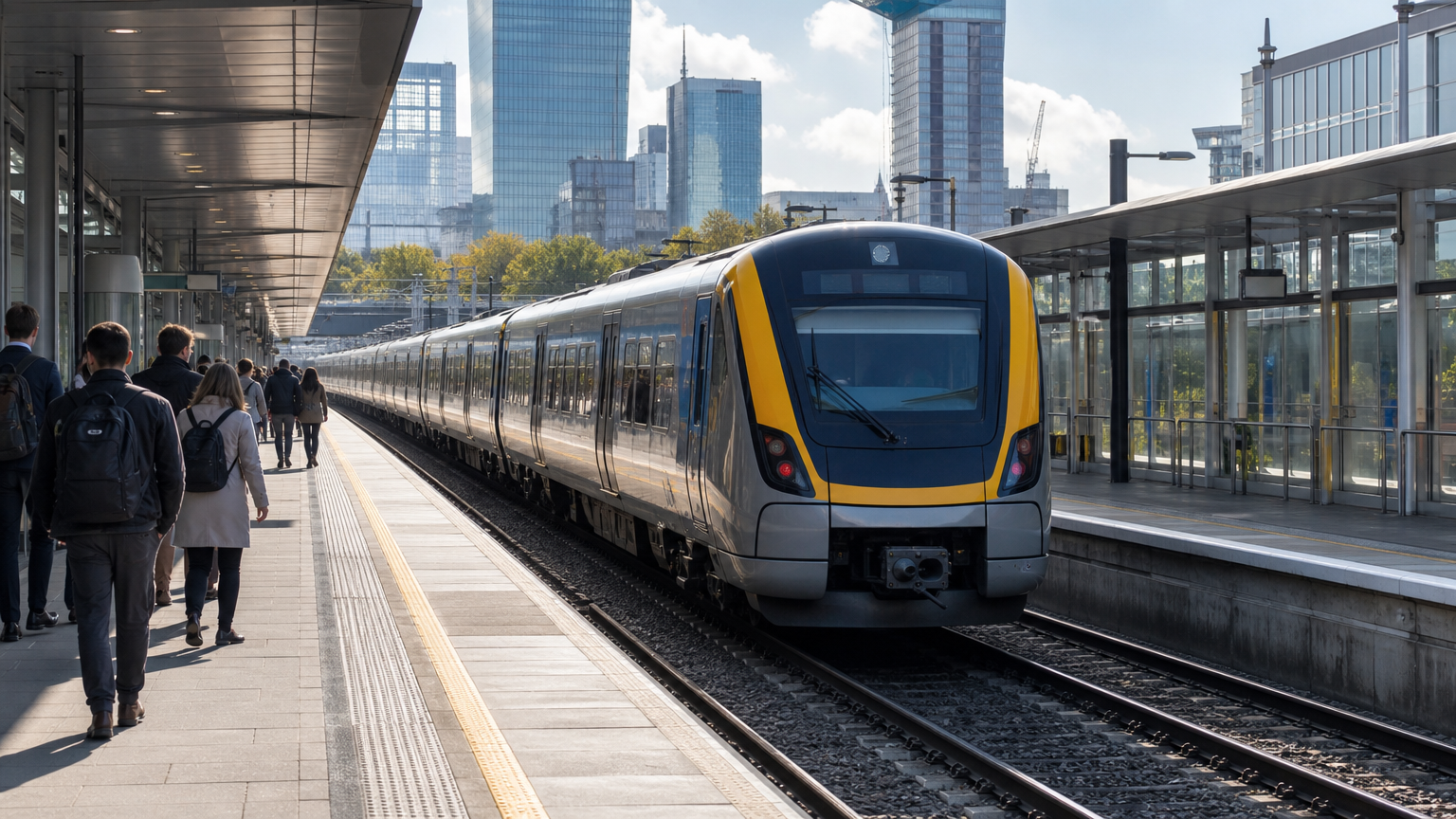
Etihad Rail’s passenger trains are now running between Abu Dhabi and Dubai, and property experts say this could change where you choose to live and rent in the UAE. The full passenger network launched on September 30, connecting Abu Dhabi to both Dubai and Al Dhaid in Sharjah, and real estate agency Betterhomes says it’s already a big deal for the market.
What’s actually changed for Abu Dhabi-Dubai commuters?
This isn’t the first route to open. Back in June, Etihad Rail launched its initial Abu Dhabi-Fujairah service. Now, three months later, the network has expanded to cover the busiest corridor in the country: Abu Dhabi to Dubai, plus a link out to Al Dhaid in Sharjah.
Betterhomes calls this a genuine turning point for Abu Dhabi’s property market. For the first time, buyers and tenants can actually weigh up a working rail connection when they’re deciding which neighbourhood to settle in. That’s a very different conversation than it was a few months ago, when rail travel between the two emirates was still just a plan on paper.
If you’ve ever sat in traffic on the E11 during rush hour, you’ll know why this matters. A reliable train service between the UAE’s two biggest cities opens up options for people who work in one emirate but want cheaper, bigger, or more convenient homes in another. It’s the kind of shift that tends to ripple through emirates news on housing and daily life for months after it happens.
Will rents move first, or prices?
According to Betterhomes, rents are likely to react before sales prices do. That makes sense if you think about how renters behave compared to buyers. Renting is a short-term decision, so tenants can shift their search toward station-adjacent communities almost immediately once a new transport option becomes real and reliable.
Buying a home, on the other hand, is a longer-term bet. Sales prices usually take more time to reflect new infrastructure because buyers and sellers need to see sustained demand before they adjust what they’re willing to pay or accept.
Betterhomes expects the earliest signs of change to show up in something quieter than headline price jumps: a rise in enquiries and viewing requests for properties in communities near the new stations. In other words, don’t expect dramatic price swings overnight. Watch instead for agents reporting more interest in specific pockets close to where the trains actually stop.
For anyone tracking property in Abu Dhabi, Dubai, or the wider GCC, this is a useful signal. If you’re a tenant or investor focused on communities near Etihad Rail stations, a jump in viewings could be your first real-world clue that the market is starting to price in the new connectivity, well before it shows up in official transaction data.
It’s also worth noting this fits a broader pattern across the UAE right now, where major new infrastructure keeps nudging real estate demand in new directions. Whether it’s a rail line, a highway, or a new development announcement, these projects tend to reshape which neighbourhoods suddenly look more attractive to live in.
For now, the full detail on exactly how Etihad Rail connectivity will be “factored” into buying and renting decisions going forward wasn’t fully spelled out, but the direction is clear enough: easier travel between Abu Dhabi and Dubai makes living in one and working in the other far more realistic for ordinary residents.
What to watch next: keep an eye on viewing and enquiry numbers for neighbourhoods close to the new Etihad Rail stations in Abu Dhabi, Dubai, and Al Dhaid. Betterhomes suggests that’s where the earliest market reaction will show up, long before it’s visible in headline rent or sale price figures. As reported by Arabian Business, the network’s expansion from a single Fujairah link in June to a full Abu Dhabi-Dubai-Sharjah connection in just three months suggests more route announcements, and more property ripple effects, could follow.