In an era defined by digital transformation, few concepts have become as fragile—and as valuable—as trust. Governments struggle to maintain public confidence, financial systems face increasing scrutiny, and digital platforms grapple with misinformation, fraud, and data breaches. In this landscape, two technological forces have emerged with the potential to reshape how trust is built and maintained: artificial intelligence and blockchain.
Individually, each technology promises to transform the digital world. Together, they may offer something even more ambitious—a new architecture of trust for the 21st century.
Yet the question remains: Do AI and blockchain actually lead to a more trustful world, or do they simply shift the nature of trust from humans to machines?
The Crisis of Trust in the Digital Age
The modern internet was built on optimism. Early pioneers envisioned a global network that would democratize knowledge, empower individuals, and connect societies across borders.
While much of that vision has come true, the digital revolution has also produced unintended consequences. Online misinformation spreads rapidly, cybercrime continues to grow, and massive databases containing personal data have become targets for hackers.
Trust—once rooted in institutions such as banks, governments, and professional organizations—has increasingly become difficult to maintain in the digital realm.
Users must trust that financial transactions are secure, that news sources are reliable, and that personal data is protected. Yet centralized digital systems are often vulnerable to manipulation, breaches, or abuse of power.
Against this backdrop, artificial intelligence and blockchain technology are being presented as potential solutions.
Blockchain: Trust Through Transparency
Blockchain technology emerged from the world of cryptocurrency, but its fundamental concept extends far beyond digital money.
At its core, blockchain is a distributed ledger—a record of transactions shared across a network of computers. Each transaction is verified by the network and permanently recorded in a way that is extremely difficult to alter.
This design eliminates the need for a central authority to verify transactions. Instead of trusting a bank or intermediary, participants rely on cryptographic algorithms and consensus mechanisms.
In theory, blockchain creates “trustless trust.”
People can conduct transactions, transfer assets, or record agreements without needing to trust one another personally. The system itself guarantees transparency and integrity.
Applications of blockchain are already expanding beyond finance. Supply chains use it to track products from origin to consumer. Governments are experimenting with blockchain-based voting systems. Healthcare institutions explore ways to secure patient data using distributed ledgers.
In each case, the goal is the same: to create records that are transparent, tamper-resistant, and verifiable.
Artificial Intelligence: Trust Through Insight
Artificial intelligence approaches the trust problem from a different direction.
Rather than securing transactions, AI focuses on analyzing and interpreting vast quantities of data.
Machine learning systems can detect fraudulent financial activities, identify cyber threats, and uncover patterns of misinformation across social networks. In many industries, AI systems already act as digital guardians—monitoring complex systems and identifying anomalies in real time.
In banking, AI algorithms detect suspicious transactions within milliseconds. In cybersecurity, machine learning systems analyze network behavior to identify potential intrusions. In journalism, AI tools assist fact-checkers by scanning enormous volumes of information.
By improving our ability to detect deception, manipulation, or errors, AI has the potential to strengthen trust across digital systems.
Yet AI’s role is more complicated than it first appears.
Because AI systems learn from data, their conclusions depend on the quality and fairness of that data. If datasets contain biases or inaccuracies, AI systems may reproduce or even amplify them.
Trust in AI therefore depends not only on the technology itself, but on how it is designed, trained, and governed.
When AI Meets Blockchain
The most powerful potential lies in the combination of these two technologies.
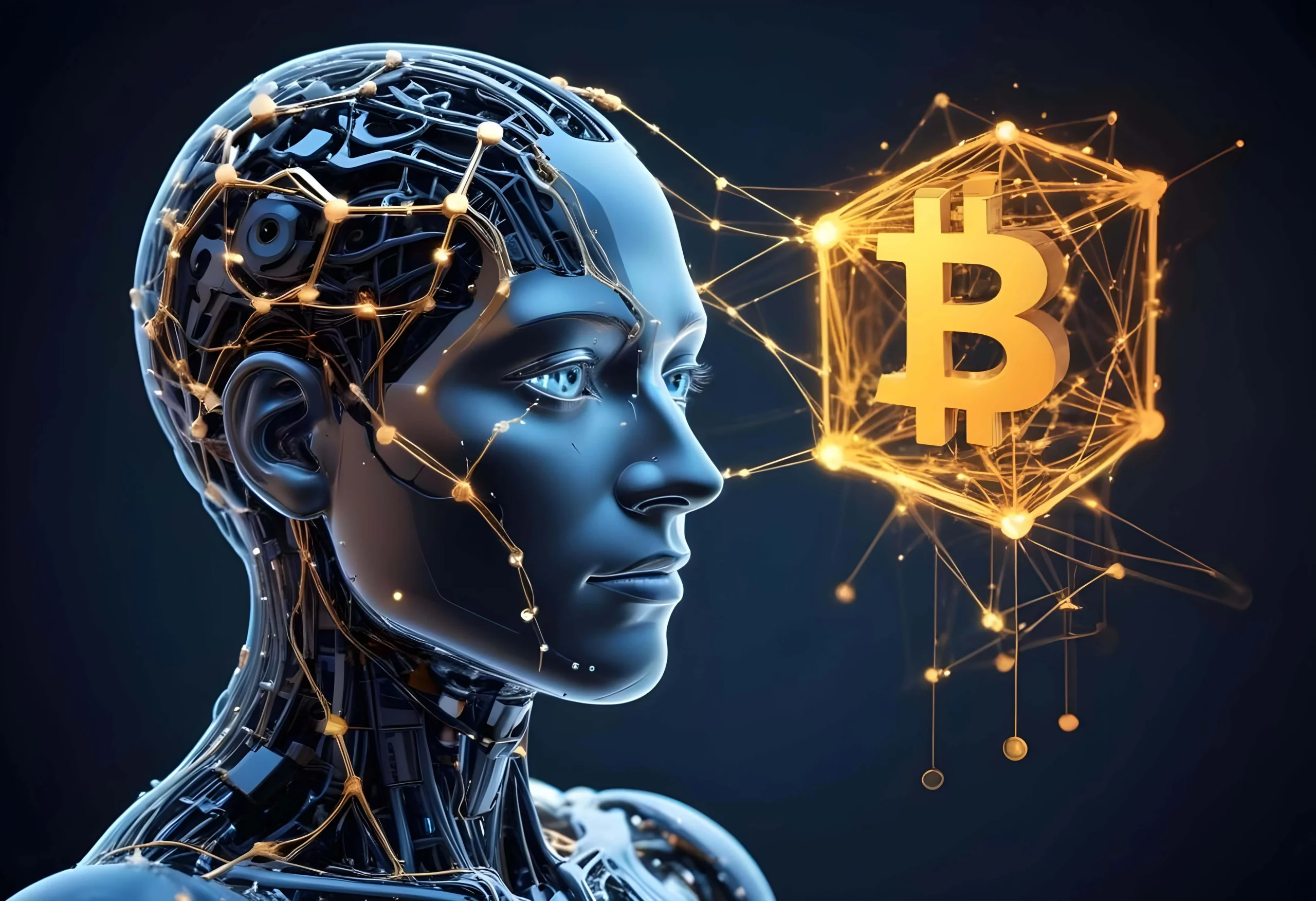
Blockchain provides a transparent and secure record of transactions, while artificial intelligence analyzes those records to generate insights and detect irregularities.
Together, they create systems that are both trustworthy and intelligent.
For example, blockchain can provide a tamper-proof record of financial transactions, while AI monitors the network for unusual activity that might indicate fraud or money laundering.
In supply chains, blockchain can track the origin and movement of goods, while AI analyzes logistical data to optimize routes, predict disruptions, and identify counterfeit products.
Even digital identity systems could benefit from this partnership. Blockchain could store secure, decentralized identity credentials, while AI verifies authenticity and detects identity theft.
The result is a technological ecosystem where trust is reinforced at multiple levels—through transparency, automation, and continuous monitoring.
The Limits of Technological Trust
Despite these promising developments, technology alone cannot solve the deeper challenges of trust.
Blockchain systems, for instance, are only as reliable as the data entered into them. If inaccurate or fraudulent information is recorded at the outset, the system will preserve that error permanently.
This is often referred to as the “garbage in, garbage forever” problem.
Artificial intelligence faces similar limitations. Algorithms may detect patterns, but they do not understand context or morality. An AI system might identify misinformation, but deciding how to respond to it remains a human responsibility.
Furthermore, both technologies raise important ethical questions.
Who controls the AI algorithms that analyze global data? Who governs blockchain networks that may operate across national boundaries? How can societies ensure that these technologies serve the public interest rather than reinforcing existing inequalities?
Trust cannot simply be coded into software.
It must also be embedded in governance, transparency, and accountability.
A New Architecture of Trust
If AI and blockchain are to create a more trustful world, they must be integrated into broader social frameworks.
Governments, international organizations, and private companies will need to collaborate on establishing standards for transparency, data protection, and algorithmic accountability.
Education will also play a crucial role. Citizens must understand how digital systems operate in order to evaluate their reliability.
In many ways, the challenge resembles earlier technological revolutions. When electricity transformed industries, societies created safety standards and regulatory frameworks. When the internet expanded communication, new rules emerged to govern digital commerce and privacy.
AI and blockchain represent the next stage of this evolution.
They are not replacements for trust—they are tools that can help rebuild it in a digital age.
Trust in a Machine-Assisted World
One of the most profound implications of these technologies is the shifting nature of trust itself.
Historically, trust was built through human relationships and institutional credibility. People trusted banks because of their reputation, governments because of their authority, and professionals because of their expertise.
In the digital future, trust may increasingly rely on systems rather than individuals.
Blockchain systems provide mathematical guarantees that transactions cannot be altered. AI systems provide analytical capabilities that exceed human perception.
This does not eliminate the human element of trust, but it transforms it.
Instead of trusting individuals blindly, people may trust transparent systems that can be independently verified.
Conclusion: Technology and Human Responsibility
Artificial intelligence and blockchain together hold enormous potential to strengthen trust in an increasingly complex digital world. By combining transparent records with intelligent analysis, they can reduce fraud, increase accountability, and enable new forms of collaboration across borders.
But technology alone cannot create a trustful society.
Trust ultimately depends on human values—fairness, honesty, responsibility, and respect for the public good.
If AI and blockchain are designed and governed wisely, they may help build a world where digital systems are more transparent, secure, and reliable than those of the past.
If they are not, they risk becoming tools of surveillance, concentration of power, or new forms of digital manipulation.
The future of trust will therefore not be determined by algorithms alone.
It will depend on the choices humanity makes about how to use them.