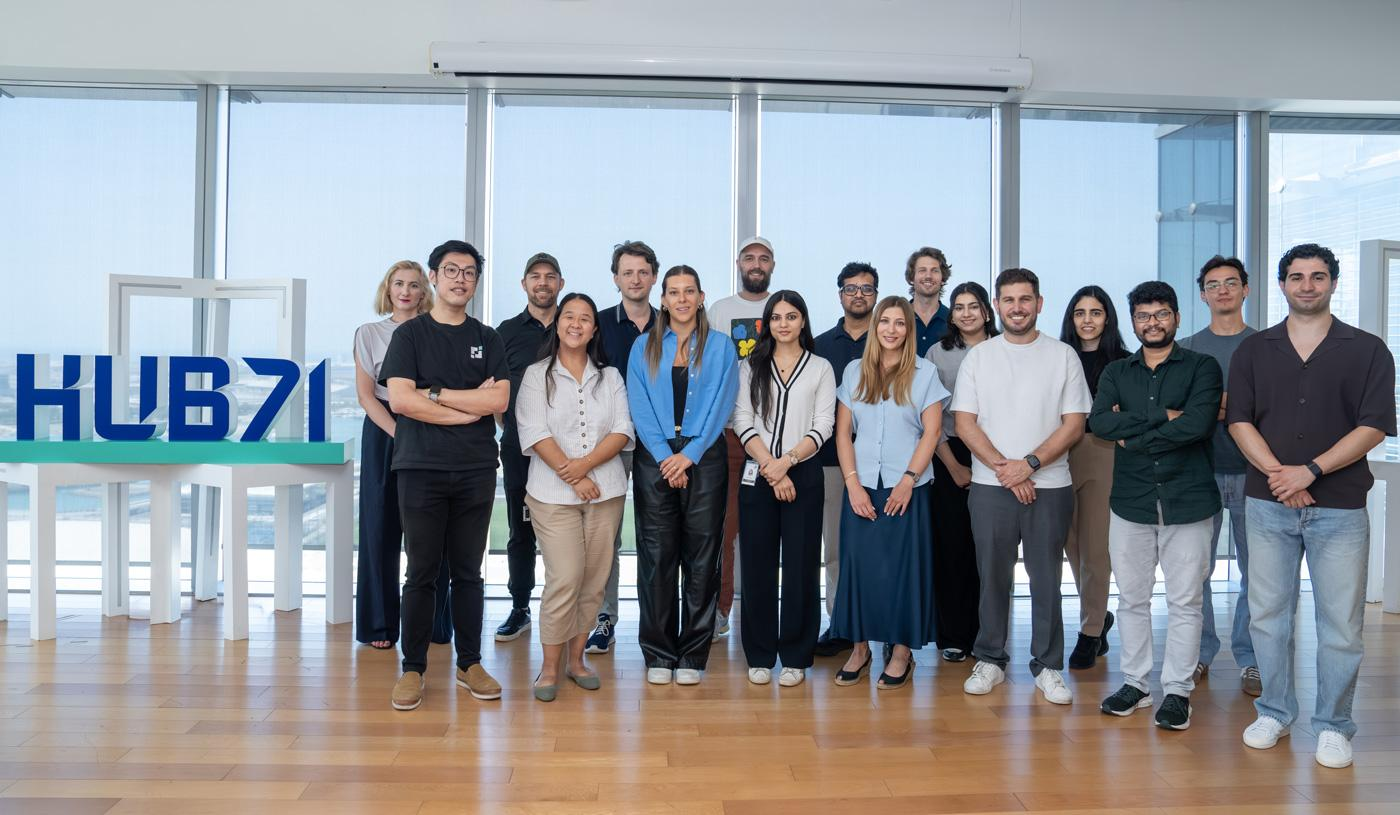
Abu Dhabi continues to strengthen its position as one of the world’s fastest-growing innovation ecosystems, as Hub71 announced the selection of 27 startups for its 18th cohort following a record-breaking 2,453 applications from 112 countries. The milestone marks a significant evolution in the emirate’s startup ecosystem, with all selected companies headquartered outside the UAE and now establishing operations in Abu Dhabi.
The announcement represents more than a successful accelerator intake. It reflects the growing international confidence in Abu Dhabi as a launchpad for global technology companies seeking access to capital, regulatory support, strategic partnerships, and expansion opportunities across the Middle East, Africa, and Asia.
With an acceptance rate of just 1.1 percent, Cohort 18 stands among Hub71’s most competitive selections to date. The chosen startups collectively represent nearly USD 230 million in funding and have raised an average of USD 8.5 million each, highlighting the maturity and market readiness of founders choosing Abu Dhabi as their regional headquarters.
Abu Dhabi’s Emerging Role as a Global Startup Gateway
The composition of Cohort 18 reflects a broader transformation underway within the UAE’s innovation landscape. Rather than attracting early-stage ventures alone, Abu Dhabi is increasingly drawing venture-backed companies with proven technologies and international ambitions.
According to Hub71 CEO Ahmad Ali Alwan, the selected companies represent founders building technologies with immediate commercial applications and strong scalability potential. The focus now extends beyond startup incubation toward enabling commercial traction, facilitating capital access, and accelerating global expansion from Abu Dhabi.
The new intake spans twelve countries and multiple growth stages ranging from pre-seed ventures to Series A companies. The cohort also demonstrates the increasing effectiveness of Hub71’s international engagement programs, particularly through partnerships and founder networks that accounted for nearly one-third of all applications received.
Artificial Intelligence Dominates the Innovation Landscape
Artificial Intelligence remains a defining theme throughout the cohort, with AI-powered startups appearing across multiple sectors including healthcare, urban infrastructure, financial services, logistics, commerce, and climate technologies.
Among the most notable entrants is EchoTwin AI from the United States, which transforms municipal vehicles into mobile sensing networks capable of creating real-time digital twins of city infrastructure. The technology enables municipalities to identify maintenance requirements, monitor compliance, and optimize urban operations using data-driven insights.
Another standout is Neuphonic, a voice AI platform focused on creating efficient language models capable of operating directly on devices rather than relying solely on cloud infrastructure. This approach addresses growing demand for real-time AI interactions while reducing latency and operational costs.
In healthcare, startups such as Amilis, Endimension Technology, Digistain, and Rubedo Life Sciences demonstrate how artificial intelligence is increasingly transforming diagnostics, clinical decision-making, patient care, and longevity research. These innovations align closely with the UAE’s ambition to become a regional leader in health technology and precision medicine.
Climate Technology Gains Strategic Momentum
Climate innovation emerged as another major focus area within Cohort 18, reinforcing Abu Dhabi’s commitment to sustainability and environmental technologies.
Selected startups include Uravu Labs from India, which has developed systems capable of extracting atmospheric moisture and converting it into usable water and cooling solutions. The technology addresses growing water security concerns, particularly in arid regions where resource efficiency remains a strategic priority.
UK-based Persium brings advanced environmental sensing technologies and AI-powered digital twins designed to measure and mitigate air pollution. Meanwhile, Phlair is developing direct air capture systems aimed at removing carbon dioxide from the atmosphere, supporting global decarbonization efforts.
The presence of these startups reflects increasing investor and governmental focus on technologies capable of supporting climate resilience, sustainable industrial development, and resource optimization.
Digital Assets Ecosystem Continues to Expand
Abu Dhabi’s ambitions in regulated digital finance and blockchain innovation are further reinforced through the inclusion of six startups within Hub71+ Digital Assets.
Among them is Wingbits from Sweden, a company creating a decentralized network of flight tracking stations that deliver real-time aviation intelligence. The startup has already secured USD 9.4 million in funding and illustrates how blockchain-enabled infrastructure can support global industries beyond traditional financial applications.
Other selected ventures are working on tokenized credit infrastructure, stablecoin-powered financial systems, digital asset financing, and the tokenization of real-world assets. These developments align with Abu Dhabi’s broader strategy to position itself among the leading global jurisdictions for digital asset innovation while maintaining regulatory oversight and institutional credibility.
Strengthening International Innovation Corridors
A notable aspect of the cohort is its geographical diversity and the strengthening of international innovation corridors.
Indian startups such as Uravu Labs and Endimension Technology reflect the growing collaboration between the UAE and India under the Comprehensive Economic Partnership Agreement (CEPA). Their inclusion underscores how policy frameworks are translating into tangible technology partnerships and cross-border innovation opportunities.
Similarly, three startups from Hong Kong—Pubrio, Craftt, and KPay—transitioned into Cohort 18 after participating in Hub71’s Hong Kong Immersion Programme. Their move demonstrates how targeted international engagement initiatives can successfully convert market exploration into long-term business establishment within Abu Dhabi.
Beyond Funding: Building an Innovation Ecosystem
Selected startups will participate in Hub71’s 12-month Access Programme, receiving up to AED 250,000 in in-kind incentives and an additional AED 250,000 through a SAFE investment structure. Participants will also gain access to investors, mentors, regulatory guidance, government stakeholders, and corporate partners.
However, the real value of Hub71 increasingly lies beyond financial support. As competition among global innovation hubs intensifies, ecosystems are being judged not only by available funding but by their ability to facilitate market access, strategic partnerships, and scalable growth opportunities.
With the addition of Cohort 18, Hub71’s ecosystem now comprises 525 startups, reinforcing Abu Dhabi’s emergence as a leading destination for technology entrepreneurship across the Middle East and North Africa.
The Bigger Picture
The significance of Cohort 18 extends beyond startup statistics. It signals a broader shift in how global founders perceive Abu Dhabi—not merely as a regional market, but as a strategic base for international expansion.
As governments worldwide compete to attract high-growth technology companies, Abu Dhabi’s combination of capital access, regulatory innovation, international connectivity, and sector-focused ecosystems is increasingly positioning the emirate as a global innovation hub.
The record application numbers and fully international intake suggest that the UAE’s technology ecosystem is entering a new phase of maturity—one where the country’s innovation ambitions are no longer regional aspirations, but increasingly global realities.