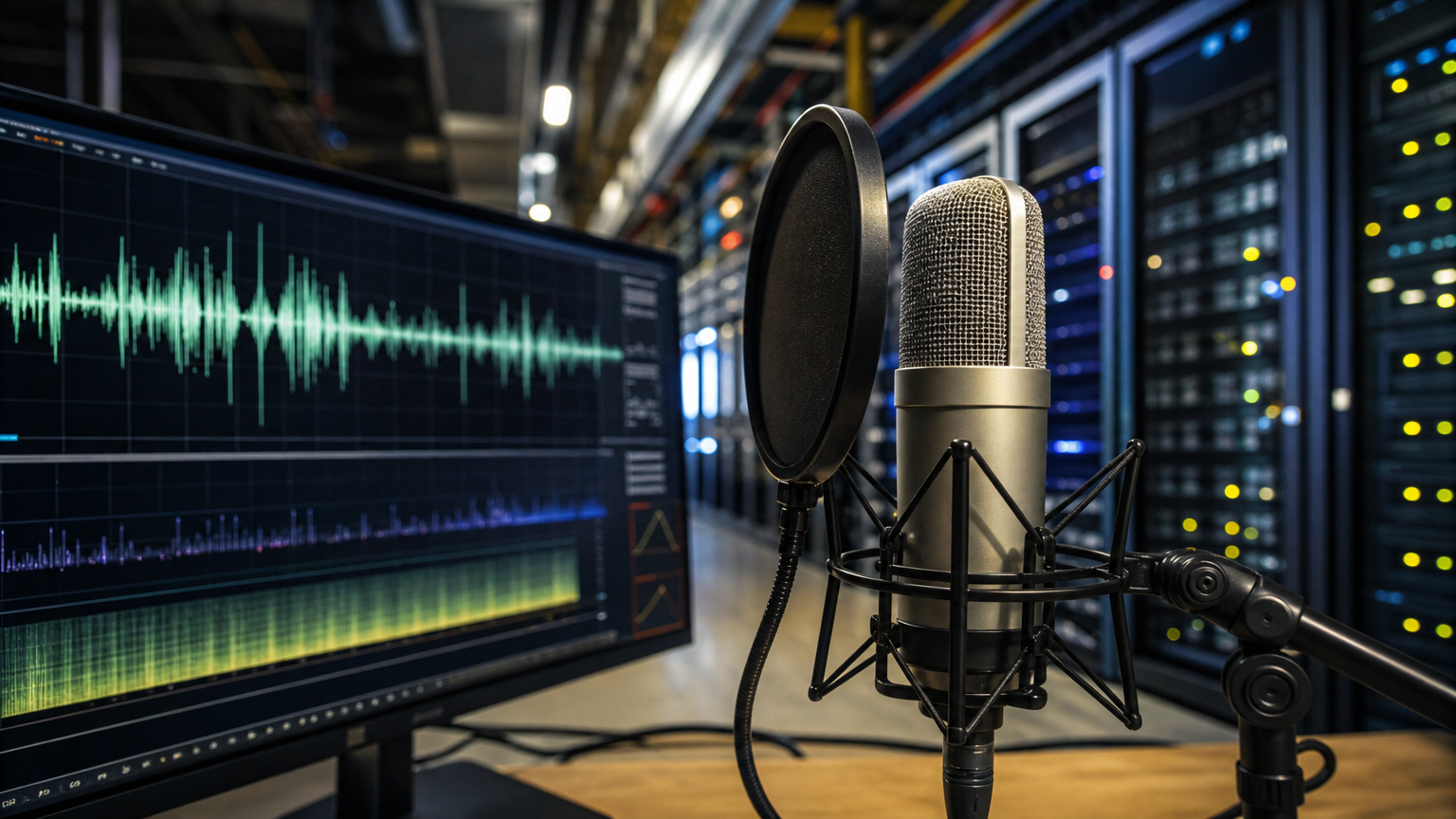
If you’ve ever cursed at Siri or Alexa for butchering your Gulf Arabic, NVIDIA might just have fixed that problem. The US chip and AI giant has fine-tuned its Nemotron 3.5 ASR speech recognition model using a Saudi dataset, and the results are striking: error rates for Saudi dialects have dropped from around 55 percent to roughly 30 percent.
That’s not a small tweak. It’s the kind of jump that could decide whether voice assistants, call centre bots, and live TV captions in the Gulf actually work, or whether they keep mangling what you say.
What made this Arabic speech breakthrough possible
The secret ingredient is called SADA, short for the Saudi Audio Dataset for Arabic. It was built by the Saudi Data and AI Authority, known as SDAIA, working alongside the Saudi Broadcasting Authority. Think of it as a huge, carefully labelled library of recorded Arabic speech, the kind of raw material that AI models need to learn how real people actually talk.
NVIDIA trained its Nemotron 3.5 ASR model on 133.7 hours of audio from two specific dialects: Najdi, spoken widely in central Saudi Arabia including Riyadh, and Hijazi, common in the west around Jeddah and Mecca. These are dialects that global AI models have historically struggled with, because most speech datasets lean heavily on Modern Standard Arabic or other regional variants.
According to a technical study NVIDIA published on its Developer blog, feeding this localised data into the model made a measurable difference. The word error rate, which is basically how often the AI mishears or mistranscribes what’s said, fell from about 55 percent down to roughly 30 percent for the targeted dialects. In plain terms, the model went from getting things wrong more often than right, to getting the majority of speech correct.
Nemotron 3.5 ASR isn’t a one-language tool either. It’s built to handle real-time transcription across roughly 40 languages and dialects, with Arabic being one of the key additions strengthened through this collaboration.
Why this matters for businesses across the UAE and GCC
Speed matters just as much as accuracy here. The upgraded model is designed for real-time use, with latency starting at just 80 milliseconds. That’s fast enough for a conversation to feel natural, without the awkward pause you get when an app is still “thinking.”
That combination of speed and improved dialect accuracy opens the door to some very practical uses across the region. Picture voice assistants in UAE smart homes that finally understand Gulf Arabic properly, or customer service call centres in Dubai and Riyadh that can automatically transcribe calls without needing a human to clean up the errors afterwards.
Broadcasters stand to gain too. Live subtitling for Arabic-language TV has long been a technical headache, since dialects shift so much from one country to another. A more accurate model could mean faster, cleaner captions during live news or sports coverage.
There’s also a quieter but important use case: archiving. Companies and government bodies across the GCC sit on huge volumes of recorded meetings and media. Better transcription technology makes it realistic to search, index, and reuse that archived audio instead of letting it gather digital dust.
Beyond the immediate product benefits, this project is a signal about how AI development is shifting. For years, the biggest language models were trained mostly on English and a handful of other major languages, leaving Arabic dialects as something of an afterthought. This collaboration shows that locally sourced, carefully curated data, like the SADA dataset built specifically for Saudi dialects, can meaningfully upgrade a global AI model’s performance for regional languages. It’s a template other GCC countries could follow for their own dialects and accents, something worth watching closely for anyone following technology news in the region.
It also reinforces Saudi Arabia’s growing role as a data and AI hub, with SDAIA positioning itself not just as a domestic regulator but as a partner capable of shaping how global AI companies build products for Arabic speakers.
What to watch next: it’s not yet clear when or how this improved Nemotron 3.5 ASR model will roll out into actual consumer products, apps, or enterprise tools across the GCC. The technical results are public, but the commercial rollout, pricing, and which companies might license it first remain open questions. As reported by GCC Business News, the study itself focused on the engineering side, not deployment timelines, so expect more announcements to follow if NVIDIA or its partners move toward bringing this into everyday tools.