The rapid development of Artificial Intelligence (AI) has sparked one of the most heated debates in the modern world: will AI cause mass unemployment, or will it become a catalyst for new employment opportunities? History teaches us that every technological revolution—from the steam engine to the internet—has been met with fears of job losses. Yet, these same revolutions have also created entirely new industries, professions, and ways of working. The case of AI is unique, however, because it has the potential not only to replace manual labor but also to perform cognitive tasks traditionally reserved for humans. This raises profound questions about the future of work, the economy, and human purpose.
In this essay, we will examine both sides of the argument. We will explore the ways in which AI might displace jobs, how it could simultaneously create new forms of employment, and what strategies societies can adopt to ensure a balance between technological progress and human well-being.
The Threat of Unemployment Due to AI
- Automation of Routine Tasks
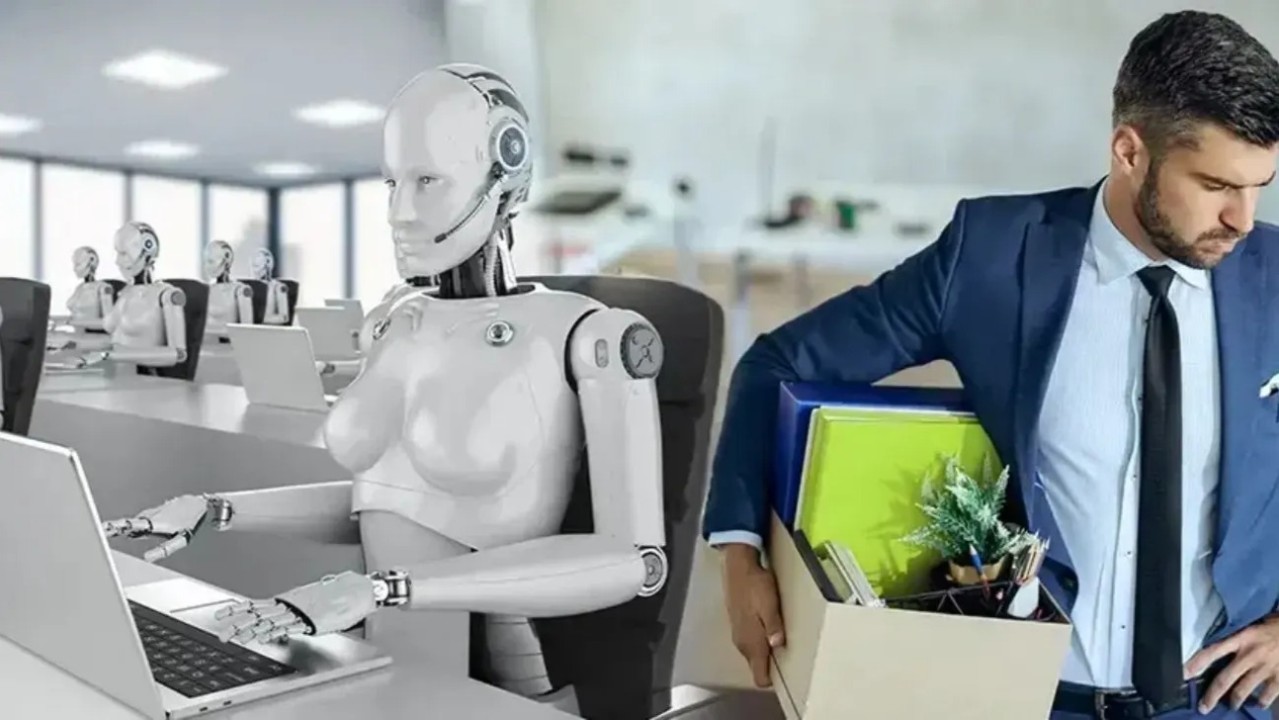
AI is particularly efficient at automating repetitive and routine tasks. In industries such as manufacturing, logistics, retail, and even services, many human roles are already being replaced by AI-powered machines and algorithms. For example, warehouses increasingly rely on robots for sorting and packing, while self-checkout systems reduce the need for human cashiers. The rise of self-driving vehicles also threatens millions of jobs in transportation, including truck drivers, delivery workers, and taxi services. - Replacement of Cognitive Labor
Unlike past technologies that primarily replaced physical labor, AI can also replace cognitive roles. Algorithms can now draft legal documents, analyze medical scans, provide financial advice, and even generate creative content like music, design, or code. As AI becomes more sophisticated, white-collar jobs in law, journalism, accounting, and medicine could be significantly disrupted. - Cost Efficiency for Businesses
From a business perspective, AI offers a major advantage: efficiency without human constraints. Machines do not require salaries, benefits, or rest. They can operate 24/7, process massive amounts of data quickly, and minimize errors. As companies seek to maximize profits, the economic incentive to replace humans with AI becomes undeniable. This could lead to widespread layoffs and growing unemployment in certain sectors. - The Risk of Widening Inequality
AI may exacerbate inequality by disproportionately affecting low- and middle-income workers. High-skilled workers, such as AI engineers or data scientists, will remain in demand, but those with fewer qualifications may find their roles disappearing. Without proper reskilling programs, a large segment of the workforce risks being left behind, creating social unrest and economic instability.
The Opportunities for Employment Through AI
- New Industries and Professions
Just as the Industrial Revolution led to the rise of factory jobs and the internet age created opportunities in digital technology, AI is giving birth to new industries. Roles such as AI ethicists, machine learning engineers, prompt designers, and data annotators did not exist a decade ago but are now increasingly important. As AI technologies expand into healthcare, education, agriculture, and energy, new types of work will emerge that we cannot yet fully predict. - Augmentation, Not Just Replacement
In many cases, AI will not replace humans entirely but will augment human capabilities. Doctors, for instance, can use AI to detect diseases more accurately, allowing them to focus on patient care and complex diagnoses. Teachers can use AI to personalize learning experiences, while financial advisors can combine AI insights with human empathy and judgment. Instead of eliminating jobs, AI may change the nature of existing ones, making them more productive and fulfilling. - The Rise of Creative and Human-Centered Work
While AI excels at logic and repetition, it struggles with emotional intelligence, creativity, and ethical judgment. Jobs that rely on human interaction—such as caregiving, therapy, arts, leadership, and innovation—will remain essential. In fact, as AI takes over mundane tasks, humans may have more freedom to pursue creative, social, and entrepreneurial ventures, potentially leading to a renaissance in human expression and collaboration. - Boosting Productivity and Economic Growth
AI has the potential to dramatically increase productivity across industries. This productivity boost can lead to greater economic growth, higher profits, and, if distributed fairly, more job creation. For example, AI-driven precision farming can help feed growing populations while creating jobs in agri-tech. Similarly, AI can improve renewable energy management, creating employment in the green economy. - Global Opportunities
Developing countries can also benefit from AI by leapfrogging traditional industrial stages. For instance, AI-powered education platforms can expand access to quality learning, while AI in healthcare can bring medical expertise to remote regions. This could create entirely new markets and employment ecosystems, particularly in emerging economies.
Balancing Risks and Opportunities
The future of work in the age of AI is not predetermined. Whether AI becomes a job destroyer or a job creator depends largely on how governments, businesses, and individuals respond to the challenges it presents. Several strategies are essential:
- Reskilling and Lifelong Learning
Workers must be equipped with new skills to adapt to AI-driven economies. Governments and corporations should invest heavily in training programs, focusing on digital literacy, critical thinking, creativity, and emotional intelligence—skills that complement AI rather than compete with it. - Redesigning Education Systems
Traditional education models focused on memorization and standardization are insufficient in the AI era. Schools and universities must emphasize adaptability, problem-solving, and interdisciplinary learning to prepare students for jobs that do not yet exist. - Policy Interventions
Governments must design policies that cushion the transition. This includes providing social safety nets for displaced workers, encouraging entrepreneurship, and potentially exploring universal basic income (UBI) as a way to ensure social stability while AI reshapes economies. - Ethical AI Deployment
The manner in which AI is deployed will determine its impact on jobs. If companies use AI solely for profit maximization without social responsibility, unemployment and inequality will rise. However, if AI is deployed with ethical frameworks and human-centered goals, it can enhance rather than diminish the quality of work. - Encouraging Human-AI Collaboration
Rather than framing the debate as humans versus machines, societies should embrace models of human-AI collaboration. By viewing AI as a tool to empower people rather than replace them, businesses can unlock new levels of innovation and productivity.
AI presents both risks and opportunities in the realm of employment. On the one hand, it threatens to automate millions of jobs, especially those involving repetitive tasks and cognitive labor. On the other hand, it offers enormous potential to create new industries, transform existing roles, and empower humans to focus on creativity, empathy, and complex problem-solving.
The truth is that AI will both displace and create jobs—it is not a matter of either-or, but of balance. The critical factor is how humanity manages this transition. If societies invest in reskilling, ethical AI deployment, and inclusive growth, AI could usher in an era of abundance and meaningful work. If neglected, however, it could lead to mass unemployment and inequality.
In the end, AI is not simply a technological question—it is a human one. It challenges us to redefine what work means, what skills matter, and how we can shape a future where technology serves humanity, rather than replaces it.