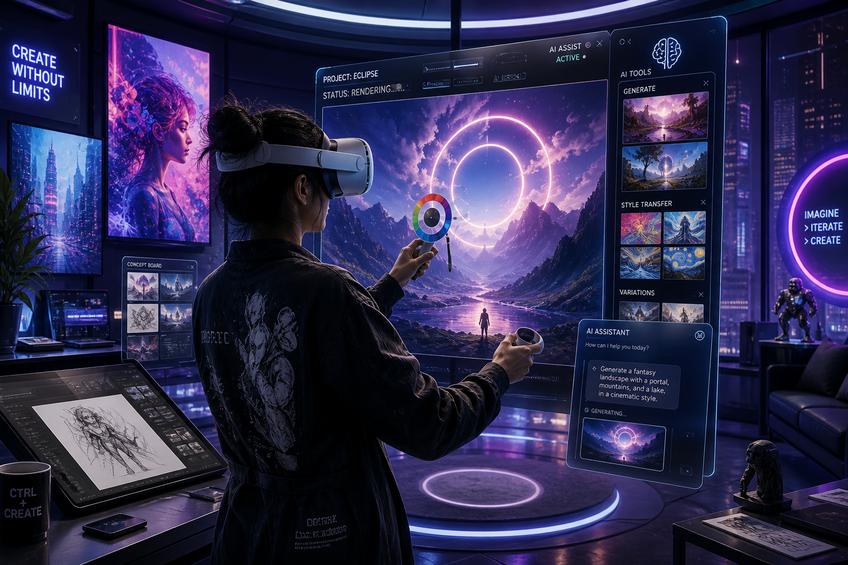
The relationship between art and technology is becoming one of the most interesting areas of modern creativity. From artificial intelligence and virtual reality to digital galleries and interactive installations, technology is changing how artists create, present and connect with audiences.
For centuries, artists have adopted new tools to expand what is possible. The camera changed visual storytelling, film introduced moving images, and digital software transformed graphic design and animation. Today, artificial intelligence, immersive technology and advanced digital platforms are opening another chapter.
AI Is Becoming a Creative Tool
Artificial intelligence is increasingly being used by artists, designers, filmmakers, musicians and writers as part of their creative process.
AI tools can generate images, help develop visual concepts, create soundscapes, assist with editing and turn early ideas into prototypes within minutes. For creative professionals, this can reduce the time spent on repetitive tasks and allow more attention to be placed on storytelling and experimentation.
However, AI is also creating important conversations around authorship, copyright and originality. Artists are asking how their work can be protected when generative systems are trained on large collections of existing content. These questions are likely to remain central as AI becomes more deeply integrated into creative industries.
Virtual Worlds Create New Art Spaces
Technology is also changing where people experience art.
Virtual and augmented reality can place audiences inside digital environments rather than simply asking them to observe a painting, sculpture or screen. Museums and cultural organisations are experimenting with immersive exhibitions that combine sound, animation, 3D environments and interactive elements.
For audiences, this can make cultural experiences more accessible. Someone who cannot physically visit an exhibition can potentially explore a digital version from another location.
At the same time, artists are creating works specifically for digital and virtual environments. In these spaces, the boundaries between architecture, cinema, gaming and visual art become increasingly blurred.
Gaming Is Becoming Part of the Art Conversation
The global games industry is another important meeting point between technology and the arts.
Modern games combine illustration, music, writing, animation, architecture, performance and software engineering. A game can function as an interactive artwork, allowing audiences to influence the story and environment rather than simply watching it.
This has also created opportunities for artists and designers to work across industries. Skills traditionally associated with film, theatre and visual arts are increasingly being used in game development, immersive experiences and digital entertainment.
Digital Platforms Expand Access
Technology has also changed how artists reach audiences.
Social media, streaming platforms, online galleries and digital marketplaces allow creators to publish their work without relying entirely on traditional institutions. An independent filmmaker can reach an international audience, while an artist can build a community around their work through digital channels.
This global reach can create new commercial opportunities, but it also brings challenges. Creators must compete for attention in crowded digital environments, while algorithms can influence which creative works audiences discover.
The Future Is Increasingly Collaborative
The most important development may not be any single technology, but the collaboration between creative and technical disciplines.
Artists are working with programmers, engineers, game developers, data specialists and AI researchers to develop experiences that would have been difficult to imagine a generation ago.
The future of arts and technology is therefore unlikely to be about technology replacing creativity. Instead, it is about new tools expanding the creative possibilities available to people.
As these technologies continue to develop, the strongest projects may be those that combine technical innovation with something technology cannot easily manufacture on its own: human perspective, cultural context and meaningful storytelling.
Tags: Arts & Technology, Art, Technology, Artificial Intelligence, AI, Digital Art, Creative Technology, Virtual Reality, Augmented Reality, Gaming, Innovation, Digital Culture, Immersive Experiences, Creativity, UAE, Future of Technology