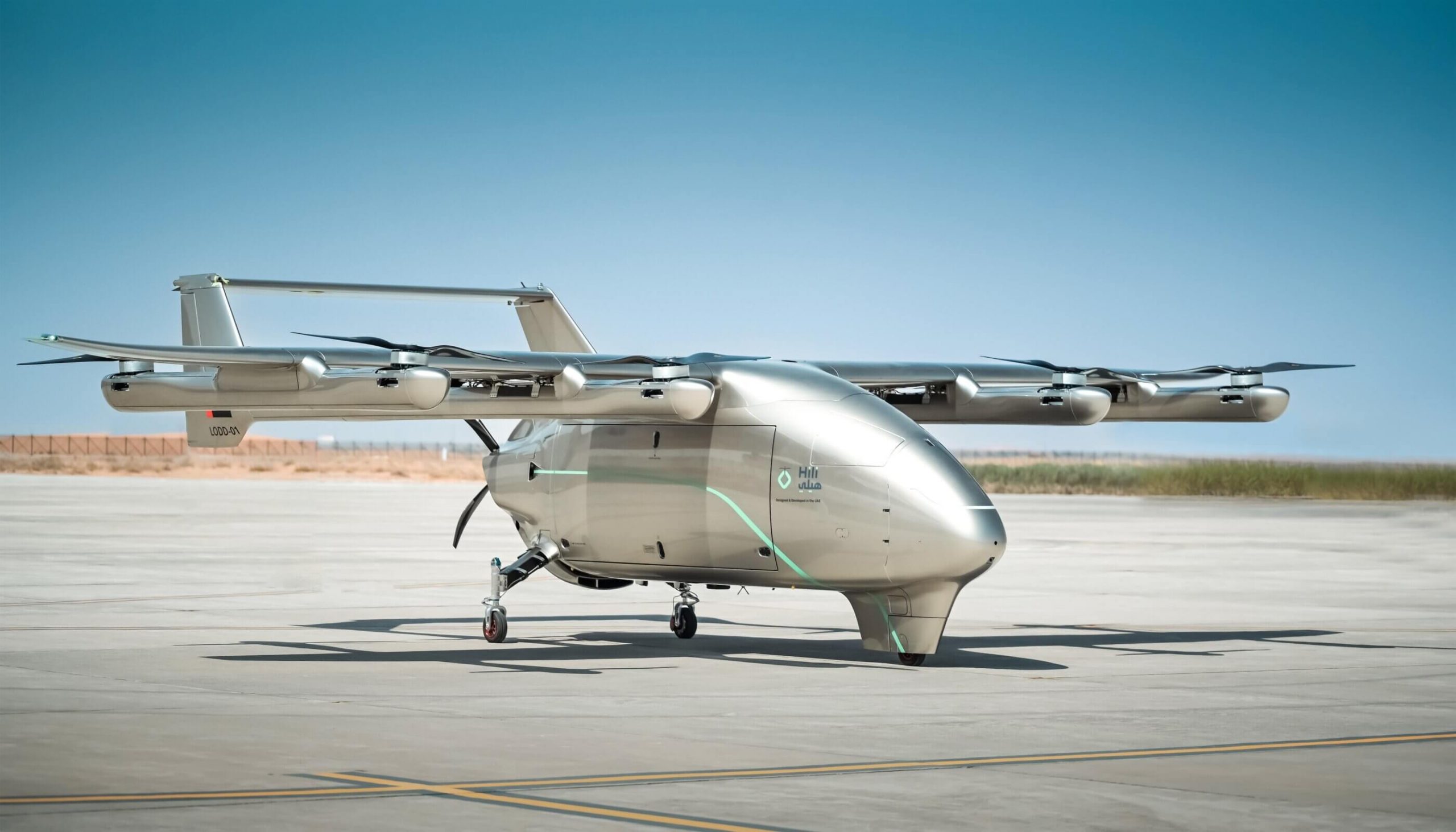
UAE is pushing forward with its vision for Advanced Air Mobility (AAM) — a future where autonomous air taxis and cargo drones navigate the skies of its metropolitan areas. Recent developments show momentum, with regulation, mapping initiatives, and cutting-edge tech all aligning.
Mapping the Sky: Air Corridors for Drones and Air Taxis
In a major step, the General Civil Aviation Authority (GCAA), together with the Technology Innovation Institute (TII) and ASPIRE, has begun mapping dedicated air corridors for both piloted and autonomous flying taxis, as well as cargo drones. These aerial lanes are designed to safely integrate future air mobility into the UAE’s urban environment—linking key hubs, airports, and strategic zones.
Regulatory Innovation: Certified Drone Navigation & Autonomous Systems
The GCAA recently introduced a first-of-its-kind national regulation, CAR Airspace Part Uspace, to certify air navigation service providers for drones. This regulation includes training, operational quality assurance, audit procedures, and safety planning — ensuring that drone operations meet rigorous standards. At the same time, TII is working on high-security, GPS-less navigation systems. Their “Perceptra” system ensures navigation even without GPS, and “Saluki” provides secure flight-control capabilities for autonomous aerial vehicles.
Why This Matters: The UAE at the Forefront of Air Mobility
- Safety First: By mapping dedicated corridors and creating regulatory frameworks, the UAE is prioritizing safety in a potentially chaotic future sky.
- Enabling Innovation: These frameworks give companies room to develop autonomous flyers, drones, and other advanced vehicles without regulatory drag.
- Strategic Testbed: With these corridors and regulations, the UAE positions itself as a global testbed for AAM, offering regulators and innovators a real-world sandbox.
Commercial & Strategic Partnerships
Abu Dhabi Aviation (ADA) signed an MoU with Archer Aviation to deploy its Midnight eVTOL aircraft in the UAE. Archer’s Midnight vertical take-off and landing aircraft could form the backbone of future urban air taxi services. Also, in recent announcements, TII, ASPIRE, and GCAA revealed they are collaborating via simulations to help shape future air mobility frameworks. Three pilot zones have been identified: Yas Island, Zayed Port, and Abu Dhabi International Airport. These locations will help test and validate autonomous operations before full commercial scale.
Emergency Response Innovation: Drones to the Rescue
In November 2025, ADNOC, TII, and ASPIRE launched a pilot to deploy coordinated drone fleets for emergency response. Drones will stream real-time video to ADNOC’s Crisis Management Center. In a major incident, swarm-based long-range and smaller support drones can be launched quickly — enhancing situational awareness and reducing risk to human responders.
This isn’t just a research exercise: by embedding autonomy in critical infrastructure operations, the UAE is demonstrating the practical value of drone technology in safety and resilience.
Market & Economic Implications
- Logistics & Cargo: Cargo drones could significantly reduce delivery times, especially for remote areas or sites with limited road access.
- Urban Mobility: Over time, autonomous air taxis could ease road congestion, offer faster commutes, and link dense urban centers.
- New Business Models: Vertiport infrastructure, drone-as-a-service, and fleet management could become new lines of business for local companies.
- Investment Attraction: By building robust regulation and test environments, the UAE becomes more attractive for global aerospace and mobility firms.
Challenges Ahead
- Scalability: Testing in pilot zones is one thing — scaling to a full, city-wide network is another.
- Public Acceptance: People must trust autonomous flyers, especially when used in populated areas.
- Regulatory Complexity: Maintaining safe separation between passenger aircraft, drones, and other airspace users is non-trivial.
- Infrastructure Needs: Vertiports, charging stations, drone hubs — all require investment, planning, and regulation.
Future Outlook
- Commercial Launch: With regulations and corridors being defined, commercial AAM services might scale faster than many expect — potentially by 2026-2027 in some zones.
- Smart Vertiports: As more vertiports come online, they will integrate with public transport, offering seamless multimodal journeys.
- Autonomous Fleets: We may see fleets of drones dedicated to logistics, emergency response, and even passenger movement.
- Sustainability Angle: Electric VTOLs and drones offer lower-emission transport solutions, supporting the UAE’s green economy goals.
The UAE’s progress in aviation technology is not merely aspirational — it is becoming operational. With mapped air-corridors, certified navigation providers, and pilot programs in place, the country is laying the groundwork for a new aerial mobility ecosystem. Whether it’s delivery drones or autonomous air taxis, the UAE is steadily turning futuristic vision into reality.