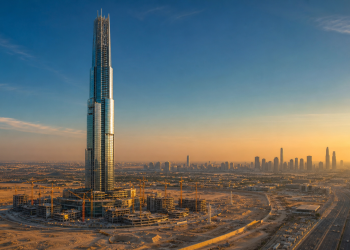
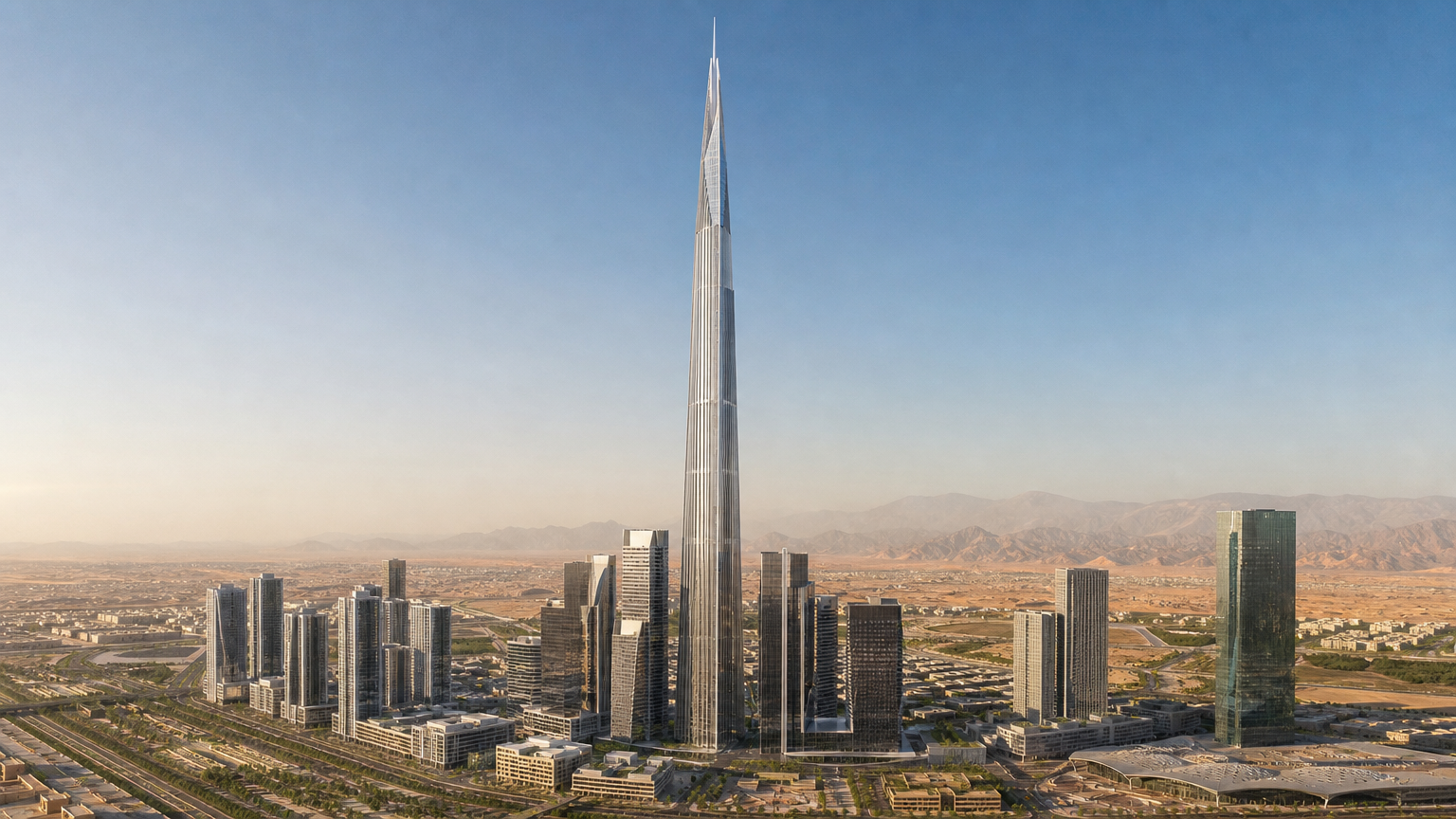
Saudi Arabia is quietly lining up contractors for a tower that would make Dubai’s Burj Khalifa look small. Riyadh’s Public Investment Fund (PIF) has started reaching out to construction firms as part of an early market-sounding exercise for a proposed 2-kilometre megatall tower, a project that would more than double the height of the world’s current tallest building.
For anyone following the region’s building boom, this is the kind of headline number that stops you mid-scroll. The Burj Khalifa stands at 828 metres. This new tower, if it goes ahead as planned, would be over 2,000 metres tall, dwarfing even the 1,000-metre-plus tower currently rising in Jeddah.
Who’s behind the Riyadh megatower and what’s the price tag?
According to MEED, the outreach is being handled by Tower District Real Estate Development Company, a PIF subsidiary. This follows an earlier step in June last year, when PIF collected offers from firms wanting to provide project management consultancy services for a new central business district on the edge of Riyadh. That business district includes the tower itself.
The project management role isn’t just about the tower. It covers the whole surrounding district too, which tells you this isn’t a standalone skyscraper but part of a much bigger urban plan.
Firms said to have been invited to bid for that consultancy work include some big international names: US-based Aecom, Jacobs and Parsons, plus the UK’s Mace. On the design side, UK firm Foster & Partners is already on board as architect, having won a design competition back in late 2022.
And the cost? Contractors who’ve priced megatall towers in the region estimate a structure of this height could run to around $5bn to build, though the final bill will depend heavily on the design that’s eventually locked in.
Where does this fit into Saudi Arabia’s bigger building spree?
The tower and its business district go by the name Project Rise. Both sit inside a much larger masterplan known as North Pole, located north of Riyadh. This isn’t an isolated announcement; it’s one piece of a wider pattern of ambitious Saudi real estate and infrastructure projects that keep landing on MEED’s radar.
For UAE and GCC readers, this matters on a few levels. First, there’s the regional rivalry angle. Dubai has held the title of tallest building in the world for well over a decade, and a project like this openly positions itself against that record, name-checking the Burj Khalifa as the benchmark to beat.
Second, there’s the opportunity side. A project of this scale means years of work for contractors, consultants, architects and suppliers across the region. If you’re in construction, engineering, project management or materials supply anywhere in the Gulf, a $5bn tower plus an entire surrounding business district represents a serious pipeline of potential contracts, even at this early market-sounding stage.
Third, it’s a reminder that despite talk of budget tightening and project delays elsewhere in Saudi Arabia’s giga-project portfolio, this kind of signature, record-chasing development is still very much alive. Market-sounding exercises like this one are usually an early signal that a government or state-backed entity is serious about moving a project forward, even if contracts are still a long way off.
It’s also worth noting the timeline here. The design competition was won back in 2022, the PMC offers came in mid-2025, and now, in October 2026, PIF is sounding out contractors directly. That’s a multi-year runway of planning before a single foundation goes in, which is fairly normal for a project of this scale and ambition.
None of this means construction starts tomorrow. Market-sounding is exactly what it sounds like: testing appetite and capability among contractors before anything formal is tendered. But for a region that already has the tallest building on earth sitting in Dubai, and now a serious contender being planned just a few hundred kilometres away in Riyadh, this is a story worth watching closely. You can follow more innovation news from across the region as these giant projects take shape.
What to watch next: whether PIF moves from market-sounding to a formal tender, which contractors actually get invited to bid, and how the final design and height compare to what’s been floated so far. This story was first reported by MEED.