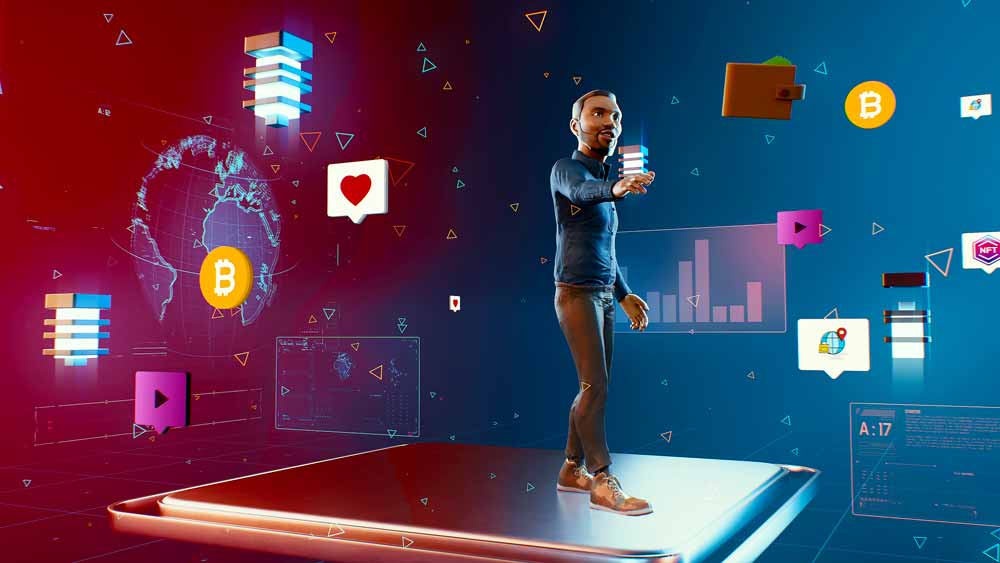
Five years ago, the metaverse was marketed as the next phase of the internet—a fully immersive digital universe where people would work, socialize, shop, and play. Tech giants rebranded themselves around it. Venture capital surged. Avatars, virtual real estate, and digital fashion briefly dominated headlines.
By 2026, the hype has evaporated. The metaverse has neither vanished nor taken over daily life. Instead, it has settled into a quieter, narrower role—less a parallel universe than a collection of practical tools embedded in existing digital ecosystems.
The metaverse did not fail. But it did not arrive as advertised.
From Total World to Specialized Spaces
The early metaverse narrative promised a single, shared digital environment where identities and assets would move seamlessly across platforms. That vision proved unrealistic.
Technical constraints—latency, hardware discomfort, interoperability issues—and human behavior quickly intervened. Most users were unwilling to spend hours wearing headsets. Enterprises balked at unclear returns. Consumers found virtual worlds novel but exhausting.
What emerged instead was fragmentation. In 2026, the metaverse exists primarily as purpose-built environments: industrial training simulations, virtual design studios, gaming universes, defense planning rooms, and remote collaboration spaces.
Rather than replacing the internet, these environments augment specific tasks where immersion adds measurable value.
Enterprise First, Consumers Second
Today’s metaverse is driven less by lifestyle aspirations and more by balance sheets.
Manufacturing firms use digital twins to simulate factories before investing billions in physical infrastructure. Energy companies model offshore platforms and power grids. Airlines train pilots in immersive simulators that replicate real-world stress with lower cost and risk.
In healthcare, surgeons practice complex procedures in virtual environments, while therapists use immersive settings for pain management and PTSD treatment. These applications do not rely on crypto assets or decentralized ownership—only on realism, accuracy, and reliability.
For enterprises, the metaverse has become a productivity tool, not a social revolution.
Gaming Remains the Cultural Core
If there is one domain where the metaverse remains culturally relevant, it is gaming.
Massively multiplayer worlds continue to evolve into complex social economies with concerts, virtual goods, and creator-driven marketplaces. For younger users, identity formation increasingly spans physical and digital spaces, with avatars acting as persistent social representations.
Yet even here, the experience is platform-specific. There is no unified metaverse—only large, walled digital worlds competing for attention.
This reality undermines the early promise of interoperability, but it aligns more closely with how the internet itself evolved: fragmented, commercialized, and dominated by ecosystems rather than universes.
What Happened to Virtual Reality?
Hardware was supposed to be the gateway to the metaverse. In 2026, VR and AR devices are better—lighter, sharper, and more affordable—but still not universal.
The problem is not technology alone. It is human behavior.
People prefer frictionless interaction. Phones won because they fit into daily routines. Headsets, even improved ones, demand intention and isolation.
As a result, mixed reality—layering digital elements onto the physical world—has gained more traction than fully immersive VR. Augmented overlays in navigation, maintenance, retail, and education have proven more adaptable to daily life.
The metaverse, it turns out, works best when it does not ask users to leave the real world entirely.
The AI Takeover
Perhaps the biggest reason the metaverse faded from headlines is competition—from artificial intelligence.
AI delivered immediate returns. It automated work, accelerated research, boosted productivity, and reshaped industries fast. The metaverse required patience, cultural change, and infrastructure investment.
Capital followed impact.
Ironically, AI now underpins much of what remains of the metaverse. Virtual environments rely on AI-generated assets, non-player characters with natural language interaction, real-time translation, and intelligent moderation. Without AI, immersive worlds would feel static and expensive to maintain.
In this sense, the metaverse has become a downstream beneficiary of AI rather than a rival vision of the future.
Digital Ownership: A Muted Experiment
Early metaverse rhetoric leaned heavily on blockchain and NFTs, promising digital ownership of virtual land, clothing, and identity.
By 2026, that vision has largely retreated. Regulatory uncertainty, speculative excess, and user confusion limited mass adoption. Most platforms reverted to centralized control, prioritizing user experience over decentralization ideology.
Digital assets still exist—especially in gaming—but function more like licensed goods than sovereign property. The metaverse, as it stands today, is not a decentralization project; it is a platform economy.
Geopolitics and the Metaverse Divide
The metaverse’s evolution has also been shaped by geopolitics.
Countries increasingly treat immersive technologies as strategic infrastructure. Military training, intelligence visualization, and disaster preparedness have driven state investment. Meanwhile, content rules, data localization, and national security concerns prevent global integration.
Rather than a universal digital space, the metaverse reflects the fractured world order—regional, regulated, and politically constrained.
So Where Is the Metaverse, Really?
In 2026, the metaverse is no longer a destination—it is a layer.
It lives inside enterprise software, training modules, design tools, and entertainment platforms. It appears when immersion offers a clear advantage and disappears when it does not.
This quieter existence may actually be a sign of success.
Technologies rarely change the world in the ways their creators imagine. The internet was not about homepages; smartphones were not about calls; social media was not about connection. Each found its purpose through use, not vision.
The metaverse is undergoing the same correction—from spectacle to utility.
A Future That’s Less Flashy—and More Real
The question in 2026 is no longer “When will the metaverse arrive?” It already has.
The better question is whether societies will notice it—embedded quietly into workflows, entertainment, and education—without the grand metaphors and inflated expectations that once defined it.
The metaverse did not become a new world.
It became part of this one.