
A new business platform called Hal has just launched in the UAE, and it could change how small businesses here find customers, suppliers and funding. It’s backed by three heavyweight names: Standard Chartered, Mashreq and LuLu Financial Holdings.
The platform was unveiled at Investopia Bridge 2026, with Abdullah bin Touq Al Marri, the UAE Minister of Economy and Tourism, in attendance. That kind of government presence signals how seriously the country is taking SME growth right now.
What exactly is Hal, and why should UAE SMEs care?
Think of Hal as a digital meeting point for business. It’s a joint venture bringing together SC Ventures, which is Standard Chartered’s innovation and venture-building arm, NeoVentures, Mashreq’s corporate venture division, and LuLu Financial Holdings.
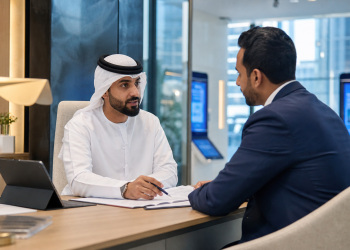
The idea is simple but useful. Hal will work as a business-to-business marketplace, meaning small and medium-sized companies in the UAE can log on to find buyers for what they sell and suppliers for what they need. That alone solves a common headache for smaller firms that often don’t have the networks or sales teams to go hunting for new clients.
But Hal isn’t just a listings site. Companies using the platform will also get introduced to financial, technology and logistics services from partner institutions. In other words, if you’re running a small business and you need a loan, a payments system, or help shipping goods, Hal is designed to point you toward providers who can actually help.
That matters a lot in the UAE, where SMEs aren’t a small part of the economy, they are the economy in many ways. The sector makes up more than 94 percent of all companies operating in the country and contributes over 60 percent of the UAE’s non-oil GDP. Anything that makes life easier for these businesses has ripple effects across the wider economy.
Who’s already on board, and what happens next?
The platform didn’t launch quietly. Beehive, Microsoft, Visa and Aramex are among the first companies joining Hal’s ecosystem, and representatives from these firms signed memoranda of understanding at the launch event.
That’s a strong opening lineup. Beehive brings alternative financing experience, Microsoft and Visa bring technology and payments muscle, and Aramex brings logistics expertise. For an SME owner, that combination covers a lot of the practical problems that come with running and scaling a business, from getting paid on time to getting products delivered.
The fact that three major financial players, Standard Chartered, Mashreq and LuLu Financial Holdings, are pooling resources instead of competing separately also says something about how the UAE business support landscape is evolving. Rather than SMEs having to approach banks, logistics firms and tech providers one by one, Hal aims to bundle those connections into a single platform.
For business owners and entrepreneurs across the UAE and wider GCC following developments in this space, it’s worth keeping an eye on how Hal rolls out in practice. You can follow ongoing coverage of these shifts through TAI News business section, where developments affecting SMEs, investment and entrepreneurship in the region are tracked closely.
What comes next will be the real test. A platform is only as useful as the deals it actually helps close, whether that’s a small manufacturer finding a new buyer, a retailer securing better financing terms, or a logistics partnership that cuts delivery costs. The initial list of partners, Beehive, Microsoft, Visa and Aramex, suggests Hal is starting with genuine capability rather than just good intentions. This report draws on details first published by Arabian Business.
Given that SMEs underpin such a large share of the UAE’s non-oil economy, how quickly Hal scales up, and how many more companies and banks join its ecosystem, will be worth watching closely in the months ahead.