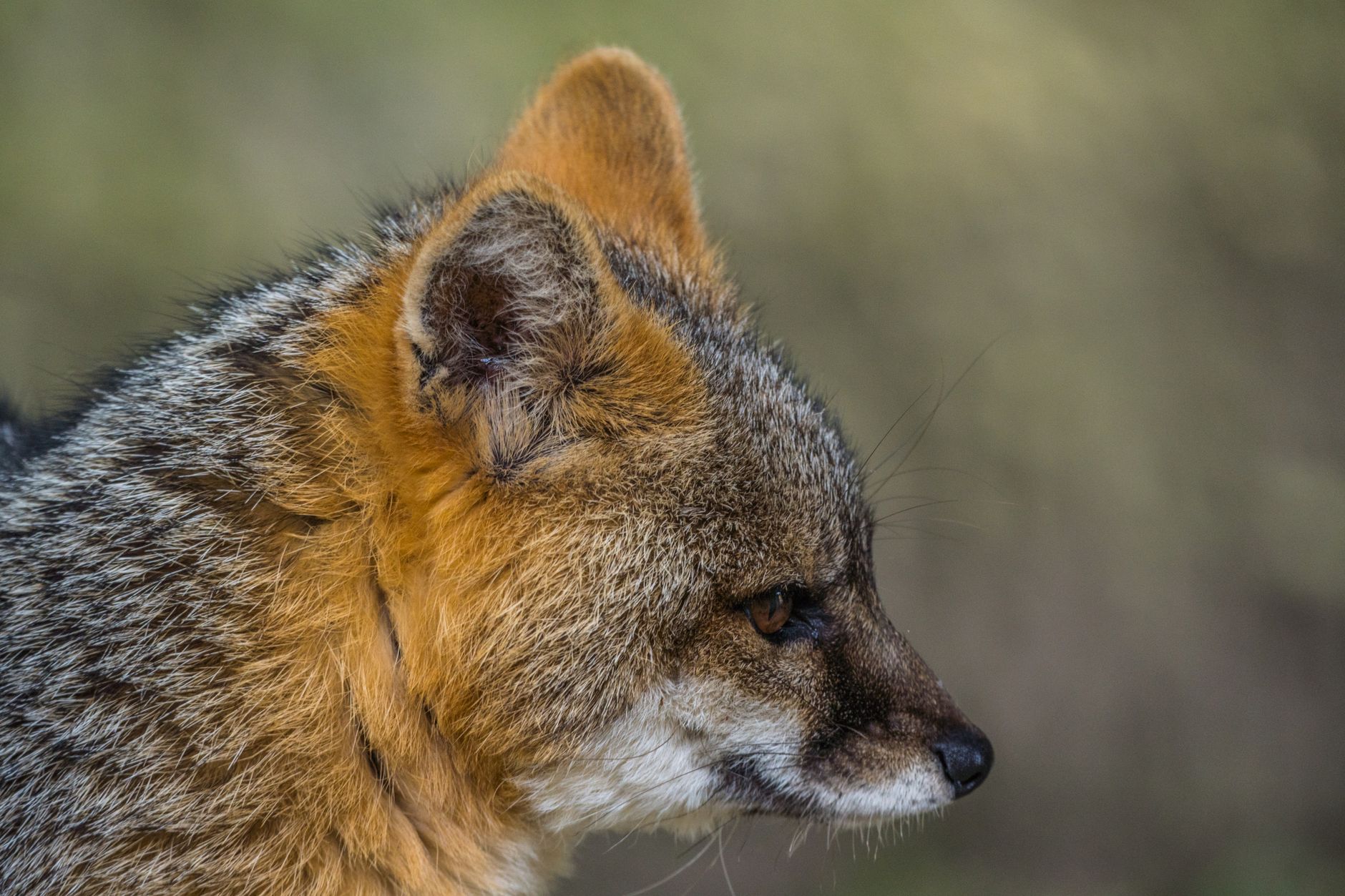
A wildlife recovery effort off the coast of California has become one of the most striking conservation success stories in recent decades, after two subspecies of island fox were pulled back from the edge of extinction and formally removed from the United States’ endangered species list. In 1999, wildlife officials recorded just 15 island foxes remaining on San Miguel Island and a similarly low count of 15 on Santa Rosa Island, numbers so small that scientists feared both populations could disappear within years.
The collapse was traced primarily to predation by golden eagles, which had moved into the island ecosystems and began preying heavily on the small, ground-dwelling foxes. Unlike mainland fox populations, the island subspecies had evolved in relative isolation, with limited natural defenses against an aerial predator of that size. As eagle numbers rose, fox populations on both islands went into freefall, pushing the animals toward what conservationists described as a near-certain path to extinction.
Faced with the crisis, wildlife agencies and conservation partners moved to implement a coordinated, multi-pronged recovery strategy rather than relying on a single intervention. Golden eagles were captured and relocated away from the islands to remove the immediate predation pressure. At the same time, surviving foxes were brought into captive breeding programs designed to rebuild population numbers under controlled, protected conditions before eventual reintroduction to the wild. Alongside these efforts, teams worked on restoring the islands’ broader habitat, addressing ecological imbalances that had made the environment more hospitable to eagles and less stable for native species.
A Model for Broader Conservation Efforts
The combined approach — predator management, captive breeding, and habitat restoration — proved effective. Over time, fox populations on both San Miguel and Santa Rosa islands rebounded significantly, allowing regulators to determine that the subspecies no longer met the criteria for endangered status. The delisting marked a rare full-circle outcome in species conservation, where a population reduced to a mere handful of individuals was ultimately restored to a level considered self-sustaining in the wild.
Conservation researchers point to the island fox case as evidence that extinction is not always an inevitable endpoint, even when a species’ numbers fall into the double digits. The recovery underscores the importance of addressing root causes — in this case, an introduced predation pressure — rather than treating population decline as an isolated problem to be solved through breeding alone. It also highlights the value of sustained, multi-year commitment from wildlife agencies willing to intervene directly in fragile ecosystems.
While the story originated far from the Gulf region, as first reported by the In 1999, just 15 island foxes remained on each of two California islands; captive breeding report, it carries relevance for conservationists and policymakers in the GCC, where governments have increasingly invested in biodiversity protection, captive breeding initiatives, and habitat restoration for native desert and marine species. As part of the wider innovation landscape shaping environmental policy, such case studies offer a practical reference point for regional wildlife programs seeking to reverse population declines through coordinated, science-based intervention rather than isolated measures.