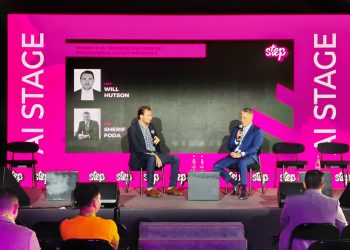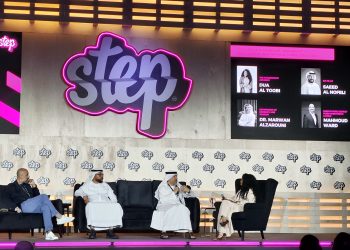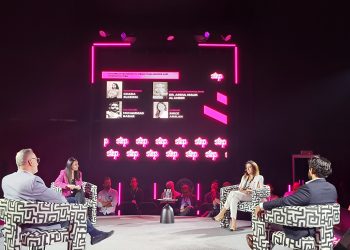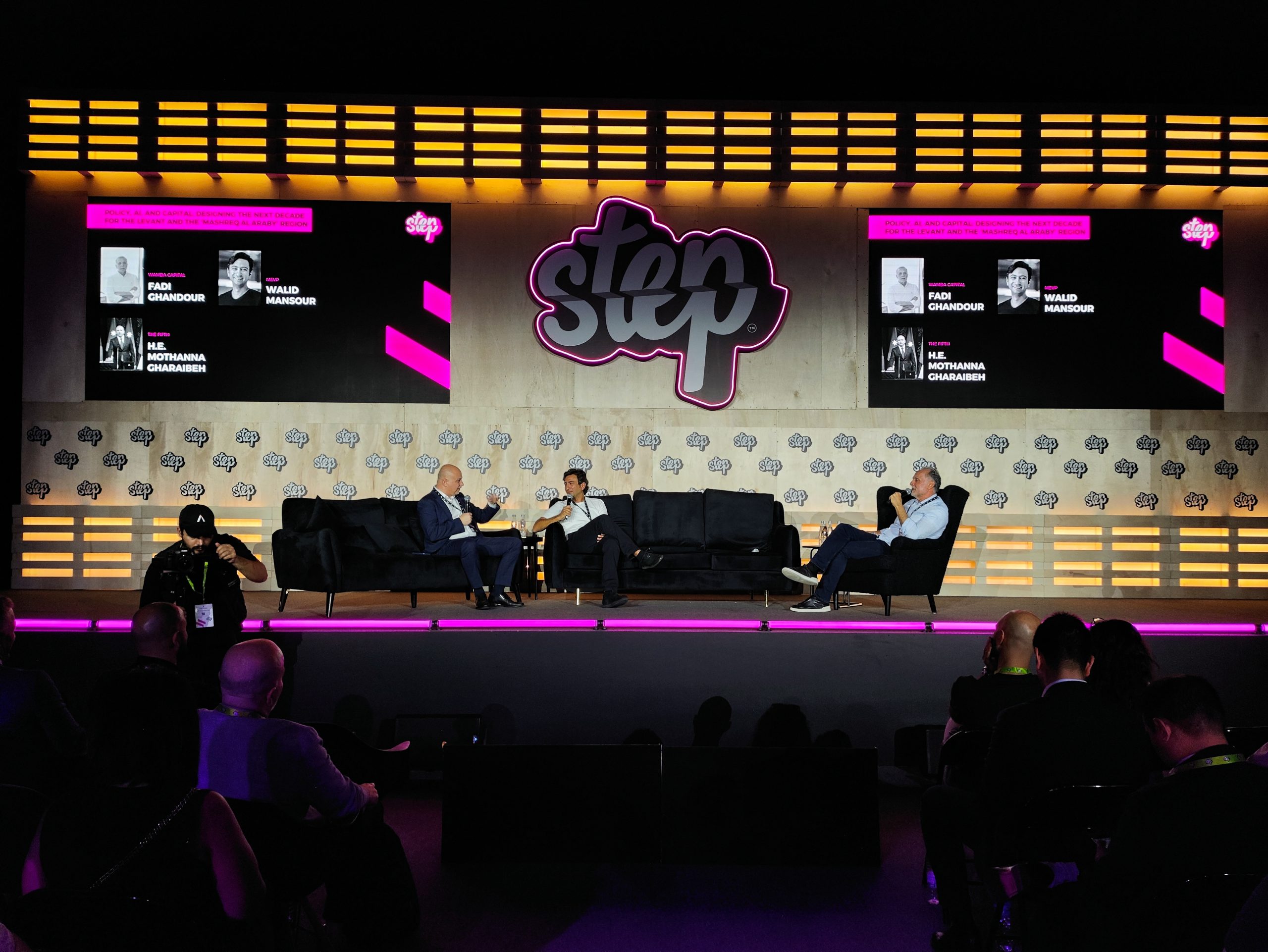
An important discussion was organized at the main Stage during STEP Dubai 2026, the conversation shifted from startups and scale to something far more structural: the future architecture of economic renewal across the Levant and the Mashreq Al Araby region. The panel, titled “Policy, AI, and Capital: Designing the Next Decade,” convened policymakers and venture leaders to examine how artificial intelligence could serve not merely as a technological upgrade, but as a catalyst for systemic transformation.
The discussion opened with a central premise: AI is not a vertical industry. It is infrastructure. And for economies seeking productivity growth, job creation, and renewed competitiveness, the design of policy frameworks and capital flows will determine whether AI becomes extractive — or generative.
Follow the conversation:
Fadi Ghandour, Executive Chairman of Wamda Capital, framed the moment as one of strategic urgency. The Levant, he argued, possesses deep human capital, entrepreneurial resilience, and a globally connected diaspora. What it requires is coordinated policy alignment and smarter capital deployment. AI, in this context, represents a leapfrogging opportunity — enabling emerging markets to bypass legacy inefficiencies and build digitally native systems from the outset.
From a governance perspective, Mothanna Gharaibeh, representing The Fifth, emphasized regulatory modernization. For AI to drive inclusive growth, governments must move beyond reactive legislation toward anticipatory regulation — frameworks that encourage experimentation while safeguarding public trust. He underscored that national AI strategies must integrate education reform, digital infrastructure investment, and public-private partnerships.
Meanwhile, Walid Mansour of Middle East Venture Partners (MEVP) focused on capital architecture. Venture funding in the region has historically been cyclical and concentrated. To power the next decade, he argued, the ecosystem must evolve toward deeper pools of institutional capital, cross-border investment vehicles, and sector-specific AI funds that support both early-stage experimentation and scale-stage expansion.
Throughout the session, one theme remained consistent: fragmentation is the region’s greatest risk — and coordination its greatest opportunity. The Levant and Mashreq economies share linguistic, cultural, and market synergies. By harmonizing digital regulations, enabling talent mobility, and aligning investment frameworks, the region could collectively compete in global AI value chains rather than operating as isolated markets.
Importantly, the panel avoided techno-optimism detached from reality. Speakers acknowledged structural challenges — political instability, infrastructure gaps, and limited risk appetite in certain markets. Yet the tone was pragmatic rather than pessimistic. AI was presented not as a silver bullet, but as a multiplier: enhancing productivity in logistics, financial services, healthcare, and government delivery.
The session concluded with a forward-looking reflection: the next decade will not be defined solely by who builds the most advanced models, but by who designs the most resilient ecosystems. Policy clarity, capital sophistication, and regional collaboration will determine whether the Levant and Mashreq Al Araby region emerge as contributors to the global AI economy — or remain consumers of imported innovation.
On the Main Stage at STEP Dubai 2026, the message was clear: economic renewal in the region will not happen by chance. It will be designed — deliberately — at the intersection of policy, AI, and capital.