
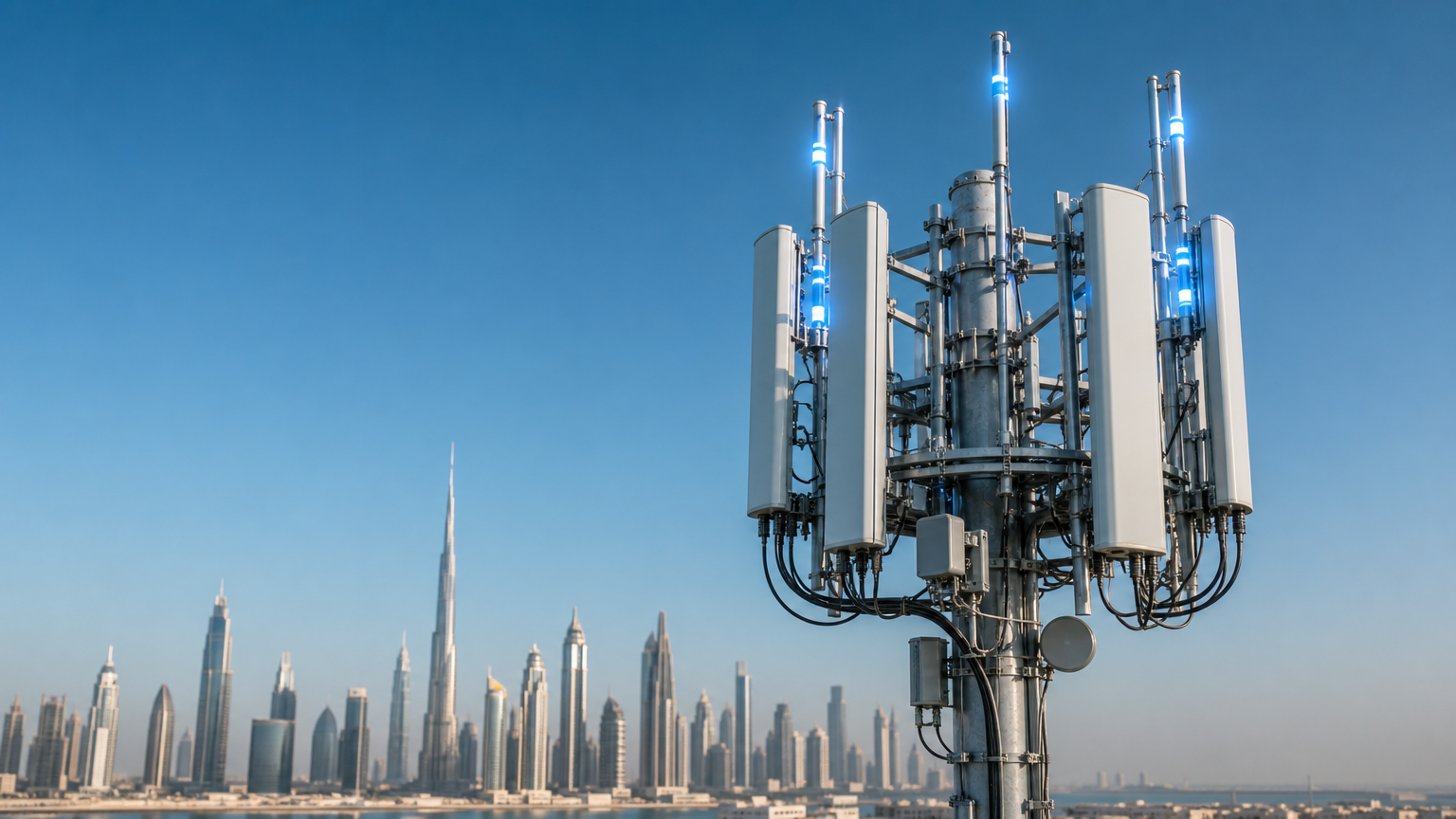
If you live in the UAE and stream, game or work from your phone, this one’s for you. e& UAE has switched on the world’s first commercial mobile network built on Upper 6GHz (U6GHz) 256TRX Giga-MIMO technology, and it can hit single-user speeds of up to 10 Gbps on the downlink.
That’s not a typo. Ten gigabits per second is roughly what a top-tier home fibre broadband plan offers, except this is happening over the air, on your mobile connection. The launch, announced on Tuesday, September 29, marks a major step for the UAE’s telecom sector and puts the country ahead of the pack in the global race toward 6G.
Why UAE mobile networks are suddenly this fast
The magic is in two things: a wide slice of new spectrum and smarter antennas. The network runs on the 6425–6775 MHz U6GHz band, giving it up to 350 MHz of continuous bandwidth to work with. That’s a lot more room than older bands typically offer, which is a big reason speeds have jumped so sharply.
Then there’s the 256TRX Giga-MIMO technology itself. In simple terms, it packs far more antenna transceivers into each mobile site compared with the 64TRX setups used in standard 5G rollouts. More antennas per site means the network can send and receive more data at once, aim signals more precisely at individual users through dynamic beamforming, and cut down on interference. For everyday users, that should translate into steadier connections even in crowded areas like Downtown Dubai or Abu Dhabi’s business districts, where thousands of phones compete for signal at the same time.
On the uplink side, the network supports speeds of up to 1 Gbps, which matters for anything you’re sending out, not just downloading. Live video calls, cloud backups and remote work tools all depend on strong upload speeds, and this upgrade gives that side of the equation a serious boost too.
What this means for the UAE’s 6G ambitions
This isn’t just about faster Netflix downloads. The rollout is designed to support the UAE’s national 6G roadmap, which is being led by the Telecommunications and Digital Government Regulatory Authority (TDRA). By deploying this technology commercially now, the UAE is positioning itself to adopt full 6G standards early, once they’re finalised internationally.</p
e& UAE says the high-throughput, low-latency network it’s building is meant to support technologies that need serious bandwidth and near-instant response times. That includes AI systems that manage networks on their own, extended reality (XR) applications like advanced AR and VR, autonomous industrial systems, and the kind of mission-critical infrastructure that keeps smart cities running. For readers who follow technology news in the region, this fits a broader pattern: the UAE isn’t just adopting new tech, it’s trying to be first in line for it.
For businesses, especially in logistics, manufacturing and healthcare, this kind of network infrastructure could open doors that weren’t practical before. Autonomous industrial systems and real-time smart-city applications need networks that don’t lag, and this upgrade is built specifically with that in mind. Startups and enterprises working on AI-native operations or XR products may find the UAE an increasingly attractive place to test and scale those ideas, simply because the underlying network can now keep up.
For everyday residents, the immediate benefit is simpler: faster mobile internet where it’s rolled out, with better performance even when everyone around you is online at the same time. Over time, as coverage expands, that could mean smoother video calls, quicker downloads and fewer dropped connections in busy urban pockets.
What happens next will depend on how widely e& UAE rolls this network out beyond its initial launch and how quickly international 6G standards catch up to what’s already running commercially in the UAE. According to GCC Business News, the deployment strengthens the UAE’s 5G-Advanced capabilities while laying groundwork for 6G, so this launch looks less like a one-off upgrade and more like the opening move in a longer race. Worth watching is whether other UAE and GCC operators follow with similar U6GHz deployments, and how soon ordinary users start seeing these speeds on their own devices.