
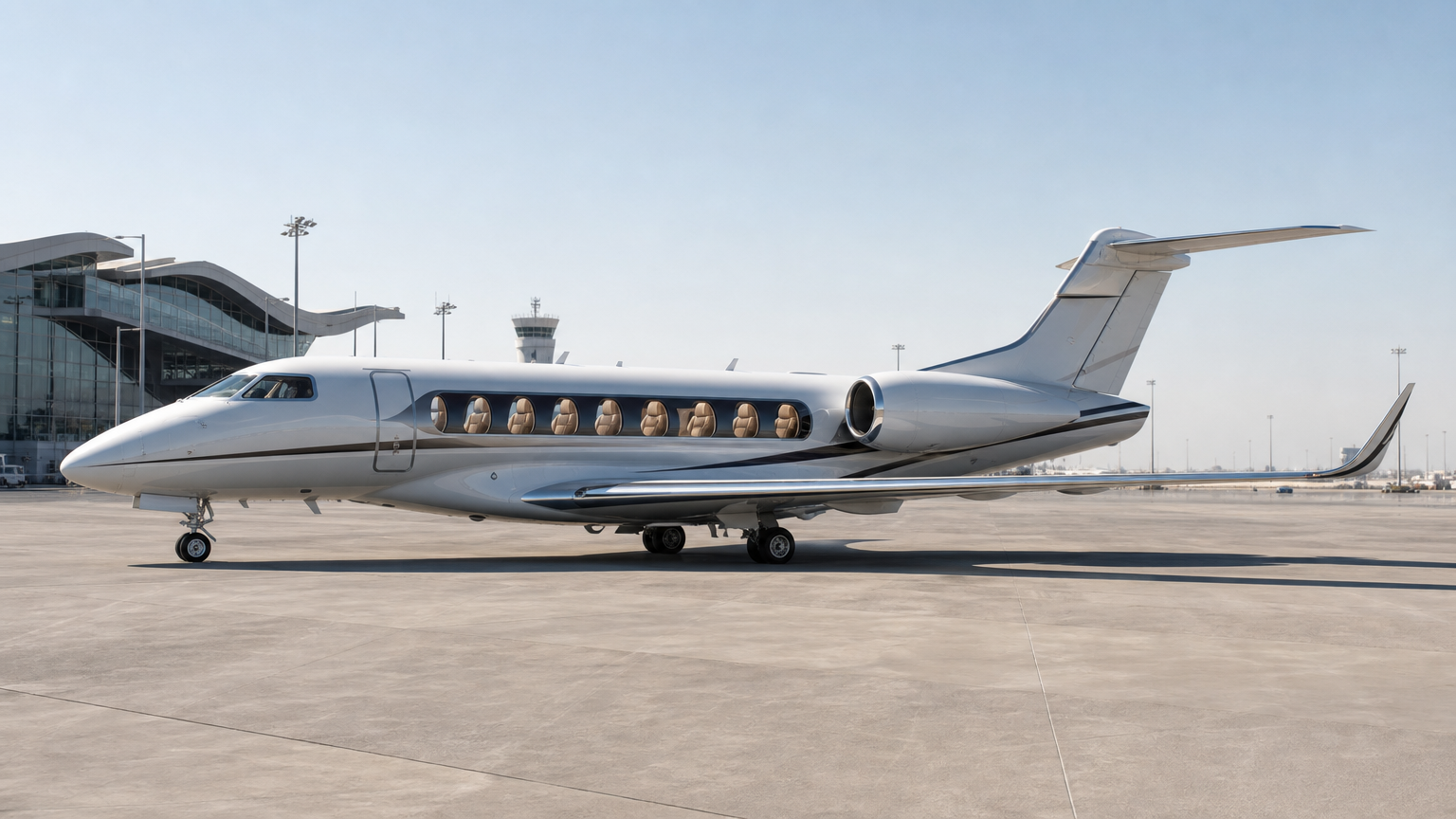
Hundreds of private jets are flying empty between Dubai and Riyadh every year, and that’s actually good news if you’re looking for a cheap way to fly private. New data from aviation booking platform SkyAccess shows the Dubai-Riyadh corridor logged 355 “empty leg” flights, making it the tenth-busiest route of its kind in the world. For UAE and Saudi travellers, this quirk of private aviation could mean a private jet seat for a fraction of the usual price.
What exactly is an empty leg, and why does Dubai have so many?
An empty leg happens when a private jet drops off passengers at one airport and then has to fly back, or fly onward, without anyone on board. Instead of letting that flight go to waste, operators list the seats at steep discounts. SkyAccess says these empty legs typically cost between 25 and 75 per cent less than booking a full charter, depending on the aircraft, the route and how last-minute the booking is.
Dubai sits right at the centre of this trend in the Gulf. Across the entire GCC, SkyAccess recorded 4,873 empty-leg flights over the year to October 2, 2026. More than a third of those flew between two Gulf airports, which tells you just how much private jet traffic is moving within the region rather than out of it.
The UAE alone accounted for 3,297 of those flights, nearly 68 per cent of the regional total. Dubai on its own made up 2,762 of them, and most of that traffic went through Al Maktoum International rather than the older Dubai International. That shift suggests private aviation in the city is increasingly concentrated at the newer airport as capacity and demand keep growing.
Which routes offer the best deals for GCC flyers?
If you’re chasing a discounted private flight, the numbers point clearly to a few corridors. Dubai-Riyadh is by far the busiest, with 349 flights recorded in both directions combined. That’s well ahead of Dubai-Doha, which saw 253 flights, and Dubai-Kuwait City, with 151.
Rounding out the top five, Dubai-Jeddah came in fourth with 139 flights, while Dubai-London took fifth place with 137. The pattern makes sense when you think about how business and leisure travellers move around the region. Riyadh, Doha, Kuwait City and Jeddah are all major business hubs with heavy daily traffic to and from Dubai, so jets naturally shuttle back and forth, often with empty seats on the return leg.
For business travellers and entrepreneurs who regularly hop between Dubai and Riyadh for meetings, this data is worth paying attention to. Instead of booking a full charter at standard rates, keeping an eye on empty-leg listings could cut costs significantly, especially for flexible travellers who can adjust their schedule by a day or two to match an available empty leg. It’s the kind of saving that matters whether you’re a startup founder watching every dirham or a corporate executive managing a travel budget across the GCC.
The broader picture also says something about Dubai’s role in regional aviation. The emirate isn’t just a tourism and trade hub, it’s increasingly the operational heart of private jet movement across the Gulf. With two-thirds of all GCC empty-leg flights touching a UAE airport, and Dubai alone handling more than half of the regional total, the numbers back up Dubai’s reputation as the Gulf’s private aviation capital. That status feeds into everything from real estate demand near the airports to the hospitality and services that cater to frequent private flyers.
For readers following the business news coming out of the UAE’s aviation and travel sectors, this data adds a practical angle: private jet travel in the Gulf isn’t just for the ultra-wealthy flying on their own schedule. There’s a growing market of discounted, last-minute seats on established routes like Dubai-Riyadh, Dubai-Doha and Dubai-Kuwait City. Worth watching next is whether platforms like SkyAccess expand this kind of listing further, and whether more GCC travellers start treating empty legs as a genuine alternative to commercial business class. This report was first covered by Arabian Business.