The emergence of artificial intelligence has transformed nearly every aspect of modern society, but perhaps nowhere is the disruption more profound than in the world of creativity. For centuries, copyright law has rested on a relatively simple assumption: creative works originate from human minds. Authors write novels, painters create masterpieces, musicians compose symphonies, and photographers capture moments that reflect personal vision and originality. Copyright evolved to protect these expressions, rewarding creativity while encouraging innovation.
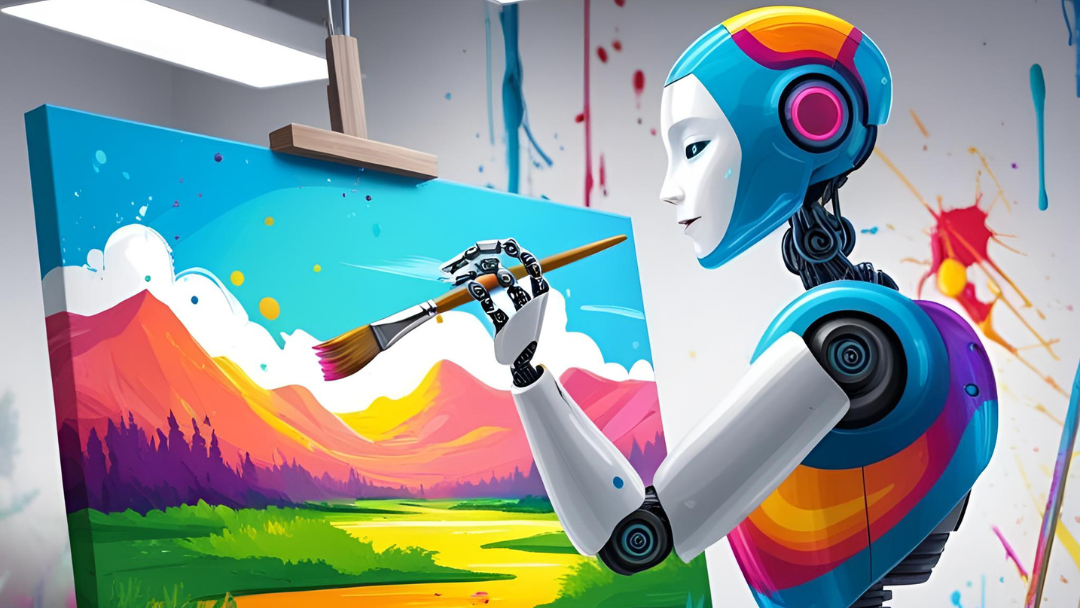
Artificial intelligence challenges this centuries-old foundation. Today, machines can generate novels, paint images, compose orchestral music, write computer code, produce feature-length videos, and even imitate the artistic styles of famous creators. Systems trained on billions of words, images, recordings, and videos are now capable of producing outputs that, to many observers, are indistinguishable from human work.
The question facing governments, courts, businesses, and artists is no longer whether AI can create. It already can. The real question is who owns what AI creates—and whether existing copyright systems are prepared for a future where human creativity increasingly collaborates with machine intelligence.
The answer will shape not only the economics of creative industries but also the future relationship between technology and culture.
Copyright’s Original Purpose
Modern copyright law emerged to balance two competing interests. On one hand, creators deserve protection and economic incentives for producing original work. On the other, society benefits when knowledge, culture, and ideas eventually become freely available to everyone.
International agreements such as the Berne Convention established principles that recognize the rights of authors across borders, while national legislation refined protections for literature, music, cinema, architecture, photography, software, and numerous other forms of creative expression.
For decades, copyright disputes generally involved familiar questions: unauthorized copying, piracy, plagiarism, derivative works, licensing, or fair use. Artificial intelligence introduces an entirely different dimension because it challenges the very definition of authorship.
If no human writes every sentence or paints every brushstroke, who becomes the author?
AI Learns by Consuming Human Creativity
Unlike traditional software, generative AI systems learn patterns from enormous collections of existing human-created material.
Large language models study books, articles, scientific papers, websites, software repositories, and public documents. Image generators analyze billions of photographs, paintings, illustrations, advertisements, and artworks. Music models absorb countless recordings spanning centuries of musical history.
This training process has become the center of global copyright controversy.
Many artists argue that their copyrighted works were used without permission, compensation, or even notification. Technology companies often respond that machine learning does not store or reproduce original works directly but instead learns statistical relationships similar to how humans study existing knowledge before creating something new.
Courts around the world are now being asked to determine whether AI training itself constitutes copyright infringement or whether it falls within legal exceptions such as fair use, text-and-data mining, or research exemptions.
The decisions reached over the next decade may become as historically significant as earlier rulings that shaped the internet itself.
Who Owns AI-Generated Content?
Ownership becomes even more complicated after AI produces new material.
Imagine an entrepreneur generates an advertising campaign using an AI platform. A journalist asks an AI assistant to draft an investigative report. A filmmaker creates digital actors through generative systems. A pharmaceutical company asks AI to produce medical illustrations.
Who owns these outputs?
Several possibilities exist.
The user who wrote the prompt could claim ownership because the creative direction originated from human instructions.
The software developer might claim rights because the AI model itself produced the work.
The company operating the AI platform could establish ownership through contractual terms.
Alternatively, some jurisdictions may conclude that purely AI-generated content belongs to no one because copyright traditionally requires human authorship.
Different countries are beginning to adopt different interpretations, creating legal uncertainty for businesses operating globally.
Human Authorship Remains Central
Many copyright authorities continue to emphasize that copyright protects human creativity rather than machine production.
In numerous jurisdictions, courts and copyright offices have rejected applications seeking protection for works created entirely by autonomous AI systems without meaningful human creative involvement.
The underlying principle is straightforward: copyright exists to encourage human intellectual effort.
If a machine independently generates content without human originality, traditional copyright may simply not apply.
However, reality is rarely so simple.
Modern creative workflows increasingly involve collaboration between humans and AI.
A designer may generate hundreds of AI concepts before selecting, modifying, editing, combining, and refining one image.
A novelist may use AI for brainstorming while personally rewriting every paragraph.
An architect may employ AI to produce structural alternatives before making entirely human design decisions.
These hybrid creations blur the boundary between machine assistance and human authorship.
Future legal systems will likely spend years defining where that boundary truly lies.
The Artist’s Perspective
Many artists see AI not as a technological marvel but as an existential threat.
Illustrators report declining commissions as businesses increasingly use AI-generated artwork.
Voice actors worry that synthetic voices trained on their performances may replace future employment.
Musicians fear unauthorized cloning of their distinctive singing styles.
Photographers compete against AI-generated imagery that requires no camera, studio, or physical location.
For many creators, the concern extends beyond economics.
Their life’s work may have become training material for systems capable of producing competing content without consent.
Some compare the situation to building a factory using stolen equipment.
Others argue that human culture has always evolved by learning from previous generations and that AI merely accelerates this historical process.
The debate remains deeply emotional because it concerns identity as much as intellectual property.
The Technology Industry’s View
Technology companies present a different argument.
They maintain that innovation has historically depended on access to existing information.
Search engines index copyrighted webpages.
Students learn by reading copyrighted books.
Researchers analyze published scientific literature.
Musicians are inspired by earlier compositions.
Painters study centuries of artistic traditions.
From this perspective, AI training represents another form of learning rather than copying.
Furthermore, technology companies argue that excessive restrictions on AI development could slow scientific progress, reduce international competitiveness, and concentrate innovation only among countries with permissive regulatory environments.
They also emphasize AI’s enormous societal benefits, including advances in healthcare, education, climate research, engineering, and scientific discovery.
The challenge for policymakers is balancing these public benefits against the legitimate rights of creators.
The Global Regulatory Race
Governments are responding in remarkably different ways.
Some countries prioritize protecting creators by strengthening transparency requirements and exploring licensing mechanisms for AI training datasets.
Others focus on promoting AI innovation by providing broader legal flexibility for machine learning.
Still others seek compromise through collective licensing systems, mandatory disclosures, or revenue-sharing arrangements between AI developers and content creators.
This divergence risks creating fragmented international markets.
An AI system considered legally trained in one country may face lawsuits elsewhere.
Businesses operating globally therefore face increasing legal complexity.
International harmonization may eventually become necessary, much as earlier treaties standardized traditional copyright protections across borders.
Deepfakes and Identity Rights
Copyright represents only one aspect of AI-generated content.
Artificial intelligence can now produce realistic videos, synthetic voices, and digital replicas of public figures.
Celebrities increasingly confront unauthorized AI-generated advertisements.
Political leaders face fabricated speeches.
Actors discover digital versions of themselves appearing in productions they never approved.
Musicians encounter songs that perfectly imitate their voices.
These issues extend beyond copyright into personality rights, privacy, publicity rights, trademark law, fraud prevention, and election integrity.
Legal systems are therefore developing entirely new frameworks alongside traditional copyright protections.
The future regulation of AI will likely combine multiple branches of law rather than relying on copyright alone.
Licensing as a Sustainable Solution
Many experts believe licensing will ultimately provide the most practical compromise.
Instead of prohibiting AI training altogether, technology companies could obtain licenses from publishers, record labels, news organizations, stock photography agencies, academic publishers, and independent creators.
Creators would receive compensation.
AI developers would gain legal certainty.
Users would access systems trained on properly licensed material.
Such models already exist in music streaming, broadcasting, publishing, and software development.
Artificial intelligence may simply require expanding these established licensing ecosystems.
However, implementing such systems globally remains extraordinarily complex because training datasets often contain billions of individual works from millions of creators across multiple jurisdictions.
Transparency and Attribution
Another emerging principle involves transparency.
Creators increasingly demand to know whether their works have been used for AI training.
Consumers also wish to distinguish between human-created and AI-generated content.
Future regulations may require AI companies to disclose training sources, maintain documentation, watermark synthetic media, or identify AI-generated outputs.
Transparency could reduce mistrust while enabling creators to exercise licensing choices more effectively.
Yet companies argue that revealing complete training datasets may expose valuable trade secrets or create cybersecurity risks.
Finding the appropriate balance will require careful regulatory design.
Beyond Copyright: A New Creative Economy
Artificial intelligence may ultimately transform the economics of creativity rather than destroy it.
Routine content generation will become increasingly automated.
Meanwhile, originality, authenticity, reputation, emotional connection, and human experience may become more valuable than ever.
Consumers may continue paying premiums for works created directly by recognized artists, just as handmade craftsmanship retains value despite industrial manufacturing.
New professions are also emerging.
Prompt engineers, AI art directors, synthetic media editors, AI ethics specialists, dataset curators, and digital rights managers represent careers that scarcely existed a few years ago.
Creative industries have repeatedly adapted to technological revolutions—from photography and cinema to television, digital publishing, streaming platforms, and social media.
Artificial intelligence represents another chapter in this ongoing evolution.
The Need for International Cooperation
No single nation can solve AI copyright challenges independently.
Generative models operate across borders.
Cloud computing ignores national boundaries.
Digital content circulates globally within seconds.
International organizations, governments, technology companies, academic institutions, publishers, creators, and civil society must therefore collaborate to establish interoperable standards.
Future agreements may define acceptable AI training practices, licensing mechanisms, transparency obligations, attribution rules, and dispute-resolution procedures.
Without such coordination, conflicting legal systems could create uncertainty that harms both innovation and creative industries.
Conclusion
Copyright has always evolved alongside technology. The printing press, photography, recorded music, radio, television, photocopiers, personal computers, and the internet each forced societies to reconsider how creative works should be protected. Artificial intelligence is simply the latest—and perhaps the most transformative—chapter in that history.
The challenge is not choosing between technology and creativity. It is ensuring that both continue to flourish together.
If copyright law becomes too restrictive, innovation may slow dramatically, limiting the enormous potential of AI to improve medicine, education, science, and economic productivity. If protections become too weak, millions of artists, writers, musicians, filmmakers, journalists, photographers, and software developers may lose both income and incentives to create.
The future therefore lies in balance rather than extremes. Transparent AI development, fair licensing systems, meaningful human authorship standards, international cooperation, and equitable compensation mechanisms can create an ecosystem where technology amplifies human creativity instead of replacing it.
Artificial intelligence should not become the end of authorship. Properly governed, it can become the beginning of a new creative partnership between human imagination and computational intelligence. In that partnership, copyright will remain essential—not as an obstacle to innovation, but as the legal and ethical foundation that ensures creativity, whether inspired by humans, assisted by machines, or born from collaboration between both, continues to enrich civilization for generations to come.