Artificial intelligence has made it easier than ever to produce an advertisement.
It has also made it easier to produce one that people immediately wish had never been made.
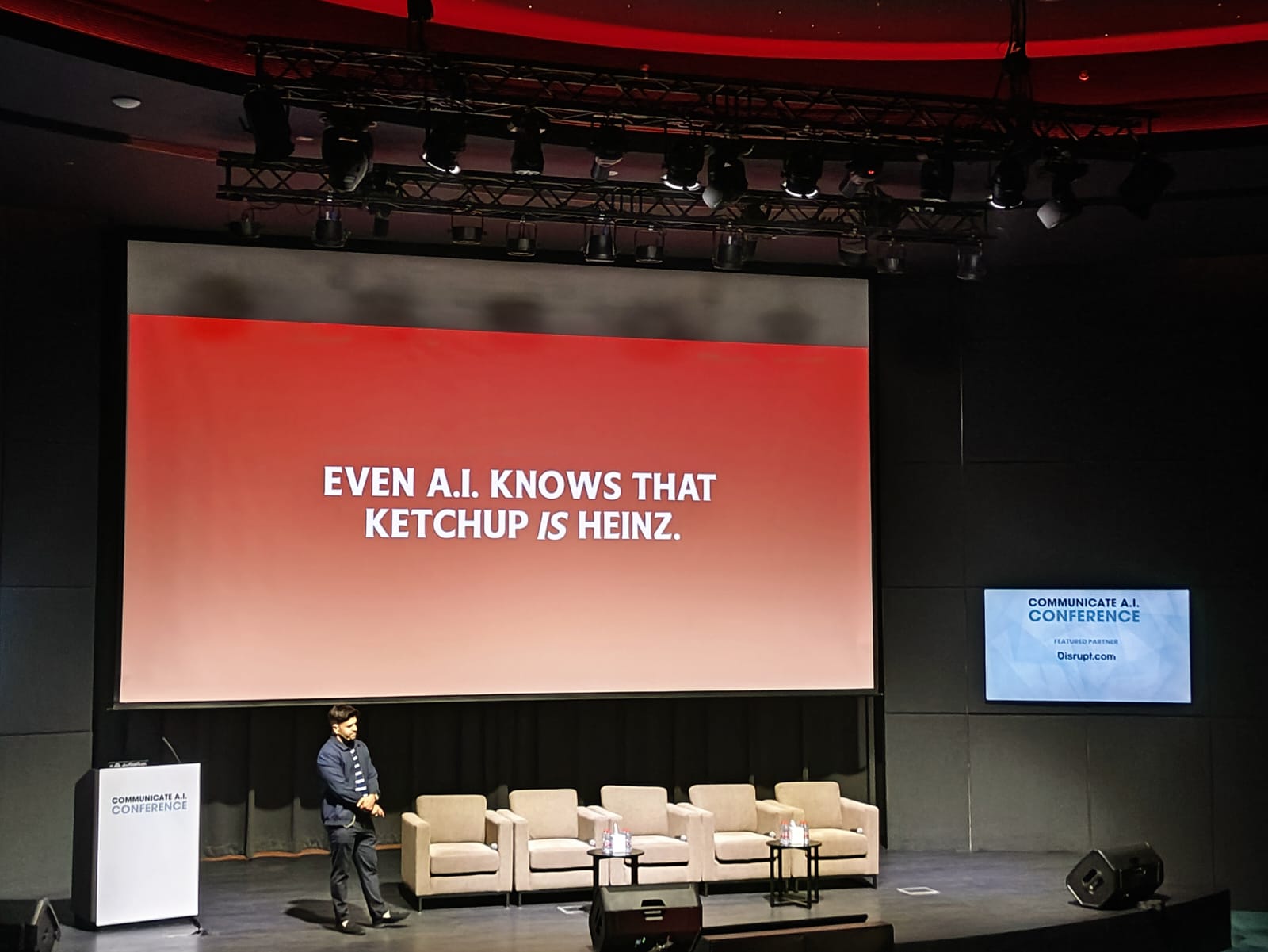
That tension was at the centre of “The Teardown: AI Ads Gone Wrong” at Communicate A.I. Conference 2026 in Dubai, where creative strategist and Yohan Wadia, Founder and Chief Creative Officer of Yohan Wadia Studio, examined some of the high-profile campaigns that discovered the hard way that faster production does not necessarily mean better advertising.
The session focused on a problem that has become increasingly familiar as brands experiment with generative AI: the technology can create something that looks finished long before anyone has established whether it should have been made.
McDonald’s, Coca-Cola and Guess were among the brands referenced in the discussion, providing a useful starting point for a wider conversation about what happens when AI enters a creative process without sufficient human judgement.
The format of the session was deliberately different from a traditional conference presentation.
Rather than presenting AI as either the future of advertising or a threat to creativity, “The Teardown” put the work itself under the microscope.
Campaigns were examined frame by frame, with attention paid to the creative decisions, visual language and emotional response they generated. Alongside the examples that attracted criticism were human-made campaigns that continued to demonstrate the ability of advertising to create something more difficult to manufacture: genuine affection and recognition.
That distinction matters.
One of the attractions of generative AI for advertisers is obvious. It can accelerate ideation, generate visual concepts, produce multiple executions and reduce the amount of time required to move from an idea to an asset.
But advertising has never been judged simply on whether an asset can be produced.
It is judged by what people feel when they encounter it.
A technically impressive AI-generated advertisement can still feel strange, generic or emotionally empty. It can also create the impression that a brand has prioritised production efficiency over the audience’s experience.
That becomes particularly problematic for global brands.
When a company such as Coca-Cola, McDonald’s or Guess puts its name behind a campaign, audiences bring decades of accumulated associations with the brand. A creative execution is therefore not operating in isolation. It is being compared with everything the brand has previously represented.
AI can reproduce visual conventions. It cannot automatically reproduce that accumulated relationship between a brand and its audience.
This is where the human-made comparison becomes important.
The strongest advertising often contains small decisions that are difficult to describe as simply “creative output”. Timing, cultural references, casting, humour, visual restraint and an understanding of what not to show can all influence whether a campaign feels authentic.
Those decisions may appear insignificant when compared with the spectacle of generative AI.
They are often the difference between something people scroll past and something they remember.
For marketers in the UAE and wider MENA region, the issue becomes even more complicated.
The region is a highly visual advertising market, but it is also culturally diverse. A campaign that travels easily across markets still needs to make sense locally. Humour, language, representation and social context can change considerably between audiences.
AI can help create multiple versions of a campaign. The difficult part is knowing whether those versions actually belong in the market.
This is one reason the debate around AI advertising is moving beyond questions of production.
The technology is increasingly capable of making content. The industry now has to become better at deciding which content deserves to exist.
That requires creative direction.
It requires people who understand the brand, the audience and the cultural environment in which the campaign will appear. And it requires someone willing to stop a piece of work when it is technically impressive but creatively wrong.
That was the underlying value of the teardown format.
Instead of asking whether AI can make an advertisement, it asks a more useful question: why did this particular advertisement work or fail?
The answer is rarely the technology alone.
AI can be a tool within a creative process, but the outcome remains dependent on the brief, the idea, the execution and the judgement applied before something reaches the audience.
There is also a growing distinction between viral attention and genuine brand value.
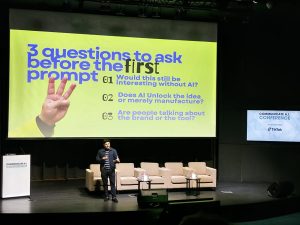
An AI-generated campaign can attract enormous attention precisely because audiences find it unusual, awkward or entertaining for the wrong reasons. That attention may look successful in social media metrics, but it does not automatically translate into positive brand association.
A campaign can be talked about without being loved.
For advertisers, that distinction is increasingly important as the volume of content continues to rise.
When everyone can generate more images, videos and concepts, attention becomes harder to earn. The answer may not be producing even more content. It may be producing fewer things that people actually care about.
That puts creative judgement back at the centre of the AI conversation.
The lesson from the campaigns examined during “The Teardown” was not necessarily that brands should stay away from artificial intelligence. Rather, it highlighted the risks of treating AI as a substitute for the creative thinking that gives advertising its purpose.
The technology can generate.
Someone still has to decide.
And as AI becomes a standard part of the advertising workflow, that decision may become the most valuable part of the process.
For an industry accustomed to measuring creative success through reach, impressions, clicks and increasingly sophisticated performance data, the harder metric may remain the oldest one: did anyone actually care?