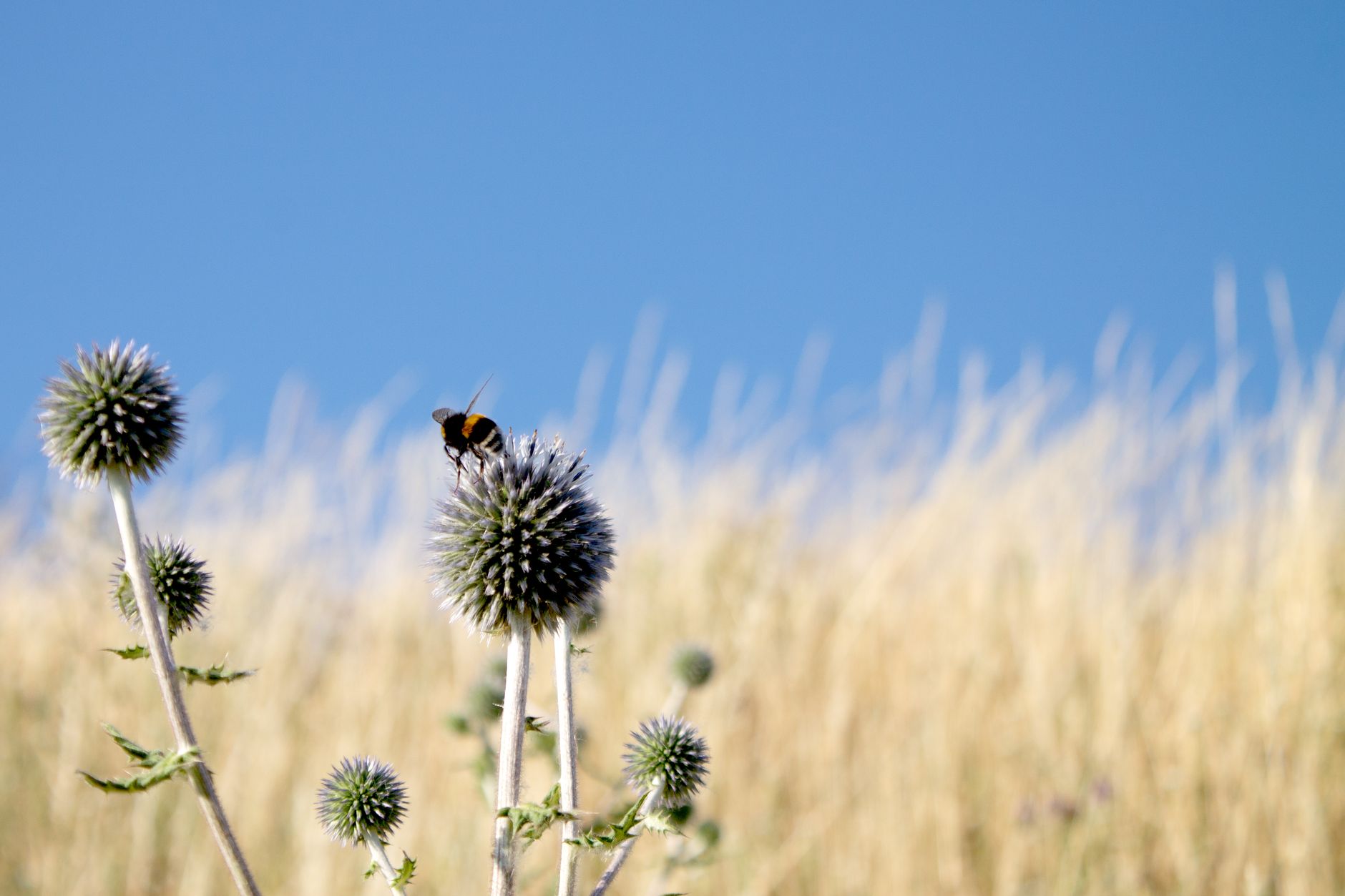
A years-long effort to return a patch of Iowa farmland to its natural state has yielded an unexpected scientific reward: the appearance of a federally endangered bumblebee species among the restored native flowers. The discovery, made on a 12-acre property painstakingly rehabilitated by its owner, is being cited by conservationists as evidence that small-scale, private habitat restoration can play a meaningful role in protecting pollinator species on the brink of extinction.
The Iowa landowner spent years converting the property from conventional turf and non-native vegetation into a landscape dominated by indigenous plants, a process that involved reseeding with regional wildflowers and grasses suited to the local ecosystem. The transformation was not undertaken with the endangered bee in mind; rather, it reflected a broader push toward ecological restoration that has gained traction among private landowners in the American Midwest, where native prairie habitat has been steadily lost to agriculture and development over the past century. It was only after the native flora matured and began attracting pollinators that the rare bumblebee was spotted, a moment that has since drawn attention from wildlife observers and habitat advocates.
A Habitat Built From Patience
Restoring degraded land to a state capable of supporting sensitive species typically takes years rather than months, since native plant communities need time to establish root systems, reach flowering maturity, and create the layered vegetation structure that ground-nesting and foraging insects depend on. In this case, the process appears to have paid off in a way rarely documented on private property, offering a real-world example of how individual restoration projects can intersect with formal conservation goals. The find was first reported in detail by the Times of India, which highlighted the property as a case study in what sustained, low-intervention land management can achieve for threatened wildlife.
Bumblebee populations across North America have declined sharply in recent decades due to habitat fragmentation, pesticide exposure, and the spread of disease, a trend mirrored among pollinator species in many parts of the world. Conservation biologists have increasingly pointed to residential and rural properties as an underused resource in reversing these declines, arguing that even modest patches of native habitat, when properly maintained, can serve as stepping stones connecting larger protected areas. The Iowa case adds to a small but growing body of anecdotal evidence supporting that approach.
Wider Relevance for Sustainability Efforts
While the discovery took place far from the Gulf, it speaks to a broader global conversation around biodiversity and land stewardship that has relevance for the UAE and the wider region, where authorities have invested heavily in native afforestation, mangrove restoration, and desert ecosystem protection as part of national sustainability strategies. Efforts such as mangrove planting along the UAE coastline and habitat conservation programmes tied to national environmental agendas share a similar underlying premise: that deliberate, patient restoration of native ecosystems can support species recovery even in landscapes altered by human activity. Stories emerging from this space continue to feed into the wider innovation picture, as researchers and policymakers look for scalable, low-cost models to address biodiversity loss alongside more capital-intensive conservation technologies.
For now, the Iowa property stands as a modest but notable example of what individual initiative can achieve, with the reappearance of a federally protected bumblebee serving as a tangible sign that habitat restoration, even on a limited scale, can produce measurable ecological outcomes. Wildlife officials and conservation groups are expected to continue monitoring the site as the native plantings mature further, with an eye toward understanding whether similar results can be replicated on other privately owned parcels of land.