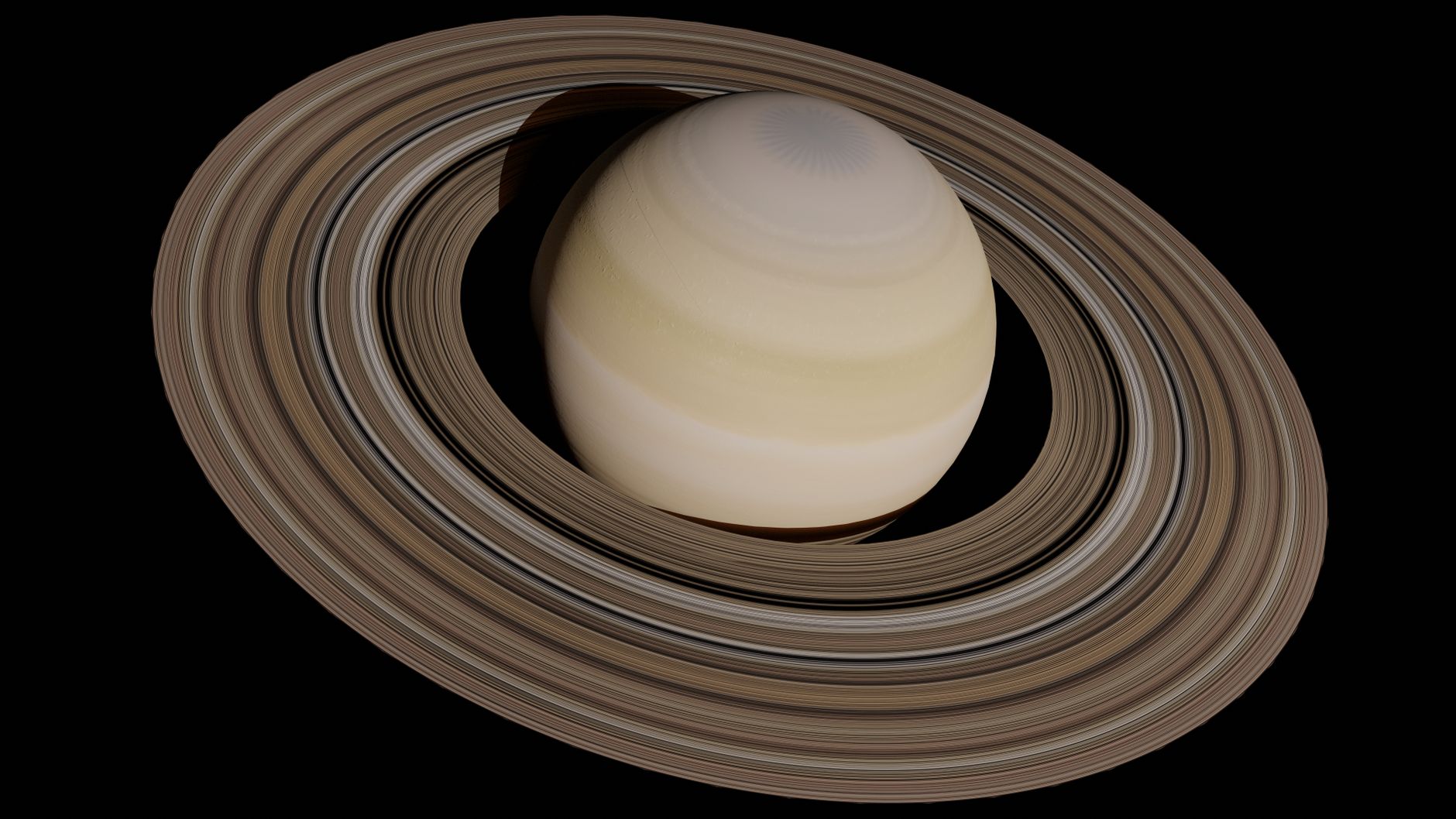
A rare ten-sided atmospheric structure circling Saturn’s south pole has been confirmed by scientists after first being spotted by an amateur astronomer working from home. The observer, a former miner from Australia, initially detected the unusual pattern in 2024 using consumer-grade equipment set up in his backyard. Two years later, that early sighting has evolved into a co-authored, peer-reviewed study confirming the existence of what researchers are calling a “decagon” — a geometric wave formation unlike anything previously documented in Saturn’s atmosphere.
The finding was detailed in a report first carried by the Times of India, which traced how the amateur’s initial observation was later validated using archival data from the Hubble Space Telescope. Scientists cross-referenced years of accumulated imagery from Hubble to verify that the wave pattern was not a fleeting anomaly but a persistent and structurally significant feature of Saturn’s polar atmosphere.
Unlike Saturn’s well-known hexagonal jet stream, which has been observed at the planet’s north pole for decades, the newly confirmed decagon appears at the south pole and operates independently alongside the planet’s existing high-speed jet streams. Researchers say the ten-sided wave interacts with multiple atmospheric layers simultaneously, a level of complexity that suggests gas giant atmospheres may be far more dynamically layered than current models account for. The discovery adds a new data point to ongoing efforts to understand how large-scale wave patterns form and persist in the turbulent, high-speed atmospheres of gas giants like Saturn and Jupiter.
Citizen Science and the Wider Innovation Landscape
The episode underscores a growing trend in astronomy in which amateur observers, equipped with increasingly capable consumer telescopes and imaging tools, contribute directly to professional research. What began as a personal observation shared within enthusiast circles ultimately met the threshold for scientific publication once cross-checked against institutional data sets — a pathway that has become more common as the barrier between hobbyist and professional-grade equipment continues to narrow.
For the UAE and wider Gulf region, the discovery carries relevance beyond its immediate scientific value. The UAE Space Agency has steadily expanded its satellite and deep-space observation programs in recent years, and findings like the Saturn decagon illustrate the kind of long-duration data analysis — comparing fresh observations against archival telescope records — that underpins much of modern planetary science. As regional investment in space capabilities grows, developments in observational astronomy and atmospheric modeling remain closely watched across the broader innovation sector, where breakthroughs in data analysis, imaging technology and citizen participation increasingly intersect.
Researchers involved in the study suggest the decagon’s discovery may prompt renewed examination of Hubble’s extensive Saturn archive for other previously overlooked atmospheric structures. With missions to the outer solar system remaining costly and infrequent, existing telescope data — paired with attentive observers both professional and amateur — is likely to remain a key resource for uncovering further anomalies in the atmospheres of Saturn and other gas giants.