AI can create an influencer who never sleeps, never ages and never accidentally goes off brand. It can generate a face, a personality, a lifestyle and an endless stream of content.
But there is one thing the technology still has to earn: trust.
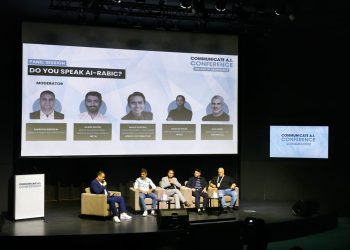
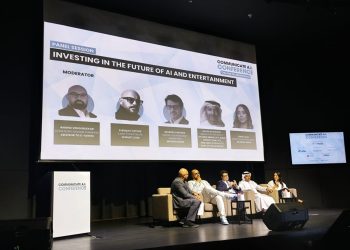
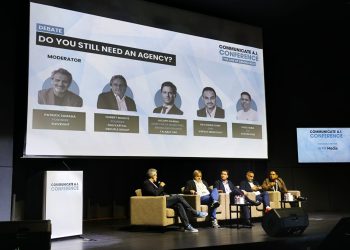
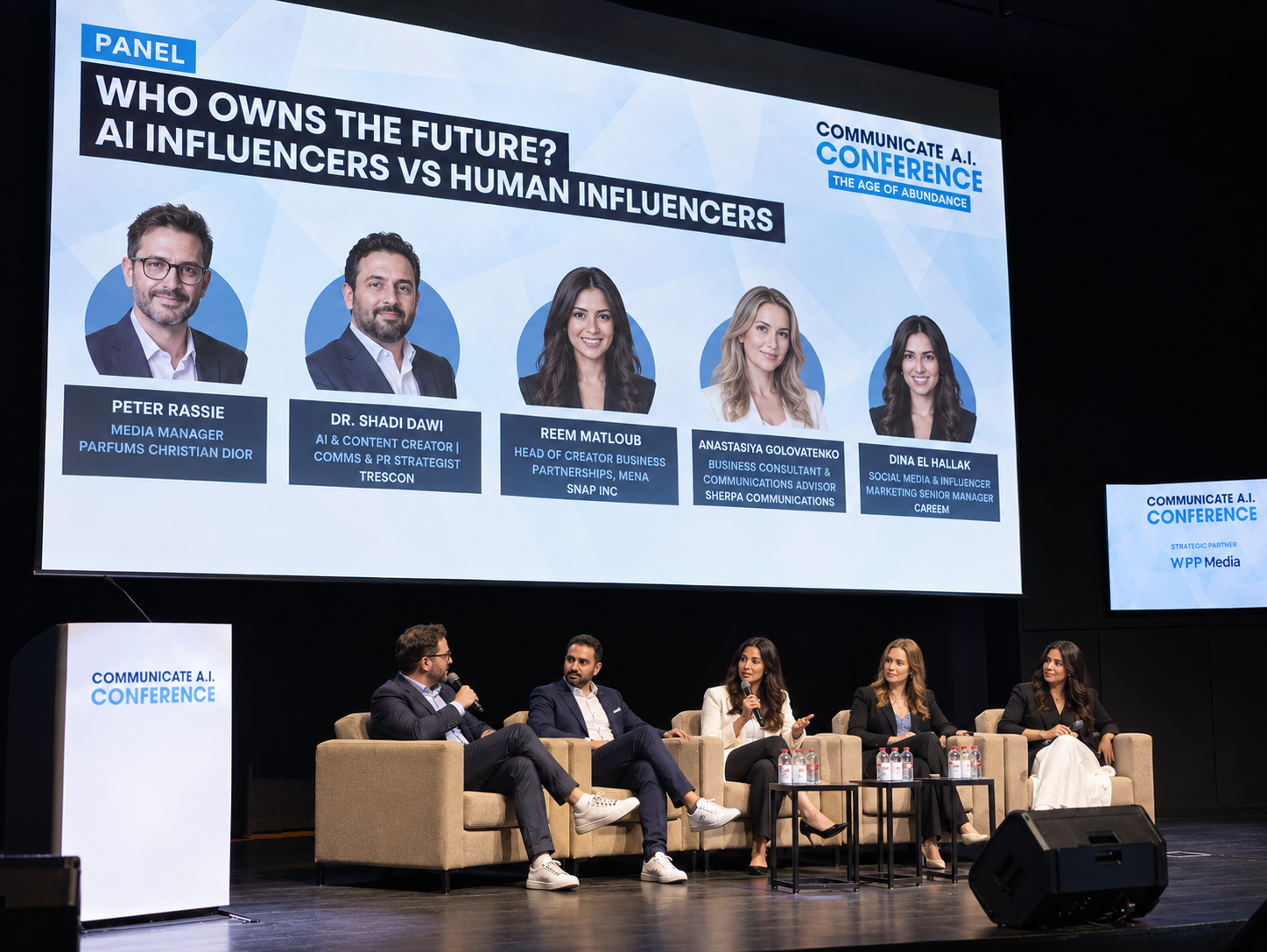
That question took centre stage at Communicate A.I. Conference 2026 in Dubai during the session “Who Owns the Future? AI Influencers vs Human Influencers,” where marketing, creator economy and communications professionals examined what happens when artificial personalities enter a space traditionally built around human connection. The conference, held on September 29 at Dubai Knowledge Park Conference Centre, brought together senior figures from marketing, media, technology and creative industries under the theme “The Age of Abundance.” (NordStella)
The panel brought together Peter Rassie, Media Manager at Parfums Christian Dior; Dr. Shadi Dawi, AI and Content Creator and Communications and PR Strategist at Trescon; Reem Matloub, Head of Creator Business Partnerships, MENA at Snap Inc; Anastasiya Golovatenko, Business Consultant and Communications Advisor at Sherpa Communications; and Dina El Hallak, Social Media & Influencer Marketing Senior Manager at Careem. (NordStella)
The premise was deliberately provocative.
If an AI influencer can produce content around the clock, maintain a perfectly controlled identity and avoid many of the unpredictabilities associated with human creators, why would a brand continue to pay for a person?
The answer is more complicated than production efficiency.
Influencer marketing has always depended on a relationship that goes beyond the content itself. Followers may respond to a creator because they recognise their personality, opinions, experiences and imperfections. A recommendation can feel more persuasive because there is a sense that an actual person has chosen to speak about a product.
AI can reproduce the appearance of that relationship.
Whether it can reproduce the relationship itself is a different question.
That distinction becomes particularly important for brands. A virtual influencer can be carefully designed around a campaign, with the brand able to control the visual identity, tone and messaging. There are obvious operational advantages. The character does not have scheduling conflicts, personal controversies or the possibility of suddenly changing direction.
But control can also become a weakness.
The very imperfections that brands may want to eliminate can be part of what makes a human creator believable. Audiences know that a person has a life outside the campaign. They can disagree with them, question them and watch them evolve. That unpredictability can make the relationship feel less like advertising and more like participation in a community.
For brands operating in the UAE and wider MENA market, the issue has another dimension.
Influencer marketing in the region is deeply connected to personality, culture and community. Creators often act as interpreters between global brands and local audiences, bringing products into conversations shaped by language, humour, lifestyle and regional identity.
An AI-generated personality can be designed to reflect those characteristics, but the question remains whether audiences will perceive that identity as lived or manufactured.
That is where the distinction between simulation and authenticity becomes important.
An AI influencer can simulate a personality. It can be given a backstory, interests, visual style and consistent voice. But audiences may increasingly want to know who, or what, is actually behind the account.
Transparency therefore becomes part of the commercial equation.
If consumers know that an influencer is entirely synthetic, does that change how they interpret an endorsement? Does it matter if the character is openly presented as virtual? And if an AI personality becomes popular enough, does the distinction between a fictional character and an influencer eventually become less important?
These questions are not purely theoretical.
The creator economy is already becoming more sophisticated, while platforms and brands are developing new ways to work with creators and distribute content. Snap’s presence on the panel through Reem Matloub added a platform perspective to a conversation increasingly shaped by the relationship between creators, audiences and technology.
For marketers, the question is also one of return on investment.
An AI influencer may potentially produce significantly more content than an individual creator. But more content does not necessarily mean more influence.
The value of influence comes from attention, credibility and action.
A virtual personality can attract attention. The harder challenge is turning that attention into a meaningful relationship with a brand.
This is where human creators continue to have an important role.
A human influencer can explain why they use something, demonstrate it in their own environment, answer questions and respond to events as they happen. Their credibility can also change over time. A creator who has built a relationship with an audience over years carries a form of social capital that cannot simply be generated with a new synthetic persona.
At the same time, dismissing AI influencers as a novelty would miss where the industry is heading.
AI is already changing how creators work. It can assist with ideation, editing, scripting, visual development, translation and content adaptation. The more interesting future may therefore not be AI versus humans, but AI working around human creators and brands.
The technology could allow individual creators to operate with capabilities that previously required an entire production team.
That could make the creator economy even more competitive.
It could also make authenticity more valuable precisely because synthetic content becomes more common.
As the volume of AI-generated material increases, audiences may become better at recognising content that feels generic. Human experience, distinctive personality and genuine cultural understanding could become signals of quality in an environment increasingly filled with manufactured personalities.
That brings the discussion back to the question at the heart of the session.
Who owns the future of influence?
The answer may not belong exclusively to either side.
AI has demonstrated that influence can be manufactured at scale. Human creators demonstrate that influence can also be built through relationships.
The real competition may therefore be between attention and trust.
AI can generate an endless stream of content. Brands will still have to decide which voices audiences believe.
And in a creator economy where almost anyone can manufacture a face, a story and a following, the most difficult thing to manufacture may ultimately be the one thing marketing has always depended on: a reason to believe.