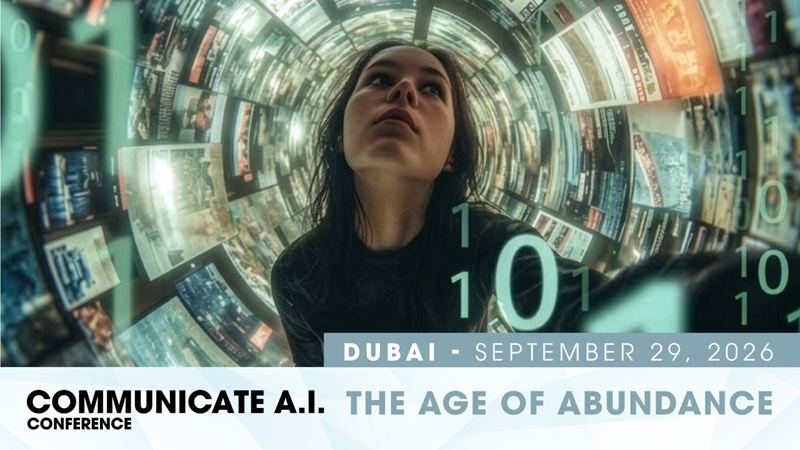
Dubai is preparing for a different kind of AI conversation as Communicate A.I. Conference returns on 29 September with a question that goes beyond technology: when creative production becomes almost limitless, what is actually worth paying for?
Artificial intelligence has changed the economics of creativity. Images, videos, copy, research, concepts and increasingly sophisticated marketing assets can now be produced faster and at a fraction of the traditional cost.
But as the technology becomes easier to access, another question is becoming harder to answer.
Where does the real value sit when everyone has access to the same tools?
That question sits at the centre of Communicate A.I. Conference: The Age of Abundance, taking place on 29 September 2026 at Dubai Knowledge Park Conference Centre.
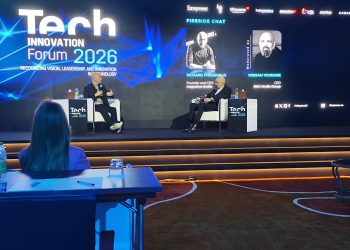
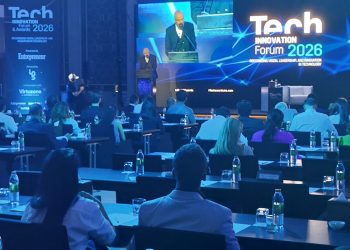
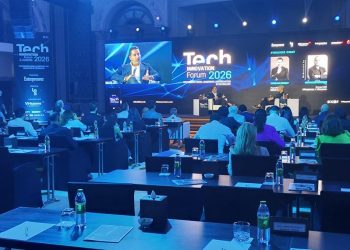
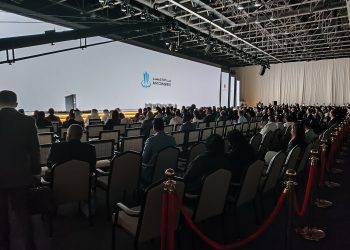
Returning after two previous editions, the conference is bringing together marketing leaders, creatives, technology executives, investors, media professionals, entrepreneurs and brand decision makers to examine what AI means for the future of marketing, communications and creative industries across the Middle East.
Beyond the AI hype
The conference is being positioned around practical questions rather than another broad discussion about the potential of artificial intelligence.
Its agenda looks at the impact AI is already having on agencies, brands, creators, investors and consumers.
One of the central debates asks a provocative question: Do you still need an agency?
As brands gain access to increasingly capable AI tools and internal teams can produce more content themselves, traditional agency models are being challenged. The discussion will examine what clients are actually paying for when production becomes easier, whether more work moves in house and how agencies can continue to demonstrate value in an environment where creative output is increasingly abundant.
The discussion will feature Hubert Boulos of Das Kapital Dekuple Group, Sayed Habib of Danube Home, Ravi Kiran Cheni of VinFast Middle East, Jacopo Garino of Talabat UAE and Patrick Samaha of Eleveight.
From AI experimentation to business value
For businesses across the Middle East, the conversation is also moving beyond experimentation.
The conference opens with a keynote from Basil Fateen, Head of Startups and VC at NVIDIA, focused on the transition from AI excitement to AI execution across the region.
The session will look at how founders, organisations and business leaders are seeking measurable value from AI across sectors including healthcare, marketing, education and enterprise, while examining the balance between human expertise and AI.
That business perspective continues with a dedicated session on Investing in the Future of AI and Entertainment.
The discussion will bring together voices from Mashreq Bank, Dubai Media City, Accenture Song, Middle East Venture Partners, International Media Investment and other organisations to explore what makes an AI venture investable.
Product market fit, access to talent, computing infrastructure, capital, strategic partnerships and access to markets are among the factors expected to shape that conversation.
For founders and investors, this is particularly relevant as the region moves from adopting global AI products toward building companies and intellectual property of its own.
Can the Middle East build its own AI advantage?
Perhaps one of the most regionally relevant discussions on the agenda is “Do You Speak AI-rabic?”
The session explores a fundamental challenge for the Gulf’s creative and technology economy: if AI makes adaptation increasingly easy, where does originality come from?
The panel will examine Arabic first tools, original intellectual property, computing infrastructure and commercial models built around the region.
Speakers include representatives from Meta, Samsung Electronics, ADNOC Distribution, MFORMEDIA and the wider regional media and creative ecosystem.
For the Middle East, this question has implications beyond marketing.
The region has invested heavily in digital infrastructure, technology ecosystems, entrepreneurship and creative industries. The next stage may increasingly depend on whether local businesses can move from being consumers of AI to becoming creators of products, platforms, content and intellectual property shaped by regional needs.
When AI gets creativity wrong
AI’s growing capabilities have also created a new category of risk.
A dedicated session titled “AI Ads Gone Wrong” will take audiences through examples of campaigns where AI generated work failed to achieve the intended result, contrasting them with human made creative work.
The session is designed as a live teardown, looking at why certain AI powered campaigns fail and what separates technological novelty from work that genuinely connects with audiences.
That distinction could become increasingly important for brands.
When producing content becomes easier, simply producing more of it does not necessarily create more attention, trust or commercial value.
The competitive advantage may instead shift towards strategy, originality, cultural understanding, storytelling and the ability to understand audiences.
The future of influence may not be entirely human
Another debate will examine one of the fastest moving areas of the creator economy: AI influencers versus human influencers.
Virtual personalities can be created without the traditional limitations associated with human creators, but the bigger question is whether audiences will ultimately trust them.
The session brings together voices from Parfums Christian Dior, Trescon, Snap Inc, Sherpa Communications and Careem to explore authenticity, influence, trust and the future of brand partnerships.
As AI generated personalities become more sophisticated, the distinction between synthetic content and human storytelling could become increasingly difficult for audiences to navigate.
That makes trust potentially as important as technology.
A room full of the region’s marketing and technology decision makers
The speaker lineup reflects the increasingly interconnected nature of AI.
Alongside technology and AI specialists, the programme features senior representatives from organisations including Samsung Electronics, Meta, NVIDIA, WPP Media, Accenture Song, Mashreq Bank, ADNOC Distribution, Talabat, Careem, Snap Inc, Accor, Miral Destinations and other regional companies.
The conference is aimed at CMOs, marketing directors, brand managers, digital executives, media professionals, agency leaders, creative directors, content creators, PR and communications professionals, production and technology teams, entrepreneurs and investors.
That mix is important because AI is no longer confined to technology departments.
It is increasingly influencing how companies develop products, communicate with customers, produce content, build brands, analyse audiences and make investment decisions.
The bigger question: what happens in an age of abundance?
The title of this year’s conference captures the larger challenge.
AI is making creative production abundant. But abundance does not automatically create value.
If everyone can generate an image, who creates the image people remember?
If everyone can produce a campaign, who creates the campaign people trust?
If everyone can access intelligence, who knows how to turn it into a business?
And if AI can increasingly replicate existing ideas, what should the Middle East create that is genuinely its own?
These are questions that extend well beyond marketing.
They touch the future of media, entertainment, advertising, entrepreneurship, investment and technology across the region.
Communicate A.I. Conference 2026 appears designed to put those questions directly in front of the people making decisions today.
For Dubai’s rapidly evolving technology and creative ecosystem, the timing could hardly be more relevant.
Communicate A.I. Conference: The Age of Abundance takes place on 29 September 2026 at Dubai Knowledge Park Conference Centre.
T&I News is a media partner for Communicate A.I. Conference 2026 and will be following the conversations, people and ideas shaping the next phase of AI, media, marketing and technology in the region.