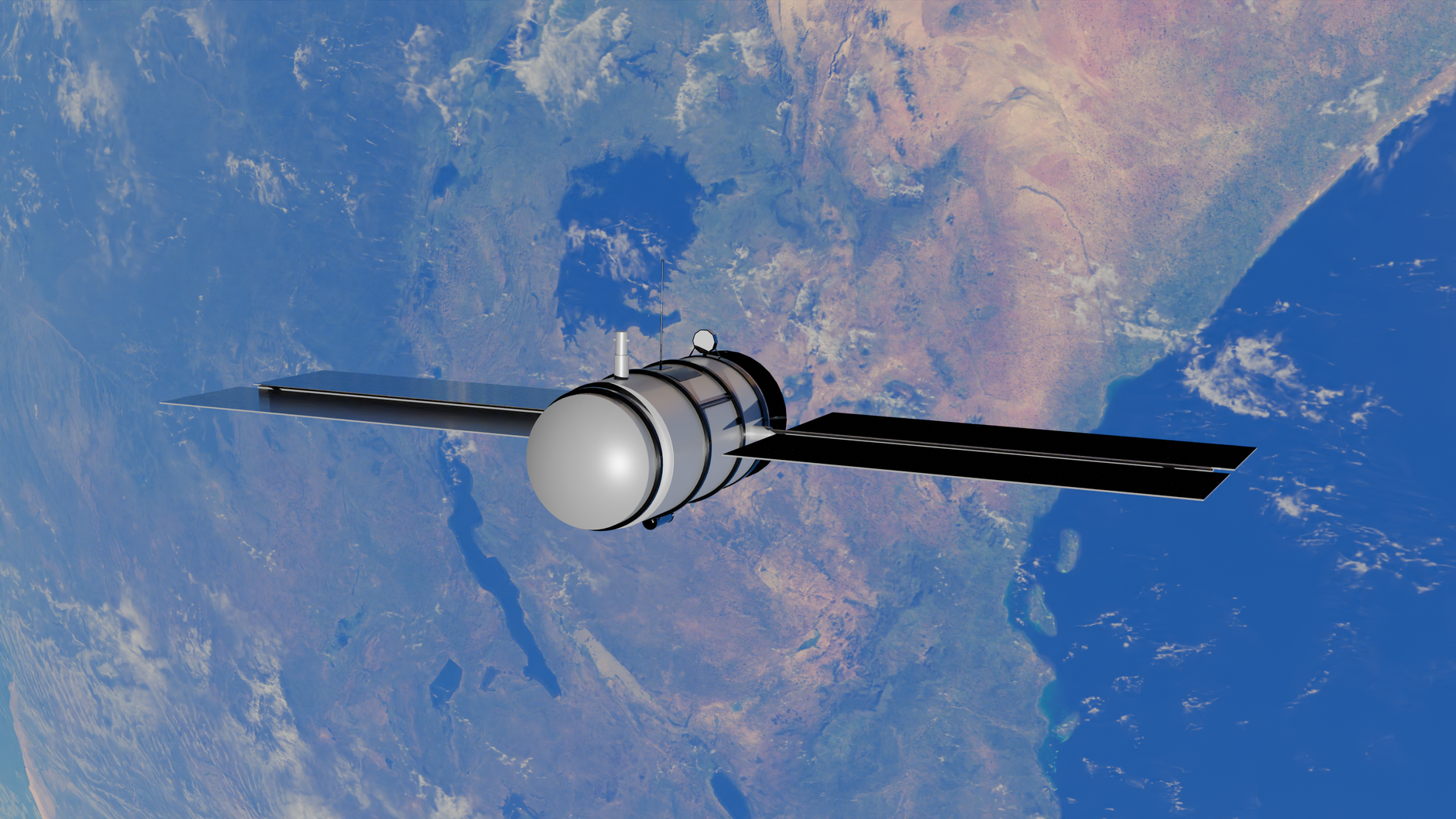
India has moved to strengthen its round-the-clock surveillance capability along its northern and western frontiers with the launch of the EOS-05 earth observation satellite, deployed on a rocket that has earned the informal nickname “Naughty Boy” within the country’s space establishment for its history of technically demanding missions. The launch adds another layer to New Delhi’s expanding constellation of reconnaissance satellites trained on its borders with China and Pakistan, two neighbours with which India has long-standing territorial disputes.
The satellite is part of a broader push by the Indian Space Research Organisation to build persistent, all-weather monitoring capacity over sensitive border regions, including the Himalayan frontier with China and the Line of Control with Pakistan. Officials and analysts tracking India’s space programme have described such missions as central to the country’s effort to reduce reliance on periodic reconnaissance and instead maintain continuous situational awareness over contested and strategically important terrain.
Why the “Naughty Boy” tag matters
The nickname attached to the launch vehicle reflects its reputation among engineers for being difficult to perfect, having required extensive troubleshooting and design refinement before becoming a reliable workhorse for India’s satellite programme. Its successful use to place EOS-05 into orbit is being viewed within India’s space and defence circles as a milestone that reinforces confidence in the country’s indigenous launch capability, reducing dependence on foreign providers for missions with strategic significance.
Earth observation satellites of this kind are typically equipped with imaging systems capable of operating in varied weather and lighting conditions, allowing continuous tracking of activity such as troop movements, infrastructure construction and terrain changes along disputed borders. For India, this translates into an enhanced ability to monitor developments in real time along frontiers where physical access for verification is often limited or contested.
Strategic context and regional stakes
The launch comes against the backdrop of persistent tension between India and China along their shared Himalayan border, as well as long-running friction with Pakistan over Kashmir. Satellite-based surveillance has become an increasingly important tool for New Delhi in managing these relationships, offering a way to track developments without escalating on-the-ground confrontation. Analysts note that continuous observation capability can serve both as an early-warning mechanism and as a deterrent, signalling to neighbouring states that border activity is subject to close and sustained scrutiny.
While the immediate strategic implications of the launch are centred on South Asia, the development is being watched more broadly as part of India’s growing footprint in space technology, an area where the country has increasingly sought international partnerships, including with Gulf states. The UAE has in recent years expanded its own space programme and pursued cooperation agreements with India covering satellite technology, space exploration and related research, reflecting a wider trend of GCC states diversifying into advanced technology sectors as part of long-term economic diversification strategies.
For Gulf audiences, India’s steady advances in indigenous space and surveillance capability carry relevance beyond South Asian security dynamics. They underscore the growing importance of space-based technology as a strategic and economic asset, an area in which UAE entities such as the Mohammed Bin Rashid Space Centre have been active, and where collaboration with technologically advanced partners like India could offer opportunities for joint ventures, knowledge exchange and investment in satellite and launch technology going forward.
India’s space agency has not detailed further plans for follow-on missions in this series, but the successful deployment of EOS-05 is expected to be followed by continued investment in earth observation and reconnaissance satellites as New Delhi looks to sustain its layered approach to border monitoring and broader strategic autonomy in space.