The world is entering an era of profound fragility. Wars are multiplying, trust in institutions is collapsing, economic inequality is widening, and societies are increasingly polarized by information overload and political extremism. Climate instability threatens supply chains and food security. Financial systems appear powerful on the surface yet vulnerable underneath. Citizens distrust governments, governments distrust each other, and individuals increasingly distrust reality itself.
For some, they represent humanity’s greatest opportunity for progress since the Industrial Revolution. For others, they symbolize the beginning of a dangerous era of surveillance, manipulation, and loss of human autonomy. Yet perhaps the most important question is not what AI and Blockchain are, but what they reflect about humanity itself.
Because technology is never neutral. It mirrors the civilization that creates it.
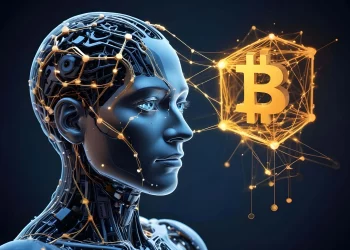
Artificial Intelligence reflects humanity’s desire to replicate intelligence, automate decision-making, and transcend biological limitations. Blockchain reflects humanity’s deep hunger for trust in a world where trust has become scarce. Together, they expose both the ambitions and anxieties of the twenty-first century.
AI is fundamentally a mirror of power. The nations, corporations, and institutions that dominate AI will shape narratives, economies, and potentially global governance itself. Unlike previous technological revolutions, AI is not merely a tool of productivity; it is becoming a tool of cognition. It can write, predict, persuade, simulate, analyze, and increasingly decide. The significance of this transformation cannot be overstated. Humanity is no longer building machines that simply execute commands. It is building systems capable of influencing perception and behavior at planetary scale.
This is why AI has become the new geopolitical battleground between the United States, China, Europe, and emerging technological powers. Whoever leads AI will not simply dominate markets. They may dominate the architecture of future civilization.
Yet AI also reflects something darker: humanity’s obsession with efficiency over wisdom.
Modern societies increasingly value speed, optimization, automation, and scalability. AI embodies all of these. But wisdom, ethics, compassion, and human judgment are far harder to encode into algorithms. A machine can optimize a battlefield, but cannot understand the pain of a mother losing a child. An AI system can maximize profits, but cannot feel moral responsibility. The danger is not necessarily that machines become evil. The danger is that humans delegate ethical responsibility to systems incapable of morality.
Already, AI-generated misinformation floods social media. Deepfakes blur the distinction between truth and fabrication. Algorithms influence elections, shape public opinion, and intensify social division. In fragile societies, AI can become a force multiplier for chaos.
At the same time, however, AI could also become humanity’s greatest stabilizing force. It could revolutionize medicine, predict pandemics, optimize energy systems, improve agriculture, and democratize education. AI may help developing nations leapfrog decades of infrastructural weakness. It may accelerate scientific discovery at unimaginable speed.
The same technology capable of destabilizing the world could also save it.
Blockchain reflects a different dimension of the global crisis: the collapse of institutional trust.
For centuries, societies functioned through centralized intermediaries—banks, governments, courts, corporations, and media institutions. People trusted these structures because they appeared stable and authoritative. But the twenty-first century has eroded that confidence. Financial crises exposed weaknesses in banking systems. Corruption scandals damaged political legitimacy. Media fragmentation shattered common narratives. Citizens increasingly question whether centralized institutions serve the public or merely protect entrenched elites.
Blockchain emerged precisely at this historical moment.
At its core, Blockchain is not merely about cryptocurrency. It is about verification without centralized authority. It represents the idea that trust can be distributed rather than concentrated. In a fragile world, this concept is revolutionary.
Blockchain reflects humanity’s aspiration to build systems where transparency replaces blind faith. Every transaction recorded. Every process traceable. Every contract verifiable. In theory, Blockchain could reduce corruption, increase accountability, and empower individuals economically and politically.
Yet Blockchain also reflects humanity’s growing fear of institutional failure.
The rise of decentralized finance, digital assets, and tokenized economies signals something deeper than technological innovation. It signals a psychological shift. Millions of people no longer fully trust traditional monetary systems. They seek alternatives beyond state-controlled financial structures.
This explains why governments simultaneously fear and study Blockchain. The technology challenges traditional power structures. Central banks recognize that digital currencies may redefine monetary sovereignty. Governments understand that decentralized networks reduce the ability of states to fully control information and capital flows.
But Blockchain, like AI, carries contradictions.
The same decentralized systems that can empower citizens may also enable criminal networks, financial speculation, and economic instability. The crypto market has already experienced dramatic collapses, fraud scandals, and speculative bubbles. Critics argue that Blockchain often promises more than it delivers. Supporters counter that every transformative technology experiences periods of chaos before maturity.
Both are correct.
The internet itself was once dismissed as unstable and dangerous. Today it underpins civilization.
What makes the combination of AI and Blockchain especially significant is that together they may redefine the relationship between trust and intelligence.
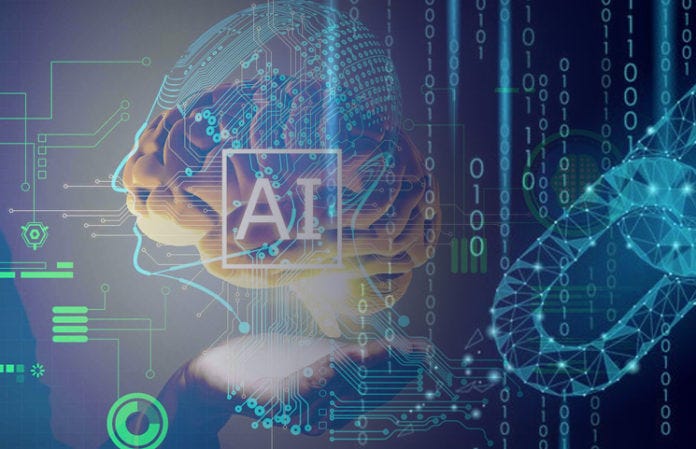
AI creates intelligent systems. Blockchain creates trusted systems.
Separately, each technology is disruptive. Combined, they could reconstruct entire sectors of society. Imagine AI systems operating on transparent Blockchain infrastructures where decisions, data origins, and transactions become traceable and auditable. Such integration could transform healthcare, finance, governance, logistics, cybersecurity, and even democratic processes.
An AI doctor could diagnose patients while Blockchain secures medical records against tampering. AI-powered supply chains could track food, medicine, and energy resources transparently across continents. Smart contracts could automate global commerce without traditional intermediaries. Elections could potentially become more transparent through Blockchain verification systems enhanced by AI monitoring.
But there is another possibility—one far more unsettling.
AI combined with Blockchain could also create unprecedented systems of surveillance and control. Governments or corporations might construct digital ecosystems where every transaction, movement, and interaction becomes permanently recorded and algorithmically analyzed. The same technologies that promise decentralization could paradoxically strengthen digital authoritarianism if controlled by centralized powers.
This is why the future of these technologies will ultimately depend not on engineering, but on values.
Technology amplifies civilization. It does not replace it.
If societies are driven by greed, AI and Blockchain may deepen inequality and instability. If nations prioritize domination over cooperation, these technologies could intensify geopolitical conflict. If humanity abandons ethics in pursuit of efficiency, the digital future may become profoundly dehumanizing.
But if guided wisely, AI and Blockchain could also reflect humanity’s highest aspirations.
They could help build more transparent institutions, more inclusive economies, and more resilient societies. They could democratize access to knowledge and financial participation. They could reduce corruption, empower innovation, and increase global connectivity. In a fragmented world, they might even become tools for rebuilding trust.
History suggests that every major technological revolution forces humanity to confront itself. The steam engine reshaped labor. Electricity transformed industry. The internet redefined communication. AI and Blockchain are different because they touch the very foundations of human civilization: intelligence and trust.
That is why the stakes are so high.
The coming decade will not simply determine which companies dominate AI or which cryptocurrencies survive. It will determine what kind of digital civilization humanity wishes to build.
Will AI become an instrument of empowerment or manipulation? Will Blockchain create transparency or financial chaos? Will technology strengthen democracy or accelerate authoritarianism? These questions are no longer theoretical. They are becoming the defining political, economic, and moral issues of our time.
In the end, AI and Blockchain may reflect the same truth: humanity is technologically advanced but emotionally and politically fragile. We are building systems of extraordinary sophistication while struggling to solve ancient human problems—fear, greed, inequality, conflict, and mistrust.
The paradox of the modern age is that humanity has never possessed more technological power, yet rarely has the future felt so uncertain.
AI and Blockchain are not merely technological trends. They are mirrors held up to civilization itself.
And what they ultimately reflect may determine the fate of the twenty-first century.