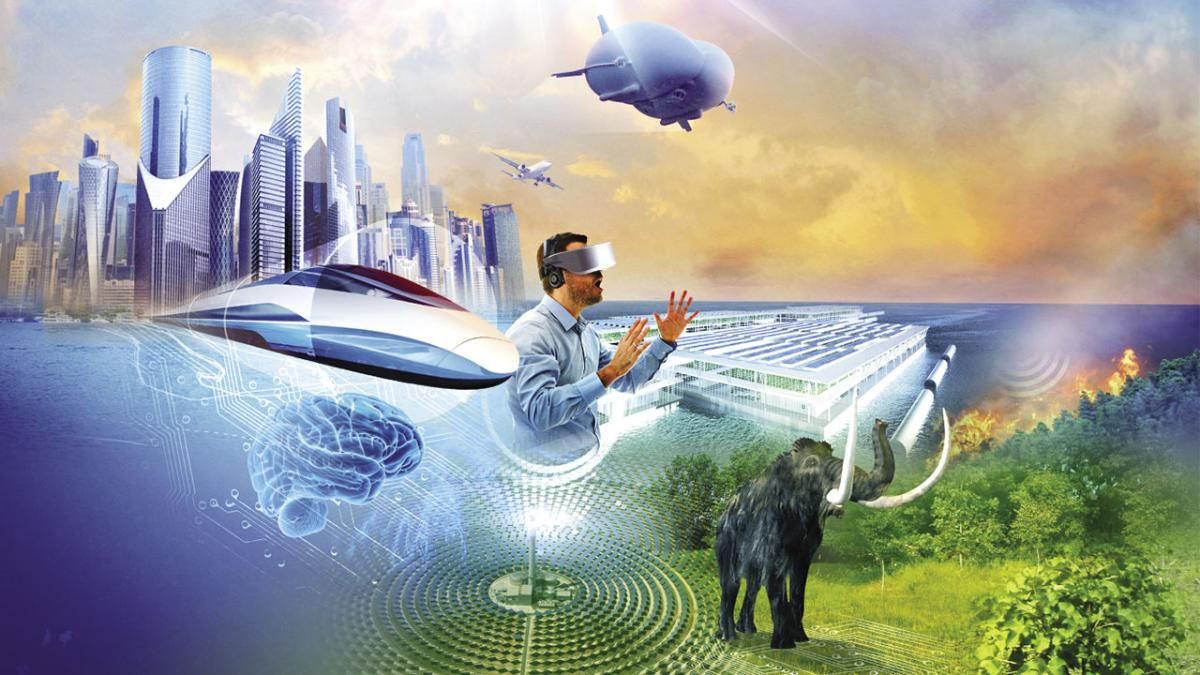
On a humid morning in a rural village, a farmer checks his smartphone before stepping into the fields. An app, powered by satellite data and artificial intelligence, predicts rainfall patterns and suggests the best time to plant. Thousands of miles away, a doctor reviews a patient’s scan generated by an AI system capable of detecting early signs of disease that might otherwise go unnoticed. In a crowded city, traffic lights adjust in real time to reduce congestion, guided by data flowing through invisible networks. These scenes, already unfolding in parts of the world, offer a glimpse into how technology is shaping the future—not as a distant abstraction, but as a force embedded in everyday life.
The idea that technology can improve the future is not new. From the invention of the wheel to the rise of the internet, each era has been marked by tools that extend human capability. What distinguishes the present moment is the speed and scale of change. Advances in artificial intelligence, biotechnology, renewable energy, and digital infrastructure are converging, creating possibilities that were difficult to imagine even a decade ago. Yet alongside this promise comes a central question: how can technology be used not just to advance, but to genuinely improve human life?
One of the most immediate and visible impacts of technology lies in healthcare. For centuries, medicine has relied on human expertise, observation, and incremental discovery. Today, technology is accelerating each of these processes. AI systems can analyze vast amounts of medical data, identifying patterns that may elude even experienced clinicians. Early detection of diseases such as cancer, heart conditions, and neurological disorders is becoming more accurate, increasing the chances of successful treatment.
Telemedicine has also transformed access to care. Patients in remote or underserved areas can now consult with specialists without traveling long distances. Wearable devices monitor vital signs in real time, allowing for continuous health tracking rather than occasional checkups. In the future, personalized medicine—tailored to an individual’s genetic makeup—could become more widespread, improving outcomes and reducing side effects.
However, these advancements also raise important considerations. Access to technology is not evenly distributed, and there is a risk that innovations could widen existing inequalities. Ensuring that technological progress benefits all populations, rather than a select few, will be essential to realizing its full potential.
Education is another domain where technology could play a transformative role. Traditional models of education, often based on standardized curricula and fixed schedules, are increasingly being supplemented by digital tools. Online platforms provide access to a vast range of resources, from lectures and tutorials to interactive simulations. AI-driven systems can adapt to individual learning styles, offering personalized feedback and pacing.
This shift has the potential to make education more inclusive and flexible. Students who may struggle in conventional settings can learn at their own pace, while those with advanced abilities can explore topics more deeply. Lifelong learning, once a concept, is becoming a practical reality as people use technology to acquire new skills throughout their lives.
Yet the integration of technology into education also requires careful balance. Human interaction—between teachers and students, and among peers—remains a critical component of learning. Technology can enhance education, but it should not replace the social and emotional aspects that are central to intellectual development.
In the realm of environmental sustainability, technology could be both a problem and a solution. Industrialization and technological growth have contributed significantly to environmental degradation, from carbon emissions to resource depletion. At the same time, new technologies offer tools to address these challenges.
Renewable energy sources such as solar, wind, and hydropower are becoming more efficient and cost-effective. Advances in energy storage are making it possible to manage supply and demand more effectively, reducing reliance on fossil fuels. Smart grids can optimize energy distribution, minimizing waste and improving resilience.
In agriculture, precision farming techniques use data and sensors to optimize water usage, reduce chemical inputs, and increase yields. This not only improves efficiency but also reduces environmental impact. Similarly, innovations in materials science are leading to the development of biodegradable and recyclable products, addressing the growing problem of waste.
Despite these advances, technology alone cannot solve environmental issues. Behavioral change, policy decisions, and global cooperation are equally important. Technology can provide the tools, but how those tools are used will determine their effectiveness.
The future of work is another area where technology is likely to have a profound impact. Automation and AI are already reshaping industries, taking over repetitive and routine tasks. This has the potential to increase productivity and free humans to focus on more complex, creative, and interpersonal work.
At the same time, the transition poses challenges. Job displacement is a real concern, particularly for workers in roles that are easily automated. Preparing the workforce for this shift will require investment in education and training, as well as policies that support workers during periods of transition.
New forms of work are also emerging. The digital economy has created opportunities for remote work, freelancing, and entrepreneurship. Technology enables collaboration across distances, allowing teams to work together regardless of location. This flexibility can improve work-life balance and open up opportunities for people who may not have access to traditional employment.
However, it also raises questions about job security, labor rights, and the nature of employment. Ensuring that the future of work is both dynamic and fair will be a key challenge for policymakers and businesses alike.
Communication is perhaps the area where technology’s impact is most visible. The rise of the internet and mobile devices has connected billions of people, enabling instant communication across the globe. Social media platforms, messaging apps, and video conferencing tools have transformed how people interact, share information, and build communities.
This connectivity has many benefits. It allows for the rapid dissemination of information, facilitates collaboration, and gives individuals a platform to express their views. It has also played a role in social movements, enabling people to organize and advocate for change.
At the same time, it has introduced new challenges. The spread of misinformation, concerns about privacy, and the impact of digital interactions on mental health are significant issues. Addressing these challenges will require not only technological solutions, but also critical thinking and digital literacy among users.
Another promising area is the use of technology in governance and public services. Digital systems can improve efficiency, reduce bureaucracy, and increase transparency. For example, online platforms can streamline processes such as applying for permits, paying taxes, or accessing public records.
Data analytics can help governments make more informed decisions, identifying trends and allocating resources more effectively. In some cases, technology can also enhance civic participation, allowing citizens to engage more directly with decision-making processes.
However, the use of technology in governance must be approached with caution. Issues of surveillance, data security, and accountability are critical. Ensuring that technology is used to empower citizens, rather than control them, will be essential.
Looking ahead, emerging technologies such as artificial intelligence, robotics, and biotechnology are likely to play an increasingly central role in shaping the future. AI, in particular, has the potential to transform multiple domains, from healthcare and education to transportation and entertainment. Autonomous vehicles could reduce accidents and improve mobility, while advanced robotics could assist in areas ranging from manufacturing to disaster response.
Biotechnology offers the possibility of breakthroughs in areas such as disease treatment, food production, and environmental conservation. Gene editing technologies, for example, could lead to new treatments for genetic disorders, while synthetic biology could enable the development of sustainable materials and energy sources.
These possibilities are exciting, but they also raise ethical and societal questions. The power to alter biological systems, make autonomous decisions, or process vast amounts of data comes with significant responsibility. Ensuring that these technologies are developed and used in ways that align with human values will be a critical challenge.
Ultimately, the role of technology in shaping the future is not predetermined. It is influenced by choices—by how technologies are designed, who has access to them, and how they are governed. Technology can amplify human potential, but it can also amplify existing problems if not managed carefully.
The future will likely be defined not by technology alone, but by the relationship between technology and humanity. This relationship will require ongoing dialogue, collaboration, and reflection. It will involve balancing innovation with ethics, efficiency with equity, and progress with sustainability.
Technology has the potential to help build a future that is healthier, more connected, and more sustainable. But realizing this potential will require more than technical expertise. It will require a commitment to using technology in ways that serve the broader good, rather than narrow interests.
In the end, technology is a tool—powerful, versatile, and transformative. Its impact depends on how it is used. The future it creates will reflect the values and priorities of those who shape it. If guided thoughtfully, technology could help address some of the most pressing challenges of our time, opening new possibilities for human development and well-being.
The question is not whether technology will shape the future—it already is. The question is how we choose to shape it in return.