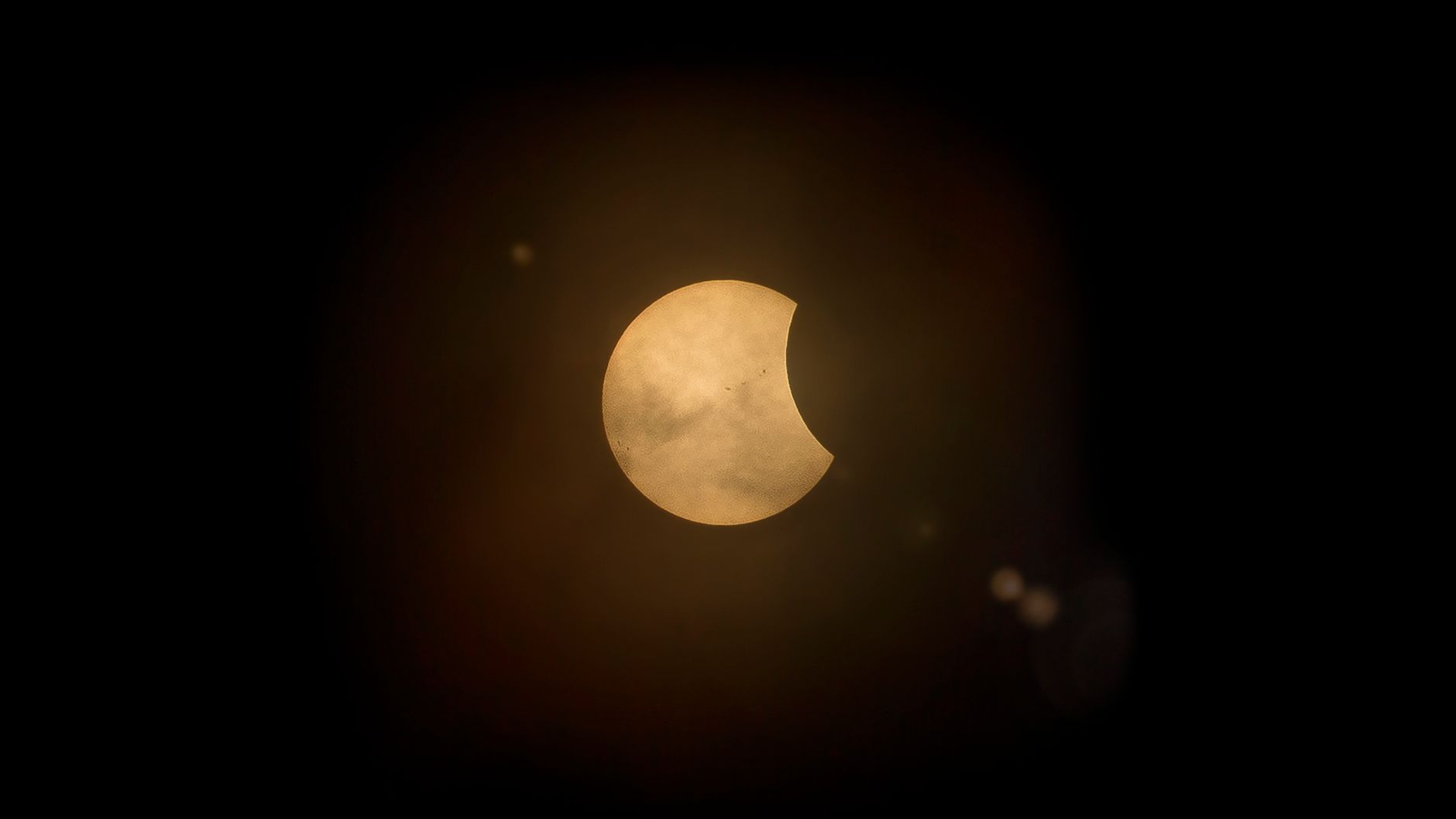
Skywatchers across the globe, including in the UAE and wider Gulf region, are preparing for an unusual astronomical event next August, when a solar eclipse and a lunar eclipse will occur within a two-week window of each other. The solar eclipse is scheduled for August 12, 2026, followed by a lunar eclipse on August 26, 2026, giving observers two distinct opportunities to witness celestial phenomena in quick succession.
The pairing of a solar and lunar eclipse in the same month is not an everyday occurrence, and astronomy enthusiasts in the region are being encouraged to start planning well in advance, particularly for the solar event, which typically requires precise timing and, in many cases, travel to areas within the path of visibility.
Where the Eclipses Will Be Visible
According to available path projections, the August 12 solar eclipse will be observable from Greenland, Iceland, Spain, Portugal, and parts of North Africa and the Middle East. Whether the eclipse will be visible, and to what extent, from specific locations within the UAE and other GCC states has not yet been fully mapped out. Detailed path calculations closer to the date are expected to clarify exact visibility for Gulf-based observers, and regional astronomical societies and observatories are likely to issue localized viewing guides as the event approaches.
The lunar eclipse on August 26 is expected to have a broader viewing footprint, with visibility extending across Europe, Africa, Asia, and Australia. Gulf residents will still need to confirm precise timing windows for their specific locations, since the visible phases of a lunar eclipse can vary depending on latitude and longitude even within a single region. Unlike solar eclipses, lunar eclipses can be viewed safely with the naked eye from any location where the Moon is above the horizon during the event, and the experience can be enhanced with a pair of binoculars.
For residents of the UAE and neighboring Gulf states, the lunar eclipse is likely to be the more accessible of the two events, requiring no travel and no specialized equipment. The solar eclipse, by contrast, may demand more preparation, including confirming whether any part of the region falls within or near the path of visibility, and if not, whether a short trip to a neighboring country or region would be necessary to view it directly.
Safety Precautions for Solar Viewing
Astronomers and eye-safety experts consistently stress that solar eclipses cannot be viewed safely with the naked eye at any stage, except during the brief period of totality in a total eclipse. Observers are advised to use certified eclipse glasses or solar filters specifically designed for direct solar viewing. Ordinary sunglasses, regardless of their darkness, do not provide adequate protection and should never be used as a substitute. Looking directly at the sun without proper protective equipment can cause serious and permanent eye damage, including a condition known as solar retinopathy.
Given the summer timing of both events, residents planning to observe the solar eclipse are also being reminded to account for regional heat conditions if travel or extended outdoor viewing is involved. As the dates approach, local observatories and astronomy groups in the UAE and across the Gulf are expected to release detailed guidance on optimal viewing times, locations, and safety measures for both the solar and lunar eclipses.