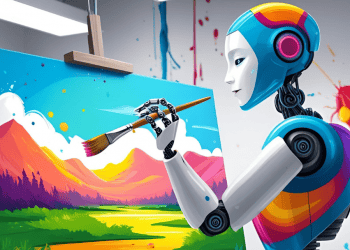
Artificial intelligence has moved from research laboratories into everyday life with extraordinary speed. Only a decade ago, AI was largely associated with academic research, advanced robotics, and science fiction. Today, billions of people use AI-powered tools every day—often without even realizing it. From smartphones that recognize our voices to navigation systems that optimize our routes, from online shopping recommendations to medical diagnostic software, AI has quietly become an indispensable part of modern society.
The emergence of generative artificial intelligence has accelerated this transformation even further. Intelligent systems can now write reports, generate images, compose music, develop software, analyze legal documents, summarize scientific research, translate dozens of languages, and engage in sophisticated conversations. What once required teams of specialists can increasingly be accomplished through AI-assisted tools available to businesses, governments, students, researchers, entrepreneurs, and individuals.
AI tools are no longer simply applications that automate routine tasks. They are becoming intelligent collaborators capable of augmenting human creativity, accelerating innovation, improving decision-making, and expanding access to knowledge. Their influence reaches virtually every sector of society, reshaping education, healthcare, finance, manufacturing, public administration, entertainment, agriculture, transportation, scientific research, and communication.
The challenge facing society is therefore not whether AI tools will become more powerful—they undoubtedly will. The real question is how humanity can ensure that these tools improve lives while protecting privacy, fairness, transparency, security, and human dignity.
The Evolution of AI Tools
The first generation of AI tools focused primarily on automation. They performed narrow, repetitive tasks such as filtering spam emails, recognizing handwritten text, or recommending products based on customer preferences. Their intelligence was limited to specific domains and carefully programmed objectives.
Modern AI tools are fundamentally different.
Powered by large language models, machine learning, computer vision, speech recognition, and advanced data analytics, today’s systems can understand context, generate original content, reason across multiple disciplines, and continuously improve through interaction with users.
Rather than functioning as isolated software applications, AI tools increasingly operate as integrated digital assistants capable of supporting complex workflows and collaborative problem-solving.
This evolution marks a transition from automation to augmentation.
AI Tools in Education
Education is experiencing one of the most significant transformations driven by AI.
Students now use intelligent tutoring systems that personalize lessons according to individual learning styles and progress. Language learning applications provide real-time pronunciation feedback. AI-powered writing assistants help improve grammar, structure, and clarity. Educational platforms recommend learning resources tailored to each student’s needs.
Teachers also benefit.
AI assists with lesson planning, grading, curriculum development, classroom analytics, and administrative tasks, allowing educators to devote more time to mentoring and personalized instruction.
Universities increasingly integrate AI into research, online learning, laboratory simulations, and academic advising.
Rather than replacing teachers, AI tools enhance educational quality by making learning more adaptive, accessible, and individualized.
AI Tools in Healthcare
Healthcare has become one of the most promising fields for artificial intelligence.
Medical imaging systems assist radiologists in identifying diseases such as cancer, stroke, and cardiovascular conditions with remarkable accuracy. AI supports clinical decision-making by analyzing enormous quantities of medical literature and patient data.
Virtual health assistants answer routine medical questions, schedule appointments, monitor chronic conditions, and encourage medication adherence.
Hospitals employ AI to optimize staffing, predict patient admissions, improve supply chain management, and reduce operational costs.
Drug discovery has also accelerated dramatically as AI analyzes biological data to identify promising therapeutic compounds.
Importantly, AI supports rather than replaces healthcare professionals. Physicians remain responsible for diagnosis, treatment decisions, ethical judgment, and patient care.
Human expertise remains at the center of modern medicine.
AI Tools in Business
Organizations across every industry increasingly depend upon AI-powered business tools.
Customer relationship management platforms analyze customer behavior and predict future purchasing patterns.
Marketing departments create personalized campaigns using AI-generated content and audience analytics.
Financial departments automate forecasting, budgeting, and fraud detection.
Human resources professionals streamline recruitment, employee engagement, and workforce planning.
Executives use AI-powered dashboards to monitor business performance and support strategic decision-making.
Small businesses particularly benefit because AI democratizes capabilities once available only to large multinational corporations.
Entrepreneurs now access sophisticated analytics, customer service automation, financial planning, and global marketing tools at relatively low cost.
AI Tools in Scientific Research
Scientific discovery increasingly depends upon artificial intelligence.
Researchers analyze enormous datasets that would be impossible to evaluate manually.
AI accelerates genomics, climate science, astronomy, chemistry, materials science, and pharmaceutical research.
Scientists use intelligent systems to identify hidden patterns, generate hypotheses, simulate experiments, and review thousands of academic publications within minutes.
Research productivity increases dramatically when AI handles repetitive analytical tasks while scientists concentrate on creativity, interpretation, and experimental design.
Rather than replacing researchers, AI expands human scientific capability.
AI Tools in Creative Industries
One of the most surprising developments has been AI’s growing influence within creative professions.
Artists generate visual concepts using AI image creation platforms.
Musicians experiment with AI-assisted composition.
Filmmakers accelerate editing and visual effects.
Architects explore innovative building designs.
Writers use AI for brainstorming, research, editing, and language refinement.
Designers rapidly create prototypes.
Advertising agencies personalize marketing content.
Creative professionals increasingly view AI not as a competitor but as a collaborative partner capable of accelerating ideation while leaving artistic direction firmly under human control.
Creativity becomes amplified rather than diminished.
AI Tools in Manufacturing and Industry
Manufacturing has entered the era of intelligent production.
Factories deploy AI to monitor machinery, predict maintenance requirements, optimize energy consumption, improve quality control, and coordinate supply chains.
Computer vision systems inspect products more consistently than traditional manual inspection methods.
Industrial robots increasingly collaborate safely alongside human workers.
Predictive analytics reduce downtime while improving operational efficiency.
Smart manufacturing enables greater flexibility, reduced waste, and improved sustainability.
AI contributes directly to industrial competitiveness in an increasingly global marketplace.
AI Tools in Agriculture
Agriculture faces growing pressure to produce more food while reducing environmental impact.
AI supports precision farming by analyzing satellite imagery, soil conditions, weather forecasts, irrigation requirements, and crop health.
Farmers receive recommendations regarding planting schedules, fertilizer application, pest management, and harvesting.
Autonomous agricultural equipment increasingly performs repetitive field operations with improved precision.
AI contributes to food security while supporting more sustainable agricultural practices.
AI Tools in Transportation
Transportation systems increasingly rely on intelligent technologies.
Navigation applications optimize travel routes based on real-time traffic conditions.
Airlines improve scheduling and fuel efficiency through predictive analytics.
Shipping companies optimize logistics.
Rail operators monitor infrastructure.
Autonomous driving technologies continue advancing through computer vision, sensor fusion, and machine learning.
Public transportation agencies analyze passenger demand to improve service planning.
AI enhances mobility while reducing congestion, emissions, and operational costs.
AI Tools in Public Administration
Governments increasingly adopt AI to improve public services.
Intelligent chatbots answer citizen inquiries.
Administrative processes become more efficient through document automation.
Tax agencies identify anomalies more effectively.
Emergency response systems analyze disasters.
Urban planners optimize transportation networks.
Environmental agencies monitor pollution.
Digital public services become faster, more responsive, and more accessible.
Responsible governance remains essential to ensure transparency, accountability, and protection of citizens’ rights.
AI Tools and Financial Services
The financial sector has become one of AI’s earliest adopters.
Banks employ AI for fraud detection, credit assessment, customer support, risk management, regulatory compliance, and investment analysis.
Digital assistants answer customer questions twenty-four hours a day.
Insurance companies accelerate claims processing.
Investment firms analyze global markets using advanced predictive models.
Payment providers identify suspicious transactions almost instantly.
These capabilities strengthen both operational efficiency and financial security.
AI Tools for Everyday Life
Perhaps AI’s greatest societal influence appears in ordinary daily activities.
Smartphones recognize speech.
Translation applications remove language barriers.
Navigation systems optimize journeys.
Streaming platforms recommend entertainment.
Smart homes regulate lighting and temperature.
Shopping assistants compare products.
Personal productivity tools organize schedules, summarize meetings, and draft communications.
Consumers increasingly interact with dozens of AI systems every day, often without consciously recognizing their presence.
Artificial intelligence has become embedded within daily routines.
Challenges Facing Society
Despite remarkable benefits, AI tools also introduce significant challenges.
Privacy concerns arise because intelligent systems frequently process enormous quantities of personal information.
Bias within training data may produce unfair outcomes.
Misinformation becomes easier to generate.
Cybersecurity risks increase as AI systems become more interconnected.
Employment patterns continue evolving as automation changes workforce requirements.
Intellectual property questions remain unresolved.
Energy consumption associated with large AI models continues growing.
Addressing these challenges requires responsible governance involving governments, businesses, researchers, educators, and civil society.
Technology alone cannot solve ethical questions.
Building Trustworthy AI Tools
Public confidence depends upon responsible development.
Organizations should prioritize transparency, fairness, accountability, privacy, security, explainability, and meaningful human oversight.
Independent auditing, ethical review, continuous monitoring, and compliance with international standards strengthen trust.
Education also plays an important role.
Citizens should understand both the capabilities and limitations of AI tools, enabling informed and responsible use.
Digital literacy becomes an essential skill for the twenty-first century.
The Future of AI Tools
The next generation of AI tools will become increasingly autonomous, personalized, and interconnected.
Agentic AI systems will manage complex projects across multiple software platforms.
Multimodal AI will seamlessly integrate text, images, speech, video, and data analysis.
Digital assistants will become lifelong learning companions.
Healthcare platforms will provide increasingly personalized preventive medicine.
Educational AI will adapt continuously to each learner.
Businesses will coordinate intelligent digital workforces supporting human teams.
The distinction between software and intelligent collaboration will continue to disappear.
AI tools will increasingly function as trusted partners rather than passive applications.
Conclusion
Artificial intelligence tools are transforming society at a pace unmatched by most previous technological revolutions. Their influence extends far beyond automation, reaching into education, healthcare, business, finance, manufacturing, agriculture, transportation, scientific research, public administration, and everyday life. By augmenting human intelligence rather than merely replacing routine tasks, AI tools are enabling individuals and organizations to solve problems more efficiently, innovate more rapidly, and access knowledge more easily than ever before.
Yet their long-term success will depend not only on technological capability but also on responsible governance. Privacy, cybersecurity, fairness, transparency, accountability, environmental sustainability, and human oversight must remain central principles guiding AI development. Public trust is built when intelligent systems are reliable, understandable, and aligned with societal values.
The future of AI tools is not one in which machines replace humanity. Instead, it is one in which people and intelligent systems work together, combining computational power with human creativity, ethical judgment, empathy, and leadership. Organizations that embrace this collaborative model will become more innovative and resilient, while societies that invest in digital literacy, ethical governance, and inclusive access to AI will be better positioned to share its benefits widely.
Ultimately, AI tools represent far more than technological products—they are becoming a new layer of social and economic infrastructure. Like electricity, the internet, and mobile communications before them, they will increasingly shape how people learn, work, communicate, create, and solve global challenges. The true measure of their success will not be the sophistication of their algorithms but their ability to improve human well-being, expand opportunity, and contribute to a more prosperous, equitable, and sustainable world.